




01. Edit your form online
Type text, add images, blackout confidential details, add comments, highlights and more.

Type text, add images, blackout confidential details, add comments, highlights and more.

Draw your signature, type it, upload its image, or use your mobile device as a signature pad.

Send it via email, link, or fax. You can also download it, export it or print it out.
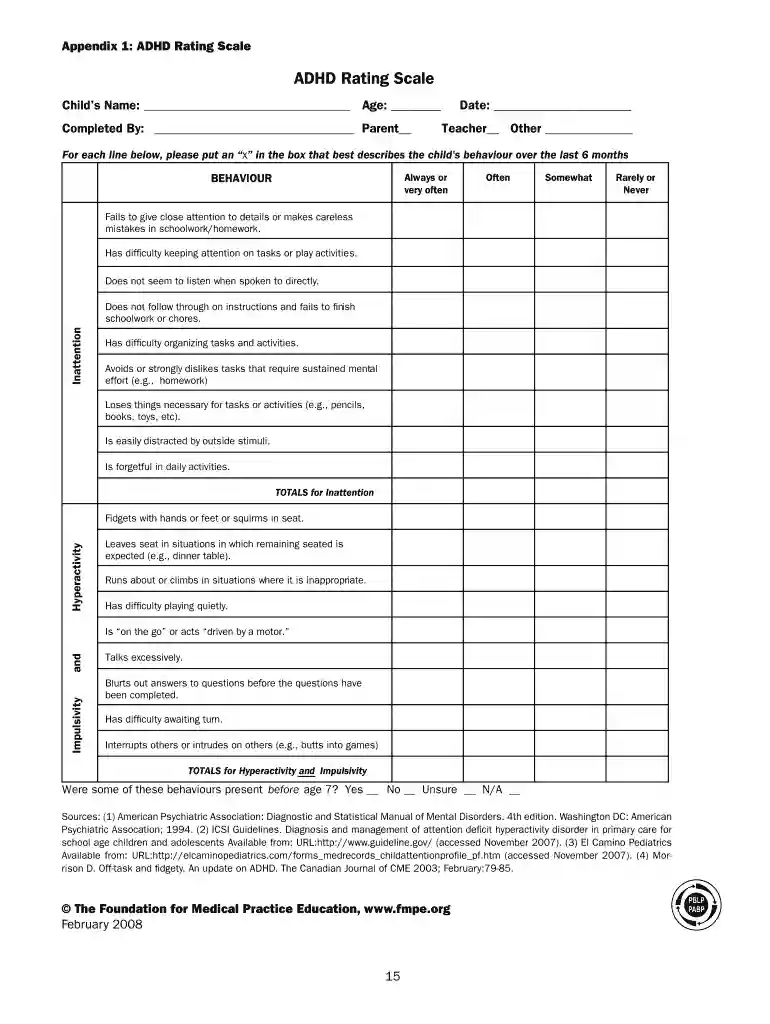
The "ADHD Rating Scale - Tulane University" is a practical tool designed to assess and quantify the presence and severity of Attention Deficit Hyperactivity Disorder (ADHD) symptoms in children. The rating scale is typically completed by parents and teachers, enabling them to evaluate a child's behavior across various settings. This dual perspective helps to ensure an accurate and comprehensive assessment of the child's symptoms. The scale systematically addresses behaviors related to inattention, hyperactivity, and impulsivity, which are the core dimensions of ADHD.
Parents and teachers use the ADHD Rating Scale by rating the frequency of specific behaviors over the past six months. Each behavior is linked to symptoms of inattention or hyperactivity/impulsivity. Participants assess how often a child demonstrates certain behaviors, using a scale that ranges from "never" to "very often." The cumulative scores from these assessments can help determine the severity of ADHD symptoms and guide further diagnostic processes. It is vital to consider the context, as behaviors must be present across multiple settings, like home and school, to justify a diagnosis.
The ADHD Rating Scale can be obtained through Tulane University’s developmental or educational departments, which may offer access upon request. Educational professionals such as school psychologists or counselors often have these forms on hand. It may also be possible to acquire the scale through health care providers specializing in child behavior and developmental disorders. Ensuring the authenticity of the source is critical to using a standardized and verified tool for assessment.
The scale is primarily used by parents and teachers who regularly observe the child in natural settings. Educational professionals, including psychologists and counselors, may also employ this tool for screening purposes. It is an essential component of an initial evaluation process for children suspected of having ADHD. Clinicians use it to gather collateral information that complements clinical interviews and other diagnostic tools.


A seven-year-old child's behavior could be evaluated using the scale, revealing frequent inattentiveness and impulsivity which interfere with learning and social interactions. Alternatively, a parent might notice at home that their child frequently loses items and forgets to complete daily routines, rating these behaviors accordingly. Teachers could observe fidgeting and interruptive behavior in class, marking these items on the scale to aid in diagnosis and individualized educational planning.
The ADHD Rating Scale - Tulane University must be utilized in accordance with ethical guidelines and laws governing psychological assessments. It should supplement a comprehensive evaluation process, not serve as a standalone diagnostic tool. Professionals using the scale should ensure that results are interpreted by qualified individuals familiar with ADHD, and confidentiality must be maintained to protect sensitive information gathered during the assessment process.
While the ADHD Rating Scale itself is standardized, its application might vary according to state regulations regarding educational assessments and interventions. States may have specific guidelines for employing psychological assessments within public schools or for developing Individualized Education Programs (IEPs). Educators and clinicians should remain informed about their state's legal requirements and ensure compliance with local educational laws when using the scale in assessments.
At DocHub, your data security is our priority. We follow HIPAA, SOC2, GDPR, and other standards, so you can work on your documents with confidence.
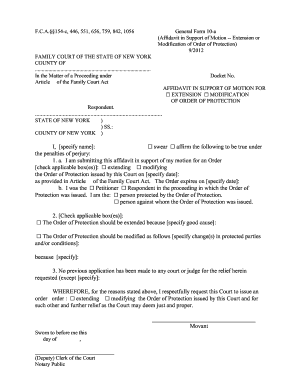

by H Quintana 2007 Cited by 85 Rating scales readily classified inattentive, impulsive, and/or hyperactive symptoms as being due to ADHD, leading to a sensitivity of 81% and
ADHD Rating Scale Initial for Parent; Call the Clinics: 504-988-5000 or 1-800-588-5800


