




01. Edit your form online
Type text, add images, blackout confidential details, add comments, highlights and more.

Type text, add images, blackout confidential details, add comments, highlights and more.

Draw your signature, type it, upload its image, or use your mobile device as a signature pad.

Send it via email, link, or fax. You can also download it, export it or print it out.
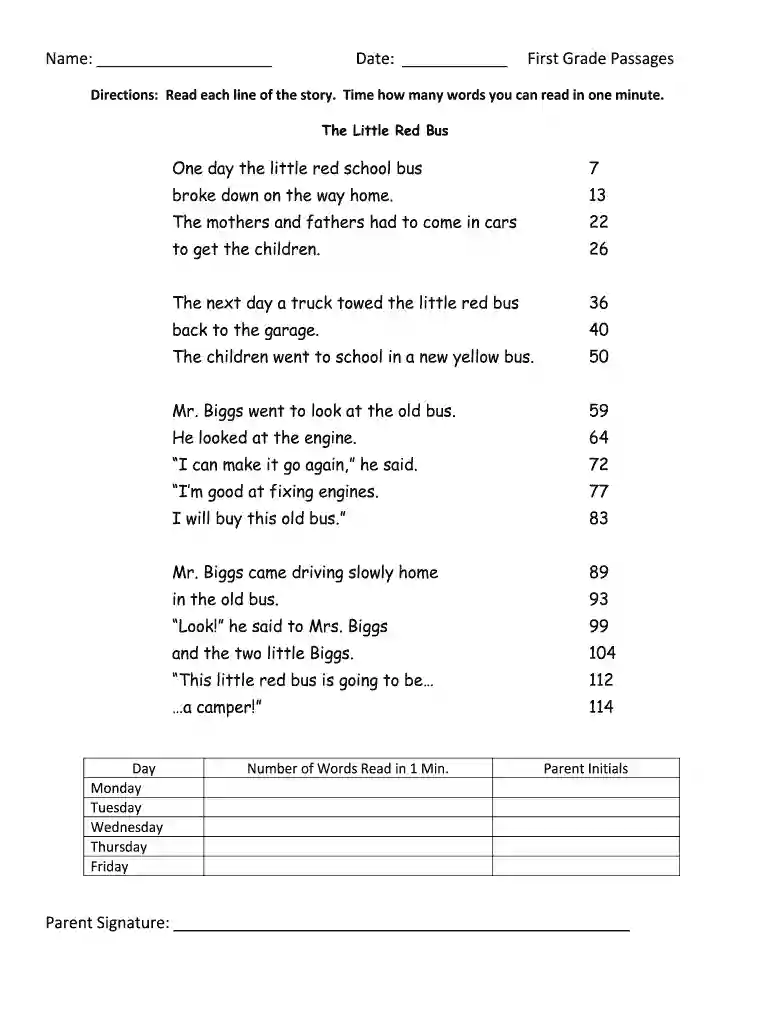
The "Directions Read each line of the story Time how many" refers to a technique commonly used to evaluate and enhance reading fluency in young children, particularly those in early elementary school grades, like first grade. This approach involves asking the child to read lines from a story while timing their reading speed. The primary goal is to measure how many words they can read correctly in a minute, providing a quantitative assessment of their reading ability. This structured method helps educators and parents identify reading strengths and areas needing improvement.
To effectively use this reading fluency exercise, follow these steps:
Select a Suitable Story: Choose a story appropriate for the child's reading level, ensuring it includes diverse vocabulary and varying sentence structures.
Position and Timing: Have the child sit comfortably with the story in front of them. Start a timer as soon as they begin reading the first line.
Listening and Observing: Pay close attention as the child reads aloud. Note any words they struggle with or mispronounce.
Word Count and Accuracy: At the end of one minute, count the total number of words read. Subtract any words that were skipped or read incorrectly.
Feedback and Encouragement: Provide constructive feedback to the child, emphasizing their strengths and areas for improvement.
This exercise supports continuous improvement by encouraging regular practice and monitoring progress over time.
Completing this reading fluency exercise involves several crucial steps, each designed to ensure an accurate and beneficial assessment:
Preparation:
Initiating the Exercise:
Conducting the Timed Reading:
Calculating Results:
Reviewing Results:
Utilizing this reading approach provides several key benefits, particularly for young learners:
Using this method establishes a solid foundation for advancing reading skills.
This exercise comprises several important components:
These elements work together to create a comprehensive reading assessment tool.
This reading exercise can be applied in various contexts:
By adapting the approach to different scenarios, educators can maximize its effectiveness.
This technique is predominantly used by:
By engaging with this strategy, these groups foster literacy development in young readers.


Understanding certain terms can enhance the effectiveness of this exercise:
Familiarity with these terms enriches the reading assessment experience.
At DocHub, your data security is our priority. We follow HIPAA, SOC2, GDPR, and other standards, so you can work on your documents with confidence.

The things in the game which the player will be interacting with or using very often need to be perfect. They need to be seamless, clear, intuitive,Read more
600 11th Street Wichita Falls, TX 76301 United States Get Directions Hours: Monday - Wednesday 9am - 8pm


