Definition & Purpose of Optum Health Forms For Authorization
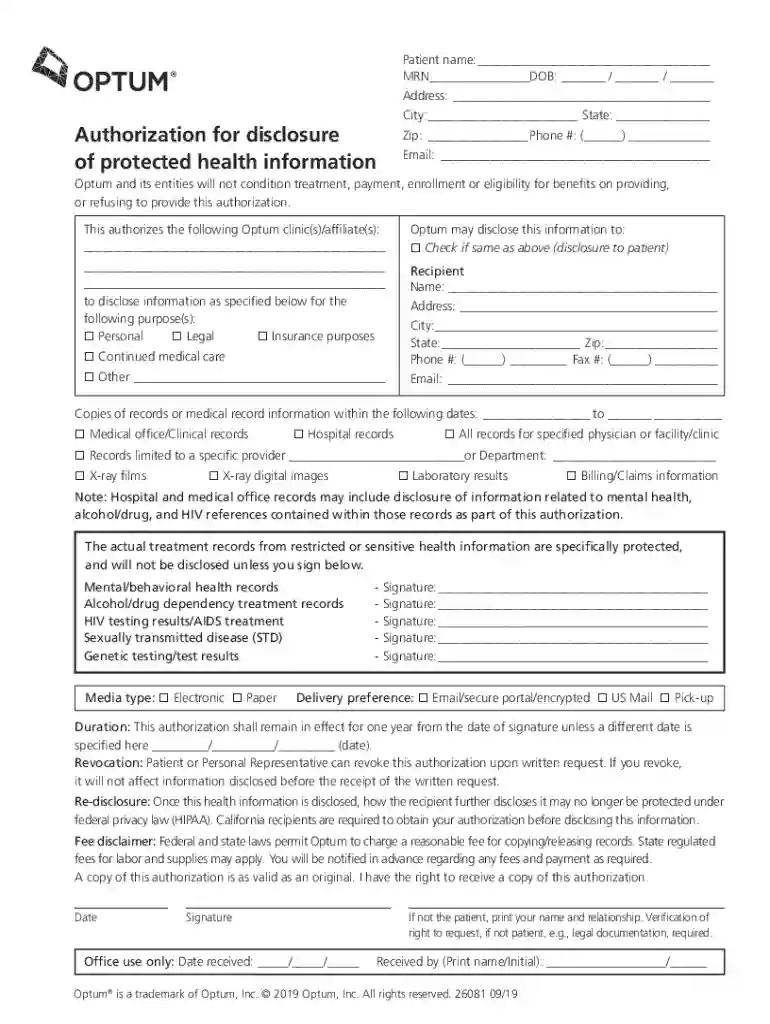
The Optum Health Forms for Authorization serve a pivotal role in managing health information. These forms permit the release of protected health information (PHI) by Optum and its affiliates. The purpose is to obtain a patient's consent for accessing their medical records for various reasons, such as personal, legal, or insurance matters. It ensures compliance with laws, including the Health Insurance Portability and Accountability Act (HIPAA), by protecting sensitive health data and outlining who can access it.
Types of Requests Covered
- Personal Access: Patients seeking information for personal records.
- Legal Purposes: Records used for legal proceedings or consultations.
- Insurance Claims: Records needed to process insurance claims or disputes.
Elements of Consent
- Patient Information: Details like name, address, and contact.
- Recipient Details: Who will receive the information.
- Specific Records: Types of medical records being authorized for release.
- Duration: How long the authorization is valid before it expires.
How to Use the Optum Health Forms For Authorization
The form leverages a streamlined process designed to simplify the authorization of medical record disclosures.
Step-by-Step Instructions
- Obtain the Form: Request the form from Optum’s official website or contact their customer service.
- Fill Out Patient Information: Add personal details accurately.
- Specify Recipient Details: Indicate who will receive the information.
- Detail the Records Needed: Clearly mark the types of records to be disclosed.
- State Authorization Duration: Specify the period for which the authorization remains effective.
- Sign the Form: Provide a signature to validate the form.
Special Considerations
- Sensitive Information: Certain health details may require additional consent.
- Additional Signatures: Some circumstances might necessitate more than one signature, especially for minors or those with legal guardians.
Why You Should Use Optum Health Forms For Authorization
Utilizing the Optum Health Forms provides a legal pathway for accessing medical records while ensuring compliance and security.
Key Benefits
- Legal Compliance: Adheres to privacy laws and regulations like HIPAA.
- Streamlined Process: Simplifies requests for medical record releases.
- Security Assurance: Protects against unauthorized access to sensitive data.
Practical Scenarios
- Insurance Processing: Expedites claims by providing necessary documentation.
- Personal Health Management: Enables patients to manage and review their medical history.
Key Elements of the Optum Health Forms For Authorization
Understanding the crucial components of the form ensures its proper use and acceptance.
Essential Sections
- Authorization Consent: Clearly outlines the consent for record release.
- Record Specification: Details the exact records being authorized for disclosure.
- Owner Signature: Validates the authorization with a patient or legal guardian signature.
- Form Expiration: Indicates when the form's authority ends.
Verification Requirements
- Identification Proof: May be required for identity verification.
- Additional Documentation: For cases involving third-party representation or complex medical records.
Legal Use of Optum Health Forms For Authorization
Legal framework ensures the authorization is valid and enforceable.
Compliance with Health Laws
- HIPAA: Maintains patient privacy and controls over disclosures.
- State Laws: Adheres to specific state regulations regarding PHI.
Rights & Revocation
- Revocation Rights: Patients can withdraw authorization at any time in writing.
- Limitations: Specifies any limitations on the usage of provided health information.
Steps to Complete the Optum Health Forms For Authorization
Completing the form accurately is essential for its acceptance.
Detailed Completion Process
- Prepare Necessary Information: Gather all needed details before you begin.
- Follow the Instructions: Adhere to the provided guidelines, ensuring each section is filled.
- Review for Accuracy: Validate all information to prevent errors.
- Submit the Form: Forward the completed form to Optum through specified channels.
Common Errors to Avoid
- Incomplete Information: Ensure all required fields are filled.
- Incorrect Data: Double-check personal and medical details.
- Missing Signatures: Verify that all required signatures are present.
Typical Users
- Patients: For personal access to medical records.
- Healthcare Providers: To coordinate care between providers.
- Insurance Representatives: For claim processing or validation purposes.
Business Applications
- Hospitals: For inter-departmental information exchange.
- Legal Firms: Aiding in legal cases requiring medical evidence.