
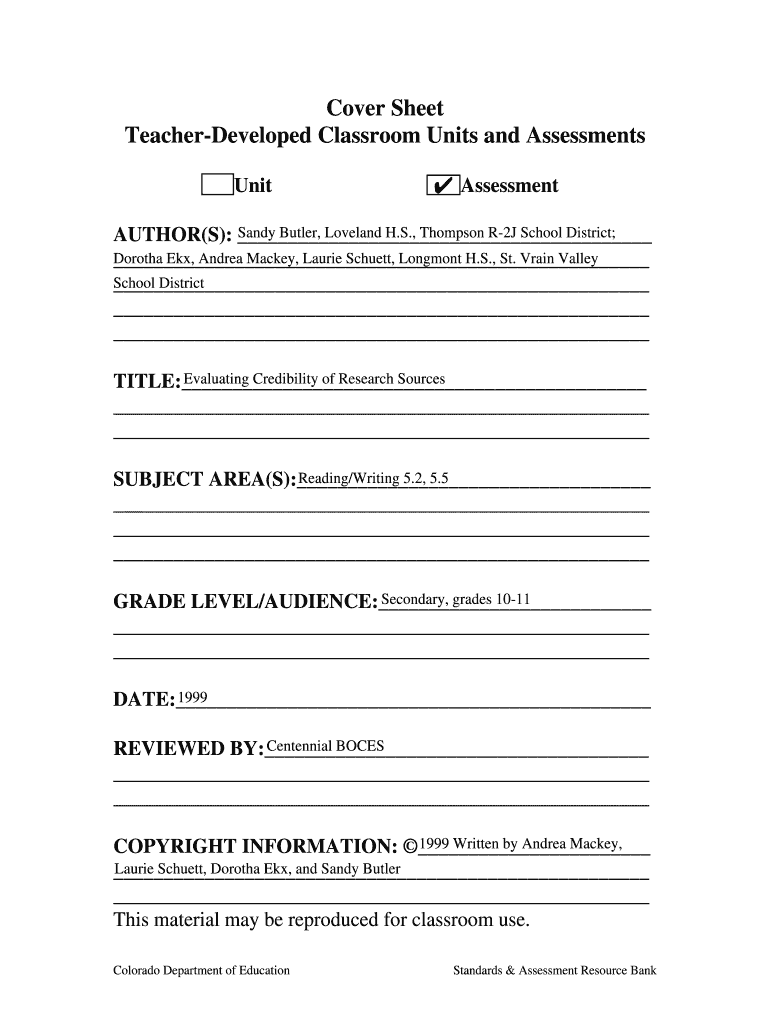







Understanding the Evaluating Credibility of Research Sources Curriculum
The "Evaluating Credibility of Research Sources curriculum" is an educational guide designed for high school teachers and students, particularly those in grades ten and eleven. This curriculum is aimed at teaching students how to assess the credibility of various research sources, which includes print, electronic, and verbal materials. Through this curriculum, students learn to distinguish fact from opinion, identify biases, and apply MLA formatting in their research work. An annotated bibliography is an essential part of the curriculum, reinforcing the importance of critically evaluating sources.
How to Use the Curriculum Effectively
Implementing the "Evaluating Credibility of Research Sources curriculum" involves several steps to ensure students gain maximum benefit. Teachers are encouraged to follow the structured six-day assessment plan included in the curriculum. Key instructional strategies include interactive lessons, group discussions, and practical exercises that allow students to practice evaluating sources. Teachers should guide students in developing annotated bibliographies and using the provided scoring rubric to self-assess their work. The curriculum's focus on hands-on learning and critical thinking fosters an engaging classroom environment.
Obtaining the Curriculum
Schools and educators looking to implement the "Evaluating Credibility of Research Sources curriculum" can typically find the curriculum through educational resource platforms and publisher websites. Certain school districts may have direct access to purchase or download the curriculum through institutional subscriptions. It is essential to ensure that the curriculum meets both educational standards and the learning needs of students before obtaining it.
Key Elements of the Curriculum
The "Evaluating Credibility of Research Sources curriculum" includes several essential components designed to facilitate learning:
- Detailed Teacher Instructions: Guidelines on how to present lessons and facilitate student understanding.
- Student Learning Objectives: Clear targets for what students should achieve, such as identifying bias or distinguishing between fact and opinion.
- Annotated Bibliography Requirements: Students learn to create annotations that describe and evaluate each source.
- Lessons on Source Types: Coverage of various source mediums to expand students' exposure.
Steps to Complete the Curriculum
- Introduction to Source Evaluation: Teachers introduce the concept of source evaluation and its importance in research.
- Distinguishing Fact from Opinion: Students partake in lessons designed to help discern factual information from opinionated content.
- Identifying Bias: Through practical examples, students learn how to spot bias in different types of sources.
- Annotated Bibliography Creation: Guided activities help students draft annotated bibliographies, focusing on clarity and thoroughness.
- Scoring Rubric Application: Students apply a rubric to evaluate their work and understand grading criteria.
Who Typically Uses the Curriculum
The primary users of the "Evaluating Credibility of Research Sources curriculum" are high school teachers and students, typically in grades ten and eleven. The curriculum is suitable for educational settings looking to enhance students' research skills, particularly within English and social studies classes. Educators focused on improving critical thinking and analytical skills in their students will find this curriculum highly beneficial.


Important Terms Related to the Curriculum
Understanding specific terminology is crucial for effectively utilizing the curriculum:
- Bias: The tendency to present information in a partial manner.
- Fact: Information that can be verified and is backed by evidence.
- Opinion: A personal belief or judgment that is not grounded in evidence.
- Annotated Bibliography: A list of citations followed by a brief evaluative description.
Practical Examples of Curriculum Use
To illustrate the curriculum in action, consider a classroom scenario where students are tasked with researching climate change. They examine articles from various sources, such as scientific journals and opinion pieces, and evaluate the credibility of each. The curriculum guides them in creating annotated bibliographies and participating in group discussions to reflect on their findings. Students assess their peers using the provided rubric, fostering a collaborative learning atmosphere.
Legal Use of the Curriculum
The "Evaluating Credibility of Research Sources curriculum" should be used in accordance with copyright laws, particularly when reproduced for educational purposes. Educators should ensure they are authorized to distribute materials in their classrooms. Schools or educators wishing to modify the curriculum for specific needs must comply with any licensing agreements.
Digital vs. Paper Versions of the Curriculum
Educators have the option to use either digital or paper versions of the "Evaluating Credibility of Research Sources curriculum." Digital versions may facilitate easier access and sharing among students via learning management systems, while paper versions may be preferred for traditional classroom settings without digital infrastructure. The choice depends on institutional resources and preferences.




