






Definition and Purpose of Form 6251
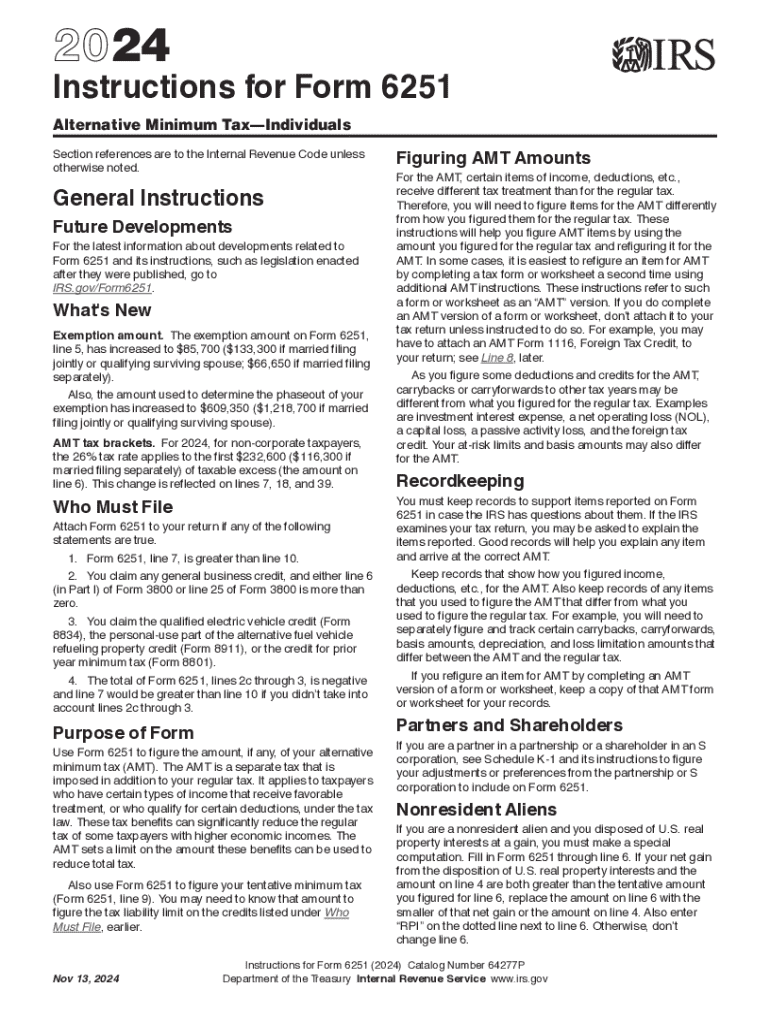
Form 6251, also known as the "Alternative Minimum Tax-Individuals," is primarily used by individuals to determine if they are subject to the Alternative Minimum Tax (AMT). The AMT is a parallel tax system aimed at ensuring that taxpayers with higher incomes pay a minimum amount of tax by recapturing certain benefits available under regular tax calculations. This form calculates the taxable income under AMT rules and compares it to the regular tax computed on Form 1040. If the AMT is higher, the taxpayer pays the AMT amount.
How to Obtain Form 6251
To acquire Form 6251, individuals can download it directly from the Internal Revenue Service (IRS) website. The website provides a PDF version of the form that can be printed or filled out digitally. Taxpayers can also access the form through tax preparation software such as TurboTax and QuickBooks, which integrate the form into their e-filing systems, making it easier for users to complete and submit alongside their tax returns.
Steps to Complete Form 6251
-
Calculate Alternative Minimum Taxable Income (AMTI):
- Begin with regular taxable income from Form 1040.
- Add back specific deductions and adjustments not allowed under AMT rules, including certain itemized deductions and personal exemptions.
-
Determine AMT Exemption Amount:
- Depending on filing status and income, calculate the exemption amount, which is phased out at higher income levels.
-
Compute Tentative Minimum Tax (TMT):
- Apply AMT rates to the AMT income after subtracting the exemption to calculate the tentative minimum tax.
-
Compare Taxes:
- Compare the tentative minimum tax with regular tax liability. If TMT exceeds the regular tax, the difference is the AMT owed.
Importance of Filing Form 6251
Filing Form 6251 is crucial for taxpayers as it ensures compliance with federal tax laws concerning AMT. The form helps identify whether an individual needs to pay additional taxes due to the AMT system, potentially affecting taxpayers with specific income levels, particularly those with high deductions, credits, or certain types of income. Not adhering to AMT regulations can lead to penalties and increased scrutiny from the IRS.
Who Typically Uses Form 6251?
Form 6251 is generally used by individual taxpayers whose income and tax situation are subject to AMT scrutiny. This includes individuals with significant income from stock options, high itemized deductions, multiple dependent exemptions, or those who have utilized tax shelters. It is also relevant for taxpayers engaged in activities producing tax preference items, like accelerated depreciation.
Key Elements of Form 6251
- AMT Adjustments: The form requires taxpayers to adjust their income for things like passive activity losses, net operating losses, and certain credits.
- Tax Preference Items: Items such as accelerated depreciation on property and tax-exempt interest from private activity bonds are included as preferences.
- Exemptions and Rates: Determining the available exemption, which decreases as income rises, and applying the appropriate AMT rates are critical components.
IRS Guidelines for Form 6251
The IRS provides guidance on completing Form 6251 through its instructions document, detailing eligibility, required adjustments, and specific tax preference items. The IRS also outlines potential changes in the exemption amounts and income thresholds annually. Official IRS publications must be reviewed to stay informed of any updates affecting how the form is filed.
Filing Deadlines and Important Dates
Form 6251 must be filed in conjunction with the regular tax return by the typical tax deadline, usually April 15. If the deadline is missed, taxpayers may face penalties and interest on unpaid taxes. Extensions are available, but taxpayers must still estimate and pay any AMT liability by the original due date to avoid fines.
Penalties for Non-Compliance with AMT Filing
Failing to file Form 6251 when required or underreporting AMT liability can lead to penalties, such as a failure-to-file penalty starting at 5% of the unpaid tax per month. Interest accrues on unpaid taxes from the original due date of the return. It's essential for taxpayers to correctly calculate and report AMT to avoid these repercussions.