
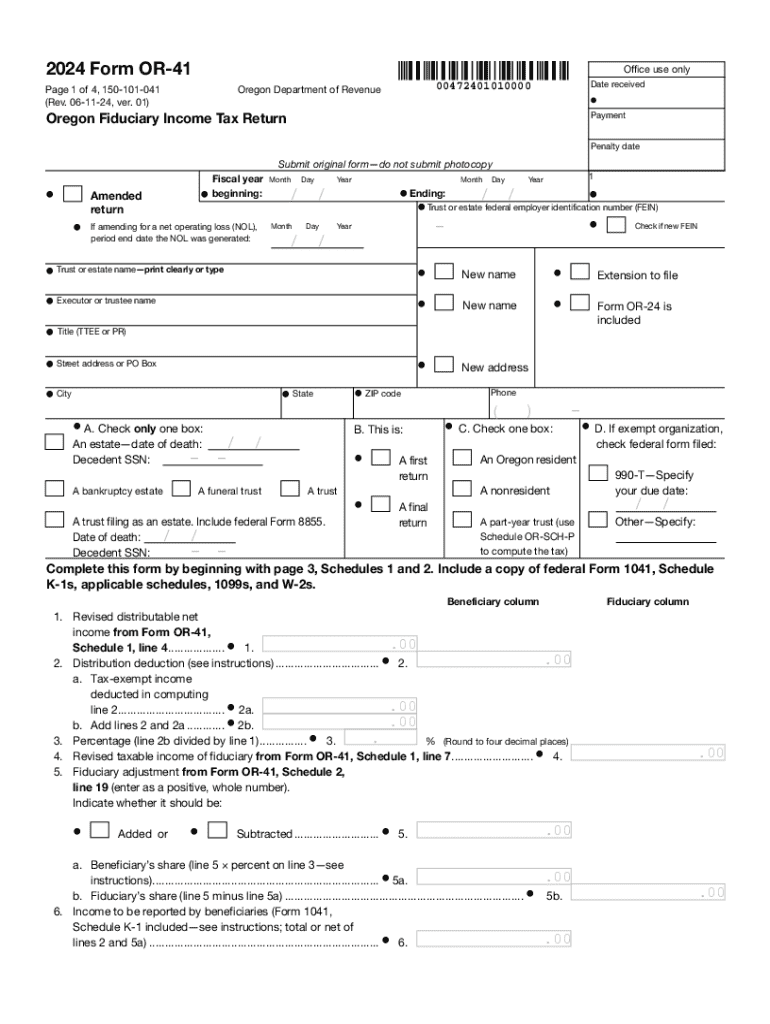







Definition and Purpose of the 2024 Form OR-41
The 2024 Form OR-41, Oregon Fiduciary Income Tax Return, serves as a crucial document for estates and trusts to report their income, calculate tax obligations, and determine any refunds due. It's specifically tailored to manage the fiduciary responsibilities in Oregon and is designed to capture detailed financial data about these entities. This form includes sections where information about beneficiaries and fiduciaries is required, along with any adjustments needed for accurate tax computation.
- Purpose: To capture and report fiduciary financial activities in Oregon.
- Entities: Used by estates and trusts for tax reporting.
- Data Collected: Income, distributions, adjustments, and taxes.
Key Features of the Form
- Identification Sections: Capture essential details about the estate or trust, such as the name, address, and federal employer identification number (FEIN).
- Income Reporting: Comprehensive sections for detailing incomes from various sources.
- Tax Calculation: Areas to compute taxable income and potential refunds.
Completing the 2024 Form OR-41
Completing the 2024 Form OR-41 requires meticulous attention to detail as it involves various sections intended for different financial specifics. Here's a guide to help navigate this complex form:
-
Identify the Estate or Trust: Begin by providing the name, address, and FEIN.
-
Income Sections: Accurately report income from dividends, interest, and other sources. This involves itemizing each income source as per the provided instructions.
-
Beneficiary Details: List all beneficiaries and their respective income distributions.
-
Tax Computation: Use the tax tables to calculate the owed taxes or refunds.
Tips for Accuracy
- Double-Check Numbers: Verify all figures to prevent errors.
- Review Instructions: Follow the official guidelines closely.
Obtaining the 2024 Form OR-41
Gaining access to the 2024 Form OR-41 is essential for timely filing. There are several ways to obtain this form:
- State Revenue Website: Download the form directly from the Oregon Department of Revenue's official site.
- Tax Software: Use compatible tax preparation software that includes form downloads.
Alternative Sources
- Local Libraries: Some libraries provide tax forms.
- Post Office: Limited availability in post offices during tax season.
Usage Scenarios for the 2024 Form OR-41
Understanding who typically uses the 2024 Form OR-41 can contextualize its importance:
- Fiduciaries: Individuals or entities managing an estate or trust's financial affairs.
- Trustees: Responsible for reporting the income and tax obligations of the trust.
Practical Examples
- Executor of an Estate: Uses the form to report the estate's earnings and distributions.
- Trust Administrator: Files on behalf of a trust to comply with state tax laws.
Important Terms and Concepts
Gaining familiarity with key terms related to the 2024 Form OR-41 can enhance comprehension and ease of use:
- Fiduciary: A person or organization that acts on behalf of another's financial interests.
- Taxable Income: The income subject to tax after deductions and exemptions.
Additional Definitions
- Beneficiary: Individuals or organizations entitled to the estate's income distributions.
- Distribution: Payment or income made to beneficiaries from the trust or estate.
Oregon-Specific Regulations
Oregon imposes particular rules for completing the 2024 Form OR-41, distinguishing it from other states:
- State Tax Rates: Oregon's unique tax brackets for estates and trusts.
- Local Adjustments: Specific state deductions or credits available.
Compliance Tips
- State Guidelines: Always refer to the latest state-provided materials.
- Advisor Consultation: Consider consulting a tax professional for state-specific compliance.
IRS Guidelines and Compliance
The IRS provides overarching guidelines that apply to the 2024 Form OR-41:
- Fiduciary Responsibilities: Defined obligations for managing and reporting trust income.
- Filing Compliance: Ensures conformity with federal regulations.
Important Considerations
- Federal Deadlines: Aligning state filing dates with federal requirements.
- Penalty Avoidance: Prevention of late-filing penalties through timely submission.
Filing Deadlines and Important Dates
Keeping track of deadlines is critical for fiduciary tax reporting:
- State Deadline: Generally aligned with federal deadlines but confirmed each tax year.
Late Filing Consequences
- Penalties: Late filing results in potential financial penalties.
- Interest Charges: Accumulated on amounts due past the deadline.




