






Definition and Meaning of the TAX-F005 Resale Certificate
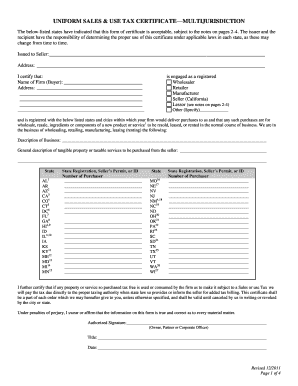
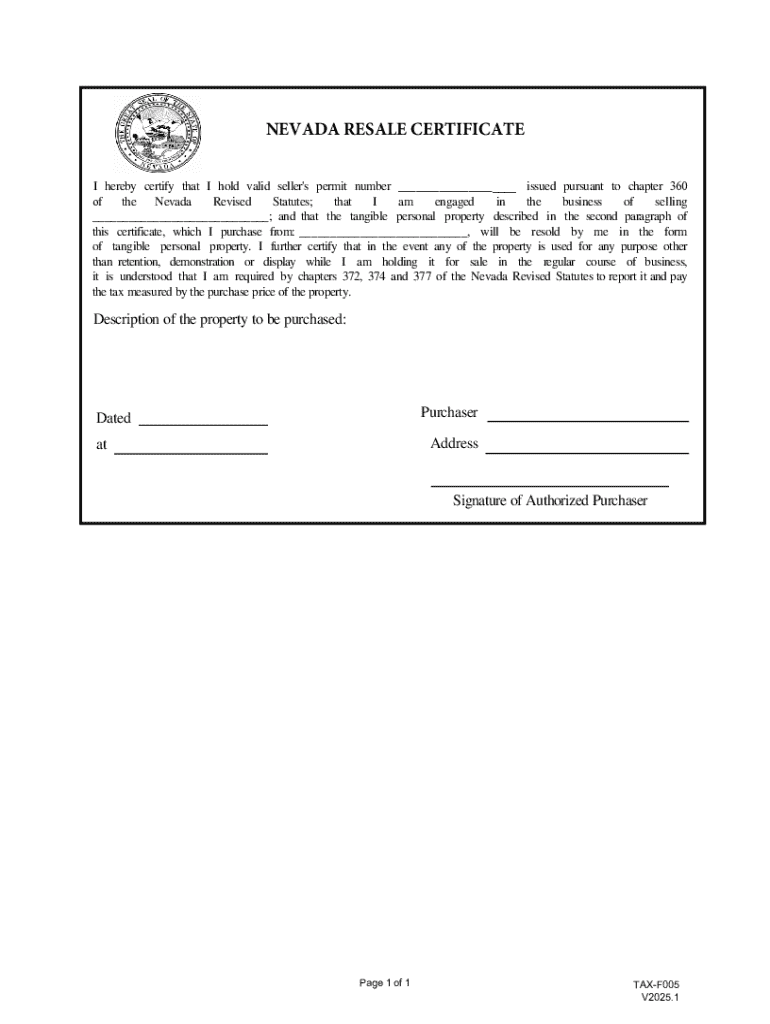
The TAX-F005 Resale Certificate is a document used primarily by retailers and wholesalers to purchase goods intended for resale without paying sales tax. By presenting this certificate, businesses certify that they hold a valid seller's permit and are engaged in selling tangible personal property. It is crucial in states like Nevada, where businesses need to document tax-free purchases to comply with sales tax regulations. The resale certificate is not a blanket exemption but rather a form of deferred taxation until the item is sold to the end consumer.
How to Use the TAX-F005 Resale Certificate
Businesses can use the TAX-F005 Resale Certificate during transactions where they purchase goods for resale. The process generally involves providing a copy of this certificate to the supplier at the time of purchase. By doing so, the transaction is exempt from sales tax, as the expectation is that the tax will be collected from the final consumer. It is essential for businesses to keep a record of transactions including these certificates to ensure compliance and verification during audits. Retailers and wholesalers should use it efficiently to maximize financial and logistical benefits.
Steps to Complete the TAX-F005 Resale Certificate
- Obtain the Form: Acquire the TAX-F005 Resale Certificate form from the relevant state department's website or office.
- Identify Business Information: Fill in the legal business name, address, and seller's permit number. Ensure all information matches official business records.
- Describe Business Activity: Clearly state the nature of your business and the type of goods for resale. This helps in validating the certificate's applicability.
- List Purchased Goods: Specify the types of goods you intend to purchase for resale. This can include a general category or specific items provided by the supplier.
- Sign and Date: Complete the certification by signing and dating the form. The signature confirms the intent to resell the items and acknowledges the legal responsibility to pay applicable taxes when these goods are sold to consumers.
Eligibility Criteria for the TAX-F005 Resale Certificate
Businesses must meet specific criteria to be eligible for a TAX-F005 Resale Certificate. Primarily, they must hold a valid seller's permit and be engaged in a business that involves selling tangible personal property. The business should demonstrate clear evidence of resale activity and maintain accurate records. Eligibility is assessed based on proper state registration and the ongoing nature of resale operations. Without meeting the qualifying conditions, businesses might not be entitled to utilize this certificate.


Legal Use of the TAX-F005 Resale Certificate
The legal framework surrounding the TAX-F005 Resale Certificate is designed to facilitate tax compliance and prevent misuse. The certificate is strictly for purchasing inventory for resale and not for items used in the business. Misusing the certificate, such as using it to buy goods for personal use or business use other than resale, can lead to penalties, interest on unpaid taxes, and potential revocation of the seller's permit. Businesses must ensure accurate issuance and usage records, as these could be reviewed in case of state tax audits.
Key Elements of the TAX-F005 Resale Certificate
- Valid Seller's Permit: A prerequisite for applying and utilizing a resale certificate is holding an active seller's permit.
- Intended Use: Clearly defines that goods purchased must be for resale.
- Recordkeeping Requirements: Businesses must maintain thorough documentation to substantiate all tax-exempt purchases for resale.
- Supplier Acceptance: Suppliers must accept the certificate as part of the transaction documentation for the purchase to qualify as tax-exempt.
State-Specific Rules for the TAX-F005 Resale Certificate
Nevada and other states may have unique requirements and rules applicable to the TAX-F005 Resale Certificate. While the general principles of usage remain consistent, details such as expiration dates, audit frequencies, and reporting requirements might vary. Businesses must familiarize themselves with state-specific guidelines to ensure compliance. State tax departments often provide specific guidance on how to accurately fill out and submit these forms.
Penalties for Non-Compliance with the TAX-F005 Resale Certificate
Non-compliance can result in significant financial and operational penalties. These may include fines for each misused or improperly documented resale certificate, payment of back taxes with interest, and punitive measures such as suspension of the seller's permit. Consistent violations could also lead to criminal charges depending on the severity and intention of the infraction. To mitigate risks, businesses must adhere strictly to compliance guidelines and maintain accurate transaction records.