Definition and Purpose of Form MI-2210
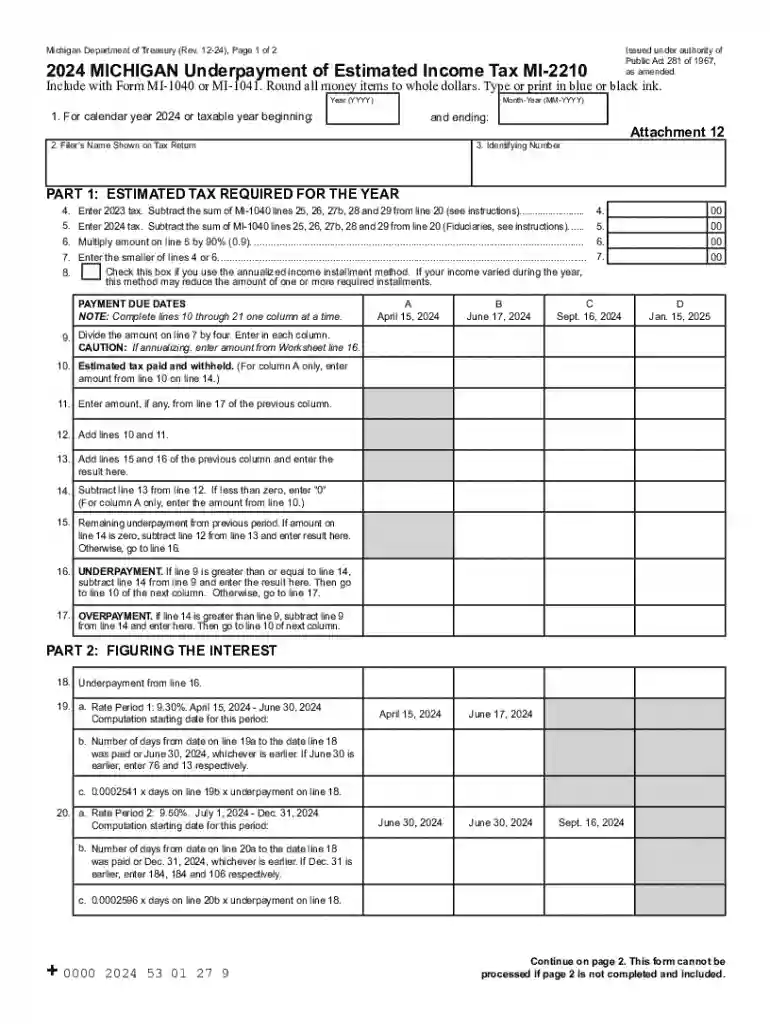
Form MI-2210 is the 2024 Michigan Underpayment of Estimated Income Tax form. It is primarily used to calculate the penalties and interest for taxpayers who have not made sufficient estimated tax payments throughout the year. The form guides individuals and fiduciary filers through determining their estimated tax requirements, payment deadlines, and the calculation of any underpayment or overpayment.
Key Elements of the Form
- Estimated Tax Requirements: The form outlines how to determine the required estimated tax payments during the fiscal year.
- Calculation of Penalties and Interest: Includes guidelines for computing penalties and interest related to underpayment or late payments.
- Annualizing Income Worksheet: Provides a worksheet for annualizing income, which is crucial for those with irregular earnings throughout the year.
Steps to Complete the MI-2210 Form
The process of filling out the MI-2210 form involves several detailed steps to ensure accurate calculation and compliance.
- Determine Taxable Income: Start by figuring out total taxable income, which forms the basis for estimated tax payments.
- Calculate Estimated Payments: Determine the amount of tax to be paid quarterly based on estimated annual income.
- Record Actual Payments Made: Document all estimated payments already made at each due date.
- Compute Underpayment: Subtract the total estimated payments made from the required estimated payments to find any underpayments.
- Apply Penalties and Interest: Follow instructions on calculating any applicable penalties and interest for the underpayment periods.
Important Terms Related to MI-2210
Understanding terminology is critical when completing the form.
- Estimated Tax Payments: Payments made based on the anticipation of annual tax liability.
- Underpayment: Occurs when the estimated tax payments are less than the required amount.
- Interest: Additional money owed on late or insufficient payments.
- Penalty: Fees imposed for underpayment of taxes.
- Annualizing Income: Method to project a taxpayer’s annual earnings based on partial-year data.
Legal Use and Compliance
Using the MI-2210 form is crucial for legal compliance with Michigan tax laws, preventing penalties.
- Legal Obligation: Ensures taxpayers meet their state tax responsibilities and avoid non-compliance penalties.
- Recordkeeping Requirements: Maintaining accurate and complete records to support entries on the form is legally advisable.
- Adjustments and Amendments: Understand how and when to make changes to the reported estimates or payments, if necessary.
State-Specific Rules for Michigan
Michigan has specific rules governing the use of the MI-2210 form.
- Michigan Tax Laws: The form adheres to state-specific guidelines, which might differ from federal standards.
- Special Rules for Certain Taxpayers: Includes provisions for taxpayers with uneven income, such as farmers, fishermen, and seafarers.
- Income Thresholds: Particular income thresholds determine who must file the MI-2210 and estimate taxes.
Filing Deadlines and Important Dates
Staying aware of important deadlines ensures compliance and avoids penalties.
- Quarterly Due Dates: Estimated tax payments are typically due in April, June, September, and January of the following year.
- Filing the MI-2210: Generally aligned with the Michigan state tax return deadline, which is usually around April 15.
Form Submission Methods
Taxpayers have multiple options to submit the MI-2210 form.
- Online Submission: Many choose electronic filing for ease and speed.
- Mail: Provides a tangible record of filing but may take longer to process.
- In-Person: Less common but available for those who prefer a direct approach.
These content blocks provide a comprehensive guide to understanding, using, and filing the MI-2210 form effectively, offering critical insights into legal compliance and practical tax management strategies.