




01. Edit your maine form 941p me online
Type text, add images, blackout confidential details, add comments, highlights and more.

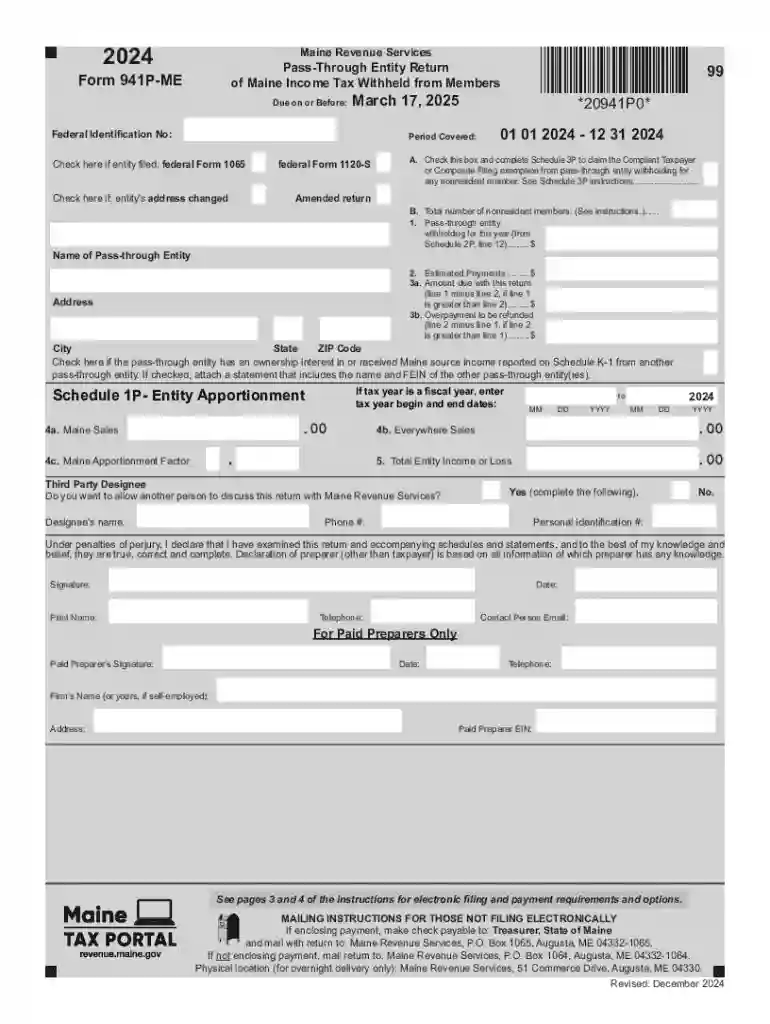
Type text, add images, blackout confidential details, add comments, highlights and more.

Draw your signature, type it, upload its image, or use your mobile device as a signature pad.

Send it via email, link, or fax. You can also download it, export it or print it out.
Federal Form 1065, known as the U.S. Return of Partnership Income, serves partnerships in the United States. Partnerships use this form to report their annual financial activities, such as income, deductions, and credits. Filing Form 1065 ensures compliance with IRS regulations regarding pass-through entities, where profits and losses are transferred to individual partners.
Partnerships do not pay income tax at the entity level. Instead, they must distribute any incurred tax obligations to their partners. Federal Form 1065 includes crucial information, such as the business's name, address, and information about the partners, detailing each partner's share of income, losses, and credits.
Collect Necessary Information: Gather details about the partnership, including legal name, address, and employer identification number (EIN). Also, prepare information about each partner, including their capital accounts and percentage of ownership.
Report Income: List all sources of income, which might include sales revenue, services provided, or contractors’ fees. Each income stream should be thoroughly documented.
Calculate Deductions and Expenses: Include all permissible deductions, such as rent, salaries, utilities, and taxes paid. Deductions must be itemized and justifiable.
Distribution to Partners: Allocate income, deductions, and credits based on each partner's ownership percentage. Attach Schedule K-1 for each partner, specifying their pro-rata share of income and expenses.
Completion and Review: Double-check entries for accuracy and complete the form with totals for income, deductions, and any resulting net profit or loss.
Checking whether an entity has filed Federal Form 1065 is crucial for ensuring compliance with federal tax laws. The form serves an important purpose by separating partnership income from individual liabilities, ensuring transparent tax handling for all partners involved. Verifying the filing status can reveal potential oversights in tax obligations, exposing entities to penalties if not resolved.
Unfiled or improperly filed Forms 1065 can lead to financial inaccuracies, resulting in IRS scrutiny. Partnerships can avoid potential legal consequences by ensuring timely and correct filing.
Partnerships are the primary users of Federal Form 1065. This includes two or more people who decide to start a business venture together, sharing its profits and losses. Typical partnerships might be professional services firms, real estate ventures, or small to midsized businesses. Additionally, limited liability companies (LLCs) with two or more members often file as partnerships.
Such businesses rely on Form 1065 to document their financial activities for tax purposes, making it an integral part of their annual tax cycle. Each partner uses the information from Form 1065 to complete their individual tax returns with accurate income data.


These terms highlight the complexities and responsibilities involved in preparing and filing the form accurately.
The IRS provides specific guidelines for completing and filing Form 1065. These guidelines include instructions for calculating self-employment taxes, determining deduction eligibility, and understanding what constitutes taxable versus non-taxable income. IRS guidelines also address proper methods for distributing income among partners and provide detail on how to handle special situations, like the addition or departure of partners.
Following these guidelines ensures accurate reporting and reduces the risk of penalties. Partnerships must consult the IRS guidelines to ensure their submission complies with existing tax laws.
Federal Form 1065 is due on the fifteenth day of the third month following the end of the partnership’s fiscal year. For those following a calendar year, the form is usually due by March 15. Partnerships requesting an extension must file Form 7004 to receive an additional extension, typically extending the due date by six months.
Timely filing is vital as delays can result in penalties and interest on any unpaid taxes. Partnerships should mark their calendars and ensure all information is gathered well before the due date.
Failure to file Form 1065 or submit it accurately can result in penalties. As of recent years, the penalty for not filing is calculated per partner, multiplied by the number of months late, up to a maximum amount. This can accumulate quickly, stressing the importance of filing on time and with precision.
Additionally, incorrect reporting can lead to audits or adjustments, potentially increasing tax liabilities. Partnerships are encouraged to seek professional advice to mitigate these risks and ensure compliance with federal tax obligations.
We've got more versions of the maine form 941p me form. Select the right maine form 941p me version from the list and start editing it straight away!
| Versions | Form popularity | Fillable & printable |
|---|---|---|
| 2025 | 4.8 Satisfied (50 Votes) | |
| 2024 | 4.7 Satisfied (53 Votes) | |
| 2023 | 4.5 Satisfied (34 Votes) | |
| 2022 | 4.6 Satisfied (31 Votes) | |
| 2021 | 4.8 Satisfied (154 Votes) | |
| 2020 | 4.3 Satisfied (172 Votes) | |
| 2019 | 4.4 Satisfied (131 Votes) | |
| 2018 | 4.3 Satisfied (94 Votes) | |
| 2017 | 4.3 Satisfied (105 Votes) | |
| 2016 | 4.2 Satisfied (49 Votes) |
At DocHub, your data security is our priority. We follow HIPAA, SOC2, GDPR, and other standards, so you can work on your documents with confidence.
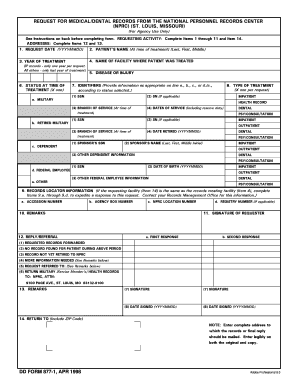





1065 Sometimes referred to as a partnership return, if your parents have ownership in a Business Partnership, they will have filed this form with the IRS.
If the organization is a corporation and is the common parent of a group that intends to file a consolidated return, check here If checked, attach a statement,
Successful production welding begins long before the first spark. Learn how better planning, communication, and welder development can lead to improvement.Read more


