






Definition & Purpose of Form NJ-2210
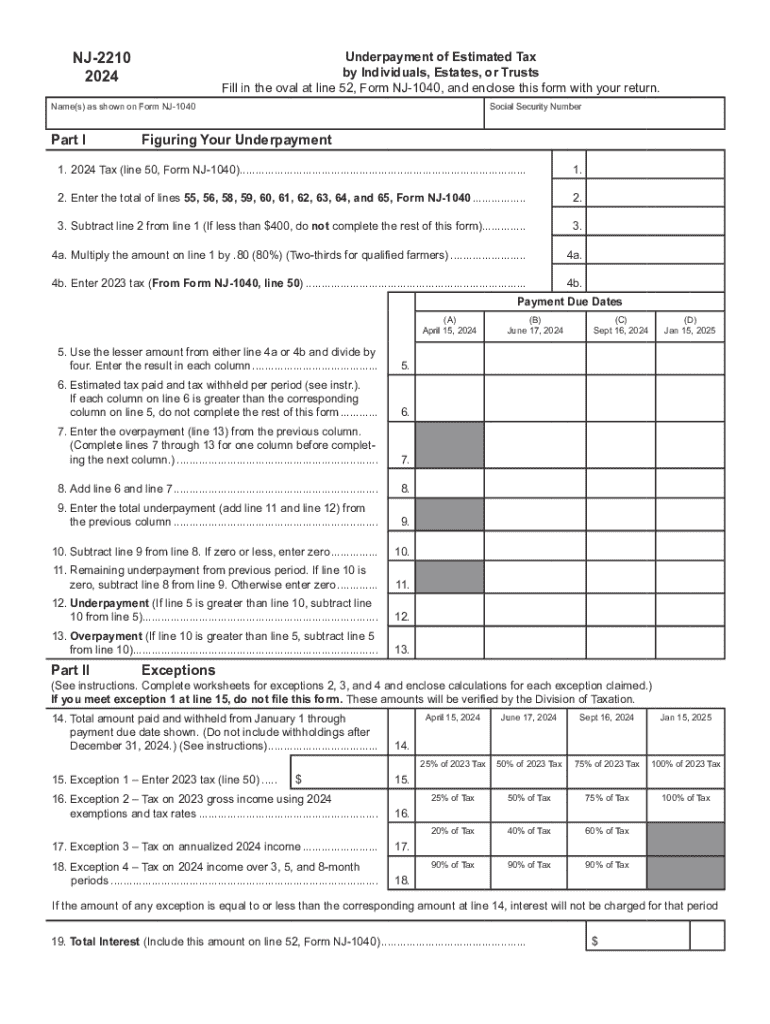
Form NJ-2210 is specifically designed for individuals, estates, and trusts in New Jersey to determine if they have underpaid their estimated state taxes for 2024. The form is crucial as it outlines the process and calculations necessary to establish whether any interest is due on underpaid taxes.
- Applicability: This form applies to taxpayers who make periodic estimated tax payments throughout the year but ultimately find that their payments fall short of the required amount.
- Objective: The primary goal of the form is to ensure taxpayers calculate potential underpayments accurately and determine any associated interest to be paid to the state.
Importance of Accurate Calculations
Accurate completion of Form NJ-2210 is vital for compliance and financial planning:
- Avoidance of Penalties: Proper calculation helps in avoiding penalties and additional interest for underpayment.
- Financial Planning: Provides taxpayers with insights into their tax obligations, aiding better financial planning for future fiscal years.
Steps to Complete the NJ-2210 Form
The completion of Form NJ-2210 involves several key steps, each crucial for accurate reporting:
-
Reviewing Estimated Payments: Compare total estimated tax payments made during the year against the actual tax liability.
-
Calculating Underpayments:
- Identify any shortfall in payments.
- Determine exceptions that may apply, such as waivers due to unforeseen circumstances.
-
Interest Calculation:
- Calculate interest on any identified underpayment using the guidelines provided in the form.
- Consider the interest rate applicable for the period of underpayment.
-
Final Review: Ensure all sections are completed accurately, and recalculate if necessary.
Critical Steps for Accurate Filing
Carefully following each step ensures compliance and minimizes errors:
- Each calculation step should be double-checked for accuracy.
- Use additional resources such as tax software that can automate parts of the process, especially where complex calculations are involved.
Who Typically Uses Form NJ-2210
The primary users of Form NJ-2210 include:
- Individuals: Especially those with fluctuating income sources such as freelance work or investments.
- Estates and Trusts: Entities managing financial matters across multiple beneficiaries needing to ensure taxes are correctly paid.
- Small Businesses: Owners who pay estimated taxes based on non-salary income streams.
Scenarios Requiring Form NJ-2210
Specific scenarios indicate the necessity for using this form:
- An individual with significant non-wage income such as dividends or capital gains.
- Business owners with varying monthly income and expenses needing to adjust estimated tax payments.
State-Specific Rules for NJ-2210
New Jersey imposes unique state-specific regulations concerning estimated tax payments, which are crucial for residents to understand.
- Estimated Payment Thresholds: New Jersey has distinct thresholds and percentages for what constitutes underpayment and the corresponding interest rates.
- Exceptions and Waivers: The state provides certain exceptions that may exempt a taxpayer from paying interest on underpayments, such as natural disasters impacting income streams.
Understanding Regulations
Awareness and understanding of these regulations help ensure compliance:
- Familiarize yourself with state-specific exceptions as they can impact your interest liability.
- Engage with a tax professional if the regulations present complexities beyond basic understanding.
Penalties for Non-Compliance
Failure to file or incorrectly file Form NJ-2210 can result in penalties imposed by the state.
- Monetary Penalties: These are applied based on the degree of underpayment and may increase over time if not addressed promptly.
- Interest Accumulation: Interest on underpaid amounts can accumulate, compounding the owed amount if corrections are not made.
Avoiding Penalties
Proactive steps to avoid penalties include:
- Regular monitoring and adjustment of estimated payments throughout the year.
- Timely filing and review of Form NJ-2210 in alignment with updated tax guidelines.
Filing Deadlines / Important Dates
Timely filing of Form NJ-2210 is essential to maintain compliance and avoid penalties.
- Annual Filing Deadline: Typically aligns with the general tax return deadlines, but specific dates should be verified annually as they may vary.
- Quarterly Payment Deadlines: Adherence to these deadlines is critical for avoiding interest on belated payments.
Managing Key Dates
Effective management of these dates involves:
- Setting reminders or using tax planning software to alert you ahead of deadlines.
- Consulting the New Jersey Division of Taxation for any annual updates on filing dates.
IRS Guidelines and State-Specific Integration
While IRS guidelines provide a federal framework, Form NJ-2210 is specifically structured around New Jersey tax laws:
- Federal vs. State Compliance: Ensure tax practices comply with both federal and state requirements.
- Dual Filing Considerations: For taxpayers requiring both state and federal tax considerations, synchronization of filing is helpful.
Harmonizing Federal and State Tax Obligations
Approaches to harmonizing obligations include:
- Detailed understanding of differences and overlaps between federal and state tax systems.
- Professional guidance for those with complex tax situations involving both jurisdictions.
Taxpayer Scenarios and Examples
Practical examples can clarify the usage of Form NJ-2210 for various taxpayer scenarios:
-
Self-Employed Individuals: A freelancer with irregular income may need to adjust estimated tax payments each quarter.
-
Retired Individuals: Those receiving multiple forms of income, such as pensions and investment returns, might require thorough assessment to avoid underpayment.


In-Depth Examples
Discussing in-depth examples can help visualize common situations:
- Break down a case study where a self-employed person corrects underpayment issues mid-year.
- Examine scenarios where retirees adjust quarterly payments due to taxable social security benefits.