





Overview of the DR 0106 Form
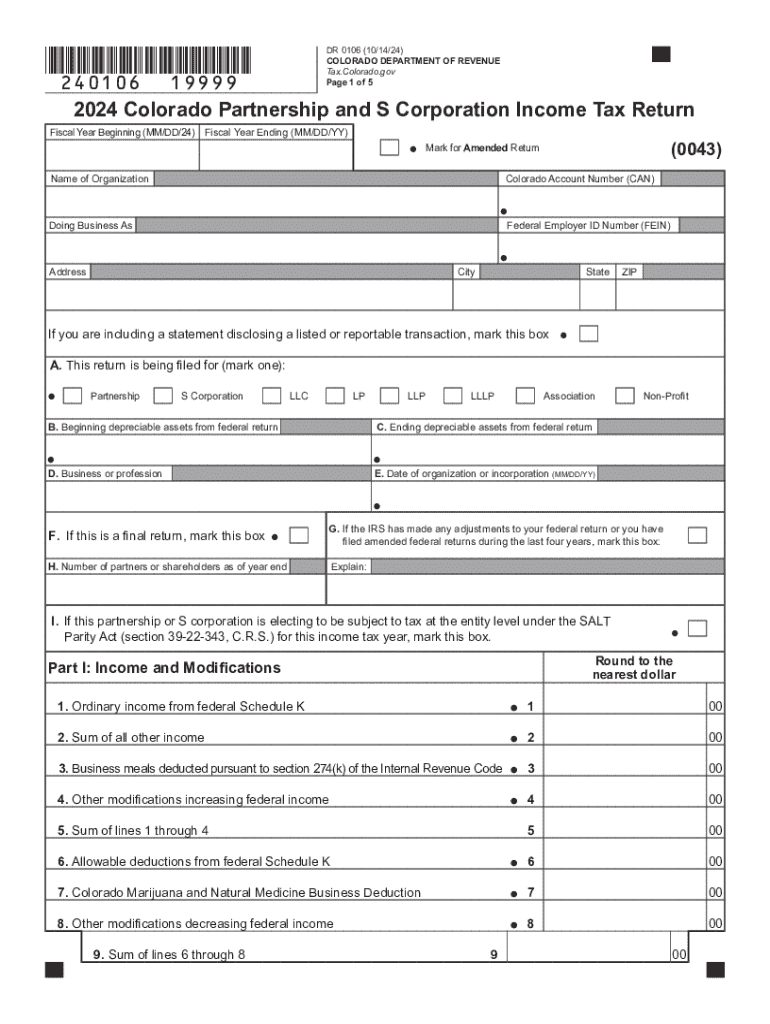
The DR 0106 form is essential for partnerships and S corporations operating in Colorado. It allows these entities to file income taxes specific to the state, covering partnerships, S corporations, and composite nonresident income tax returns. This form gathers vital information regarding income, deductions, and tax calculations, ensuring that the entity complies with Colorado tax laws.
How to Use the DR 0106 Form
When using the DR 0106 form, it's crucial to follow the specific instructions provided to accurately report your entity's financial information. The form is divided into sections addressing various tax-related matters, including:
- Income reporting for partnerships and S corporations.
- Apportionment of income to the state of Colorado.
- Calculation of applicable tax credits and penalties.
Ensure that you review each section carefully to capture all required data accurately.
Steps to Complete the DR 0106 Form
Completing the DR 0106 form involves several key steps:
-
Collect Relevant Financial Documents: Gather all necessary financial data, including income statements, deduction records, and any schedules related to tax apportionment.
-
Fill Out Income Sections: Accurately enter income details for partnerships or S corporations, reflective of Colorado-specific operations.
-
Calculate Deductions and Credits: Use the form's guidelines to determine eligible deductions and available credits, ensuring compliance with Colorado tax laws.
-
Complete Composite Nonresident Information: If applicable, fill out sections for nonresident income taxation.
-
Review and Submit: Double-check all entered information for accuracy before submitting the completed form, either through mail, online submission, or visiting relevant government office locations.
Important Terms Related to the DR 0106 Form
Familiarize yourself with key terms relevant to the DR 0106 form:
- Apportionment: The process of determining what percentage of income is taxable in Colorado based on the business's activities within the state.
- Composite Return: A tax return filed on behalf of nonresident shareholders or partners, simplifying reporting and tax payments.
- S Corporation: A corporation that passes income, losses, deductions, and credits through to shareholders for federal tax purposes.
Legal Use of the DR 0106 Form
The DR 0106 form must be used in accordance with Colorado legal requirements. Specific guidelines govern the filing and completion of the form to ensure that entities report their income and pay the correct amount of taxes. Noncompliance can lead to penalties, stressing the importance of accurate and timely filing.
Filing Deadlines and Important Dates for the DR 0106 Form
Timely submission is vital. The DR 0106 form has specific deadlines that business entities must adhere to:
- Regular Filing Deadline: Typically aligns with the federal tax deadline in mid-April.
- Extension Deadline: If granted, the extended filing deadline usually falls in mid-October.
Always confirm the current year's dates to avoid penalties for late filing.
Required Documents for the DR 0106 Form
Before beginning the DR 0106 form, prepare:
- Financial Statements: For income and deduction data.
- Apportionment Schedules: Detailing income attributable to Colorado.
- Records of Nonresident Participation: If filing a composite return.
- Documentation of Deductions and Credits: As outlined by Colorado tax laws.
Possible Penalties for Non-Compliance
Failing to comply with the DR 0106 requirements can result in penalties:
- Late Filing or Payment Penalties: These are typically a percentage of the tax due.
- Interest on Unpaid Taxes: Interest accrues on unpaid taxes from the original due date.
- Inaccurate Information Penalties: Providing incorrect or misleading data can lead to additional fines.
Form Submission Methods
Submit the DR 0106 form through various methods:
- Online: Use the Colorado Department of Revenue’s online filing system for a convenient and efficient submission.
- Mail: Send the completed form to the address specified in the DR 0106 instructions.
- In-Person: Submit directly at a Department of Revenue office.
Remember to confirm the recommended submission method for your specific business entity type to ensure compliance and prevent processing delays.