
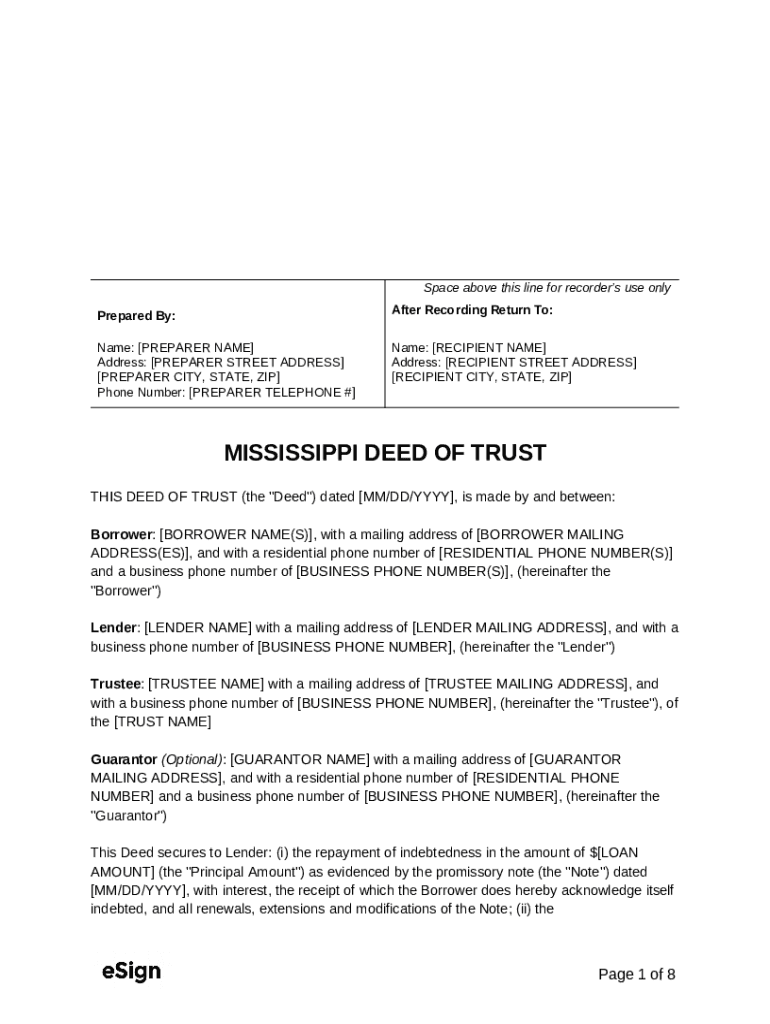







Definition and Meaning of the Mississippi Deed of Trust Form
The Mississippi Deed of Trust Form is a legally binding document that establishes an agreement among three parties: the Borrower, the Lender, and the Trustee. In this arrangement, the Borrower provides real property as collateral for a loan granted by the Lender, appointing the Trustee as a neutral third party to hold the title until the loan obligations are met. This agreement outlines the Borrower's responsibilities, including the timely repayment of the loan with interest, maintenance of the property, and adherence to specific covenants. Key elements of this form also address issues like default conditions, remedies available to the Lender, and prepayment options.
Key Elements of the Mississippi Deed of Trust Form
Several critical components define the structure and enforceability of the Mississippi Deed of Trust Form:
- Principal Amount and Interest Rate: Specifies the loan amount and the interest rate that the Borrower must pay over the loan's lifetime.
- Property Description: Offers a detailed description of the property being used as collateral.
- Default Provisions: Conditions under which the Borrower would be considered in default, such as missed payments or failure to maintain property insurance.
- Trustee Role and Powers: Outlines the trustee's responsibilities, including holding the title and potentially selling the property in case of default.
- Borrower Covenants: Includes commitments from the Borrower to maintain the property, pay taxes, and comply with zoning laws.
How to Use the Mississippi Deed of Trust Form
Using the Mississippi Deed of Trust Form involves several steps and careful considerations:
- Preparation and Drafting: Begin by gathering all necessary information, including the loan amount, interest rate, and a precise legal description of the property.
- Signing Requirements: Ensure that all parties—the Borrower, the Lender, and the Trustee—agree to and sign the form, adhering to any witnessing or notarization requirements mandated by state law.
- Recording the Document: After signing, the form must be recorded with the county clerk's office in the jurisdiction where the property is located to put the agreement on public record.
Practical Examples of Use
- Buying a Home: Borrowers commonly use this form when obtaining a mortgage to purchase a home.
- Refinancing: Homeowners might refinance their existing mortgage under new terms, requiring a new Deed of Trust.
Steps to Complete the Mississippi Deed of Trust Form
To properly complete the Mississippi Deed of Trust Form, follow these steps:
- Collect Information: Gather necessary details like loan amount, property description, and party names.
- Fill Out the Form: Enter all required data accurately, paying extra attention to legal descriptions and financial details.
- Review the Document: Carefully review the form to ensure accuracy and completeness, checking for any errors.
- Execute the Form: All involved parties should sign the document in the presence of a notary public to validate the agreement.
- Record the Form: Submit the completed form to the local county recorder to finalize the process and ensure legal enforceability.
Who Typically Uses the Mississippi Deed of Trust Form
- Home Buyers: To secure a loan from a financial institution, backing it with real estate.
- Lenders: Banks and other financial entities use this document to protect their investment.
- Real Estate Investors: Utilize the form to finance property acquisitions and developments.


Important Terms Related to the Mississippi Deed of Trust Form
Understanding specific terms associated with the Mississippi Deed of Trust Form is crucial:
- Promissory Note: A legal instrument where the Borrower agrees to repay the specified loan amount.
- Foreclosure: A legal process that allows the Lender to sell the secured property if the Borrower defaults.
- Equity: The value of the Borrower's interest in the property, over and above any liens.
Legal Use of the Mississippi Deed of Trust Form
The legal use of a Mississippi Deed of Trust is to create a binding agreement that ensures the Lender can recoup their investment if the Borrower defaults. This form complies with Mississippi state laws, and using it appropriately can prevent legal disputes and ensure the secure handling of real estate loans. It acts within the framework of property and contract law to enforce obligations and remedies.
Compliance and Legal Requirements
- Legal Descriptions: Must accurately reflect the property's boundaries and relevant features.
- Adherence to State Law: All actions, from recording to foreclosure, must follow Mississippi’s legal requirements.
State-Specific Rules for the Mississippi Deed of Trust Form
Mississippi laws govern the execution and recording of the Deed of Trust Form:
- Recording Requirements: Must be filed at the local county courthouse where the property is located.
- Redemption Laws: Mississippi allows Borrowers a short period to redeem their property after foreclosure, subject to specific conditions.
By following these guidelines, users can effectively manage their legal and financial interests through a Mississippi Deed of Trust, securing both the Lender's investment and the Borrower's property ownership.




