Definition & Meaning
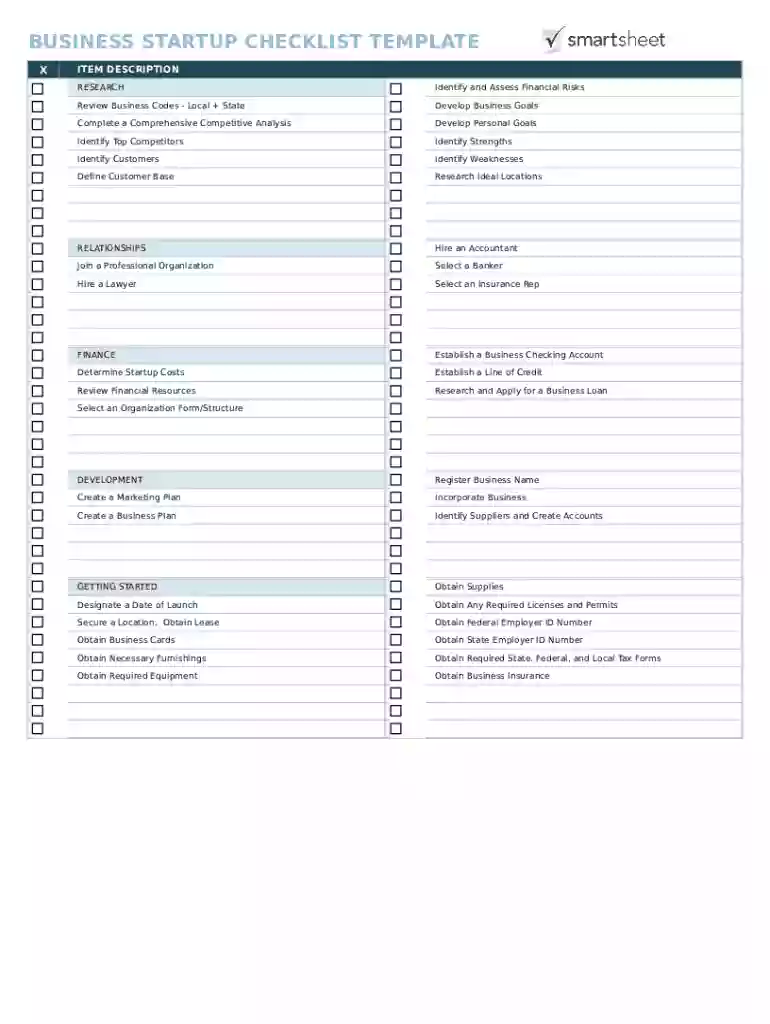
A business startup checklist template serves as a structured guide facilitating the process of launching a new business. This tool provides an organized framework outlining essential steps and considerations necessary for business establishment. By using a checklist, entrepreneurs can methodically approach tasks related to research, finance, operations, and compliance. Such a checklist ensures that critical steps are not overlooked, ultimately contributing to a smoother launch process.
Key Components
- Research: Conducting market research and competition analysis.
- Finance: Addressing budgeting, funding, and accounting needs.
- Development: Creating business and marketing plans.
- Compliance: Obtaining necessary licenses and permits.
How to Use the Business Startup Checklist Template
Using a business startup checklist template involves understanding the sequential steps required to achieve a successful business launch. This approach ensures that no critical details are missed, which could otherwise cause delays or complications down the line.
- Download or Access the Template: Ensure you have a copy of the template that you can edit.
- Assess and Customize: Review the template's contents and adapt it to fit specific business needs.
- Assign Responsibilities: Allocate tasks to responsible team members to foster accountability.
- Set Deadlines: Establish a timeline for each task to keep the startup process on track.
- Review Progress Regularly: Monitor and update the checklist to reflect completed tasks and adjust priorities as necessary.
Practical Example
- Market Research: Use the checklist to ensure comprehensive market analysis.
- Financial Planning: Double-check budgeting tasks to confirm funding adequacy.
Steps to Complete the Business Startup Checklist Template
Following detailed steps allows entrepreneurs to harness the full potential of a startup checklist, ensuring thorough execution of each task.
Step-by-Step Breakdown
- Initiate Research: Begin with market and competitor analysis to identify unique selling propositions and target customer base.
- Plan Financials: Outline initial funding sources, draft preliminary budgets, and set up accounting systems.
- Develop Business Plans: Draft a clear business and operational plan to guide your startup’s vision and objectives.
- Prepare Documentation: Collate necessary documentation required for legal compliance and registration.
- Reach Out for Advice: Consult with mentors or advisors to validate your plans and obtain feedback.
- Launch Marketing Strategies: Design and implement marketing plans to create brand awareness and attract customers.
- Establish Online Presence: Set up a professional website and social media profiles to engage with potential clients.
- Finalize Setup: Ensure that all business systems, including legal entities and operations, are ready before the official launch.
Key Elements of the Business Startup Checklist Template
Understanding the essential components of a startup checklist can enhance its utility, helping entrepreneurs to cover every necessary base.
- SWOT Analysis: Assess strengths, weaknesses, opportunities, and threats related to the business.
- Funding Strategies: Identify potential investors or funding alternatives to ensure financial stability.
- Business Registration: Complete all state and federal registration forms and filings.
- Location Setup: Secure a physical or virtual office space conducive to operations.
- Supply Chain: Establish relationships with suppliers and distributors for inventory and logistics management.
- HR and Staffing: Develop hiring plans and draft employee contracts ensuring regulatory compliance.
Real-world Scenario
A tech startup might prioritize intellectual property acquisition and regulatory compliance within its checklist due to industry-specific challenges.
Who Typically Uses the Business Startup Checklist Template
Various business professionals and aspiring entrepreneurs find the checklist template particularly beneficial, offering structure to what might otherwise be an overwhelming process.

Typical Users
- First-time Entrepreneurs: Individuals launching their first business.
- Startups in Early Stages: Small companies refining their operational frameworks.
- Project Managers: Professionals ensuring teams stay aligned with startup goals.
- Business Consultants: Advisors providing strategy, regulatory, and operational guidance.
Legal Use of the Business Startup Checklist Template
Ensuring compliance with legal requirements is crucial for the success of any startup. The checklist assists in navigating these obligations efficiently.
Regulatory Considerations
- Licensing and Permits: Identify and secure federal and state permits.
- Regulatory Compliance: Adequately address industry-specific regulations and standards.
- Trademark Protection: Safeguard business names and logos through trademarks.
Business Types that Benefit Most from the Business Startup Checklist Template
Different business models have unique requirements, and a startup checklist supports various entity formations by aligning tasks with specific needs.
Beneficial Business Models
- Limited Liability Companies (LLC): Address liability protection and operational flexibility.
- Corporations: Establish complex structures and compliance frameworks.
- Partnerships and Sole Proprietorships: Streamline basic structure setup and low-complexity compliance.
Examples of Using the Business Startup Checklist Template
Concrete examples demonstrate the template’s flexibility across different business scenarios, highlighting its practical application.
Case Studies
- Tech Startup: A company launching an innovative app can streamline tasks related to software development, user testing, and platform compliance.
- Retail Business: A new store owner can focus on location setup, supplier agreements, and merchandising strategies facilitated by the checklist.