
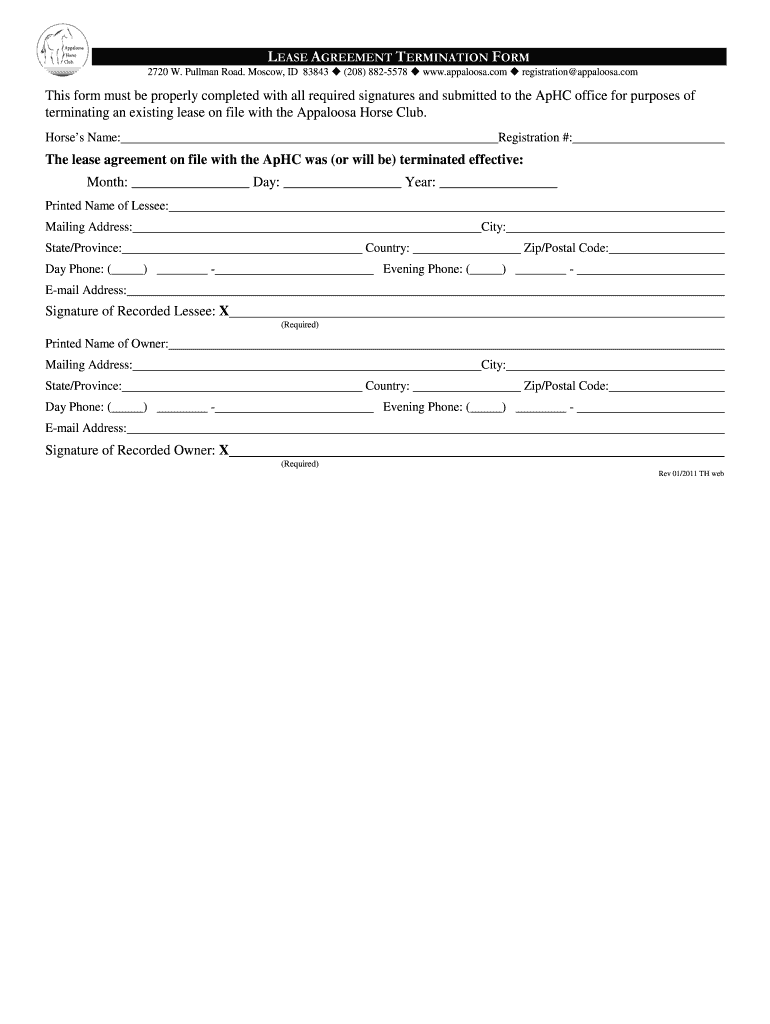







Definition and Meaning
A Lease Agreement Termination Form is an official document used to formally conclude an existing lease agreement. This form is pivotal in confirming the mutual agreement between the lessee and the lessor to end the terms laid out in the original lease. The completion of this form involves specifying details such as the lease termination date, identifying the parties involved, and obtaining necessary signatures. By serving as a formal record, it helps prevent disputes and clarifies that the lease is terminated according to agreed conditions.
How to Use the Lease Agreement Termination Form
To effectively use the Lease Agreement Termination Form, follow these essential steps:
-
Identify the Parties: Clearly indicate the names and contact details of both the lessee and the lessor.
-
Detail the Property: Include specific details about the property or asset covered by the lease, such as address or identification numbers.
-
Specify Termination Date: Determine and record the agreed-upon effective date of termination to avoid any confusion about when the obligations end.
-
Provide Reason for Termination: Although optional, specifying the reason for termination can add clarity and prevent misunderstandings.
-
Signatures: Ensure both parties sign the document to make it valid. Depending on the jurisdiction, you may also need a witness signature.
-
Distribute Copies: Provide each party with a copy of the signed form for their records.
Steps to Complete the Lease Agreement Termination Form
Completing a Lease Agreement Termination Form involves several detailed steps:
-
Gather Necessary Information: Collect all relevant information about the lease and involved parties before beginning.
-
Fill Out Party Details: Enter the names and contact information for both the lessee and the lessor.
-
Include Property Information: Accurately document details about the leased property, focusing on any identifying features like legal descriptions or registration numbers.
-
Determine Termination Date: Agree upon and clearly state the date on which the lease termination will take effect.
-
Explain Termination Reasons (if applicable): Reasons might include mutual agreement, breach of terms, or significant changes in circumstances.
-
Sign and Date the Document: Both parties must sign and date the form to formalize the termination.
-
Obtain Necessary Approvals or Notarizations: Depending on the state or type of asset, additional steps such as notarization might be required.
Key Elements of the Lease Agreement Termination Form
The Lease Agreement Termination Form includes several critical components:
-
Party Information: Full names, addresses, and contact information.
-
Property Details: Legal description and relevant identifiers of the asset.
-
Termination Date: Clear specification of when the termination takes effect.
-
Signatures: Validating signatures from all involved parties.
-
Reason for Termination (optional): Stating the grounds for termination can aid in clarity.
-
Notification of Other Parties: Informing third parties like property managers or relevant authorities of the termination.
Legal Use of the Lease Agreement Termination Form
The Lease Agreement Termination Form functions within a legal framework to:
-
Ensure Compliance: Align with local and federal regulations regarding lease agreements and terminations.
-
Protect Rights: Safeguard the rights of both parties by documenting consent to terminate the agreement.
-
Avoid Litigation: Provide clear documentation to prevent potential legal conflicts over lease terms.
-
Formalize Agreement: Offer a legally recognized way to dissolve lease obligations.
Importance of the Lease Agreement Termination Form
Understanding the importance of the Lease Agreement Termination Form is vital:
-
Clarifies Terms: Clearly outlines the conditions and agreements that govern lease termination.
-
Prevents Misunderstandings: Helps avoid disputes by clearly documenting mutual agreement on termination.
-
Ensures Legal Protection: Offers a protective measure that ensures all involved parties have agreed to the termination terms.
-
Formal Documentation: Provides formal documentation needed to counter claims or future misunderstandings about lease status.
State-Specific Rules for the Lease Agreement Termination Form
Lease Agreement Termination Forms may be subject to state-specific rules:
-
Notice Periods: Different states may require specific notice periods before termination can be effective.
-
Required Signatures: Some states require notarization or additional witnesses.
-
Disclosure Requirements: Depending on the asset and state, specific disclosures must be completed.
-
Fees: Certain states may have fees associated with terminating lease agreements.
Common Examples of Using the Lease Agreement Termination Form
This form is frequently used in numerous scenarios:
-
Residential Properties: Used when terminating leases for apartments or houses.
-
Commercial Leases: Applicable for business-related property leases involving office space or outlets.
-
Vehicle Leases: Utilized in ending leasing agreements for vehicles, requiring detailed vehicle identification.
-
Equipment Leases: Important for the termination of leased equipment, especially in industrial contexts.
These practical applications demonstrate the form's versatility across various leasing contexts.




