




01. Edit your venue checklist example online
Type text, add images, blackout confidential details, add comments, highlights and more.

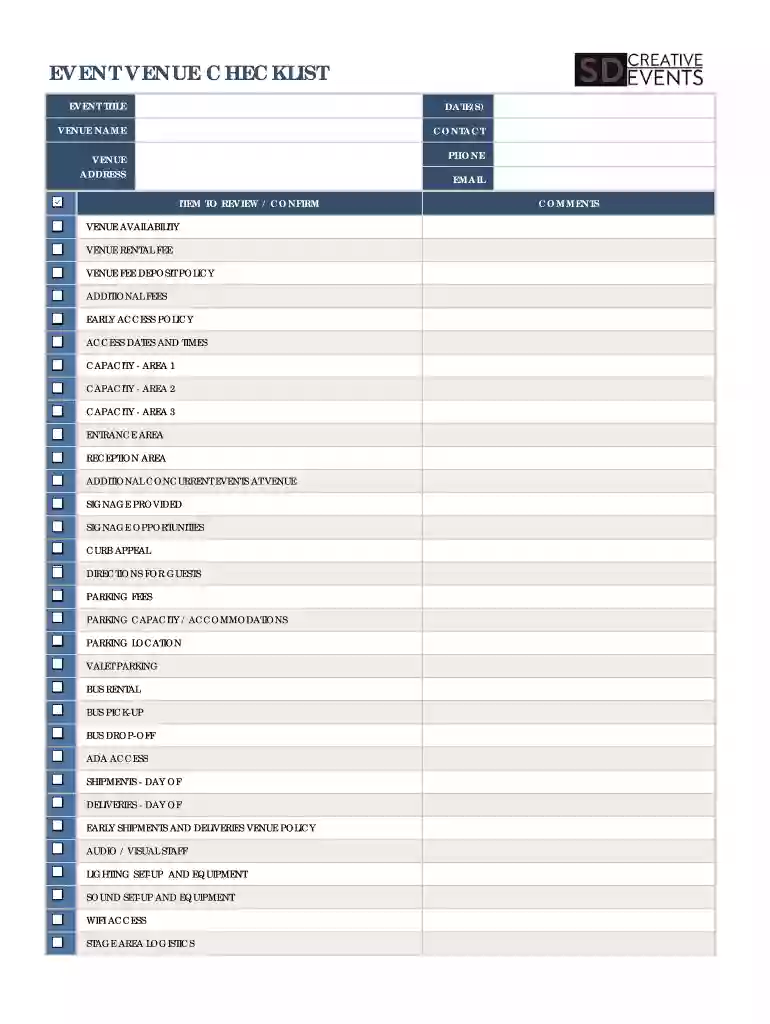
Type text, add images, blackout confidential details, add comments, highlights and more.

Draw your signature, type it, upload its image, or use your mobile device as a signature pad.

Send venue checklist template via email, link, or fax. You can also download it, export it or print it out.
A venue checklist template is an essential tool for event planners and coordinators, serving as a comprehensive guide to ensure all aspects of venue selection and preparation are thoroughly considered. This template helps outline critical details such as venue availability, rental fees, and capacity limits. By providing a structured format, it reduces the chance of overlooking crucial details that could impact the success of an event. A venue checklist template ensures that planners are well-prepared, facilitating smooth event execution.
Important components of a venue checklist template include:
To effectively use a venue checklist template, follow these steps:
Completing the venue checklist template involves several structured steps to ensure accuracy and comprehensiveness:
A venue checklist template is typically used by:


Real-world scenarios where a venue checklist template proves beneficial include:
Ensuring compliance with legal and regulatory requirements is crucial when using a venue checklist template:
We've got more versions of the venue checklist example form. Select the right venue checklist example version from the list and start editing it straight away!
| Versions | Form popularity | Fillable & printable |
|---|---|---|
| 2018 | 4.1 Satisfied (51 Votes) |
At DocHub, your data security is our priority. We follow HIPAA, SOC2, GDPR, and other standards, so you can work on your documents with confidence.




Venue Requires Sets to Other Elope 5 0 Costs x 1 Notability x 20 Romantic Notion x 1 Secluded Address x 1 Stolen Kiss A hurried riverside ceremony 5 10 Costs x
Use this handy checklist to ensure your event is on track and on budget. Download and print the checklist Set Event Purpose, Date, and Venue
Staff should do an in-person site-visit using this Checklist and some simple tools (a measuring tape, a bubble level, and a door pressure gauge)


