






Definition and Purpose of the IA 1120 Iowa Corporation Income Tax Return
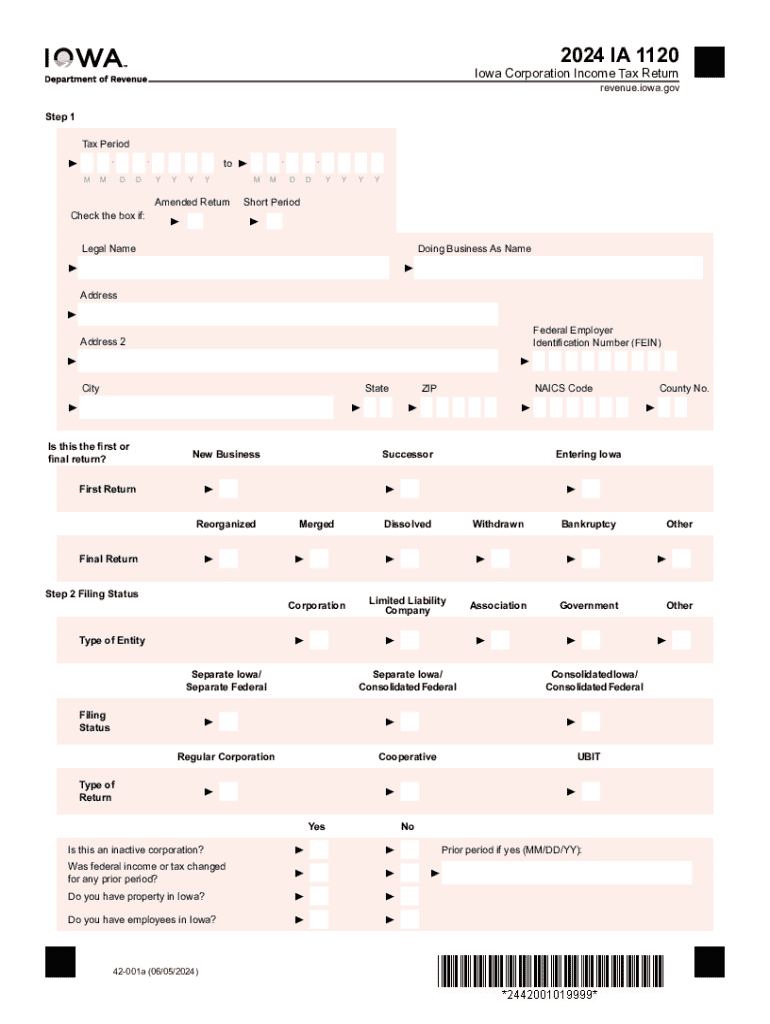
The IA 1120 is the designated form for corporations conducting business in Iowa that need to file a corporate income tax return. It is essential for reporting income, calculating owed taxes, and identifying any tax credits or refunds the corporation may be eligible for. The form encompasses multiple sections encompassing legal name, address, federal employer identification number (FEIN), and financial data. Corporations use this form to determine taxable income and reconcile it with any taxes owed or refunds due.
How to Use the IA 1120 Iowa Corporation Income Tax Return
Corporations must gather all necessary financial information and details, such as business income, expenses, and tax credits, to fill out the IA 1120 accurately. Gathering this data involves compiling detailed records of the corporation’s income streams and allowable deductions throughout the tax year. It's recommended that businesses use precise accounting practices and financial software to ensure all relevant data is accurate. After completing the form, a review is crucial to confirm that the data provided is comprehensive and error-free. Once finalized, the IA 1120 can be submitted to the Iowa Department of Revenue either electronically or in paper form.
Steps to Complete the IA 1120 Iowa Corporation Income Tax Return
-
Gather Financial Records: Collect all necessary financial records, including income statements, balance sheets, and information on tax credits or deductions.
-
Enter Corporation Information: Provide the corporation's legal name, address, and FEIN in the designated sections of the form.
-
Calculate Net Income: Using financial records, calculate the corporation’s net income by subtracting allowable expenses from gross income.
-
Determine Tax Credits and Payments: Identify any applicable tax credits and payments, such as estimated tax payments made during the year.
-
Complete the Tax Calculation Section: Use the information from previous sections to calculate the corporation’s total tax liabilities.
-
Review and Sign the Form: Thoroughly review the completed form for accuracy. Ensure that all required fields are complete and attach a signature from an authorized officer of the corporation.
-
Submit the Form: Submit the IA 1120 to the Iowa Department of Revenue by the due date.
Who Typically Uses the IA 1120 Iowa Corporation Income Tax Return
The IA 1120 is primarily used by corporations operating within Iowa, including entities such as C-corporations and qualified subchapter S subsidiaries. It is crucial for corporations of various sizes and industries that are required to report their income and pay taxes to the state of Iowa. Foreign corporations with income derived from Iowa sources must also file an IA 1120 if they meet certain criteria. Tax professionals and accountants commonly assist these corporations in accurately completing the form.


Key Elements of the IA 1120 Iowa Corporation Income Tax Return
- Legal Information: Includes the corporation's legal name, federal employer identification number (FEIN), and Iowa business activities.
- Tax Period and Filing Status: Details the specific tax year covered and the filing status of the corporation.
- Income and Deductions: Captures all income generated from the corporation's operations, along with deductible business expenses.
- Net Income Calculation: Calculates net income after accounting for all deductions and allowable expenses.
- Tax Calculation: The section calculates the total tax due based on net income.
- Tax Credits and Payments: Details any applicable tax credits and payments already made toward tax liabilities.
- Signatures and Certifications: Requires the signature of an authorized officer to confirm the accuracy of the information provided.
Filing Deadlines and Important Dates
Filing the IA 1120 by the deadline is crucial to avoid any penalties. The standard deadline for this form is typically the last day of the fourth month following the end of the corporation’s fiscal year. For calendar year filers, this would be April 30. Extensions may be available, but they must be requested before the original due date.
Penalties for Non-Compliance
Failing to submit the IA 1120 on time or accurately can result in significant penalties. These may include fines based on the outstanding tax due or the duration of the delay. Interest may also accrue on any unpaid tax. It is thus imperative for corporations to adhere to statutory filing requirements to avoid such penalties.
Form Submission Methods
Corporations have various options to file the IA 1120, including electronic submission through the Iowa Department of Revenue's online portal or mailing the completed paper form to the relevant authorities. Many corporations opt for electronic submission due to the improved efficiency and confirmation of receipt.
State-Specific Rules for IA 1120
Iowa has unique rules for determining taxable income and calculating tax liabilities, making it essential for companies to comply with state-specific regulations. For example, Iowa allows certain deductions and credits that may not apply in other states. Corporations should ensure compliance with Iowa's specific guidelines when preparing their tax returns.