




01. Edit your form 140x arizona online
Type text, add images, blackout confidential details, add comments, highlights and more.

Type text, add images, blackout confidential details, add comments, highlights and more.

Draw your signature, type it, upload its image, or use your mobile device as a signature pad.

Send it via email, link, or fax. You can also download it, export it or print it out.
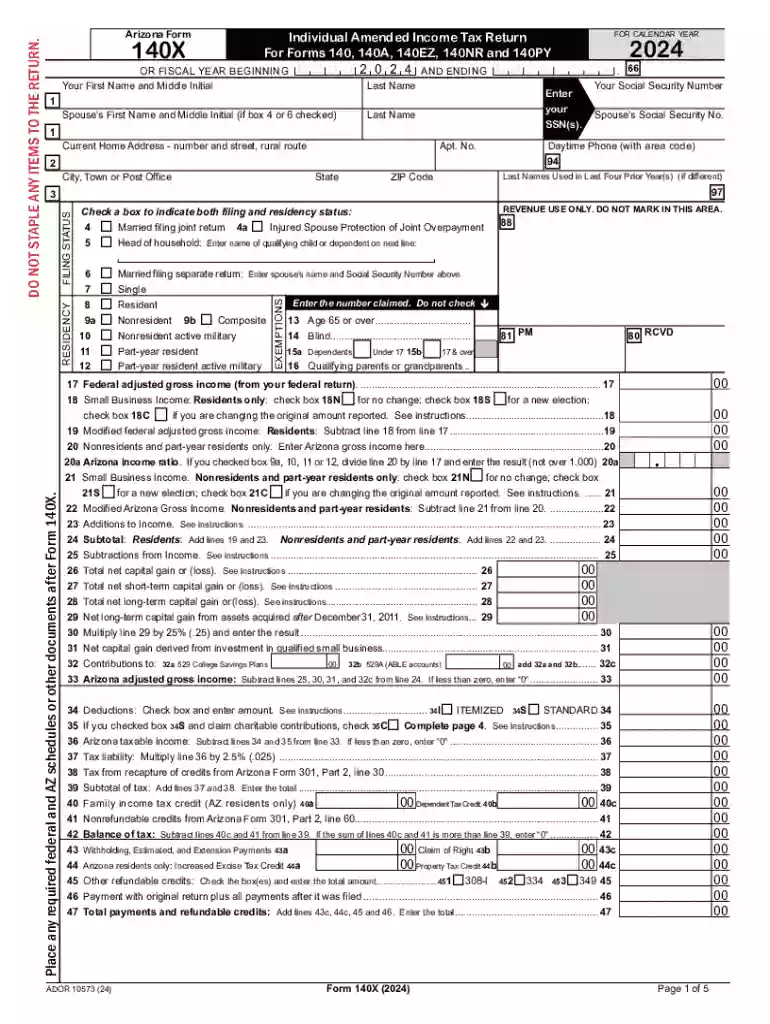
Form 140X serves as the document for amending individual income tax returns in the state of Arizona. This form allows taxpayers to correct errors found on their original Arizona Form 140 series returns after they have been filed. Common reasons for using Form 140X include reporting additional income or deductions, changing filing status, and updating personal information.
Amending a tax return can adjust mistakes that might have resulted in either an overpayment or underpayment of taxes. Using Form 140X, taxpayers ensure accuracy, which is crucial for compliance with Arizona tax laws. Amendments might be needed when new information is discovered after the initial filing, such as receiving a tax form late or new knowledge about eligible credits.
Form 140X can be obtained through several channels to ensure you have the latest version. It is available for download on the Arizona Department of Revenue's official website. Additionally, physical copies can be requested via phone or picked up at designated tax offices.
Using the correct version of Form 140X reflects the latest deductions, credits, and other essential changes in tax law, ensuring that amendments are effective and valid under current regulations.
Form 140X comprises various major sections, including:
Clear, detailed instructions accompany the form to guide users through each section, providing explanations for complex tax scenarios. Compliance with these instructions ensures accurate calculations and effective amendments.
When filing Form 140X, supporting documentation is required to substantiate any reported changes:
Even though Form 140X is a state-specific form for Arizona, it is crucial to also consider its implications on federal tax filings. The changes made through Form 140X might necessitate filing Form 1040-X with the IRS if federal amendments are also required.
Ensure amendments on Form 140X align with any federal amendments made. Timing is key—changes should be consistent and properly documented to prevent discrepancies that could trigger audits or further inquiries.
Understand key deadlines for filing amended returns using Form 140X:
While extensions for filing the original tax return exist, similar extensions are not typically available for amendments. Always file amendments within the prescribed period.
Not filing an amendment or failing to address tax discrepancies may result in penalties or interest. Additionally, willful neglect to file Form 140X when needed could lead to further audits or enforcement actions by the Arizona Tax Department.
Pay any new balances promptly upon discovery. If discrepancies result in an overpayment, request a refund or apply the surplus to future tax liabilities. Maintain clear records of all transactions and communications to support your amendments.
Form 140X is frequently used by:
Self-employed individuals, retirees, and students who receive varied income forms might also need to file Form 140X more commonly due to the complexity and variability of their financial circumstances.
We've got more versions of the form 140x arizona form. Select the right form 140x arizona version from the list and start editing it straight away!
At DocHub, your data security is our priority. We follow HIPAA, SOC2, GDPR, and other standards, so you can work on your documents with confidence.



Aug 11, 2026 Enchanted Hard Stone is an UNCOMMON item that can be crafted with 576 Hard Stone upon DocHubing Hard Stone III (3).
Use Arizona Form 140PTC to file an original claim for the property tax credit. Do not file Form 140X to only amend your claim for a property tax refund. use


