01. Edit your form online
Type text, add images, blackout confidential details, add comments, highlights and more.

Type text, add images, blackout confidential details, add comments, highlights and more.

Draw your signature, type it, upload its image, or use your mobile device as a signature pad.

Send it via email, link, or fax. You can also download it, export it or print it out.
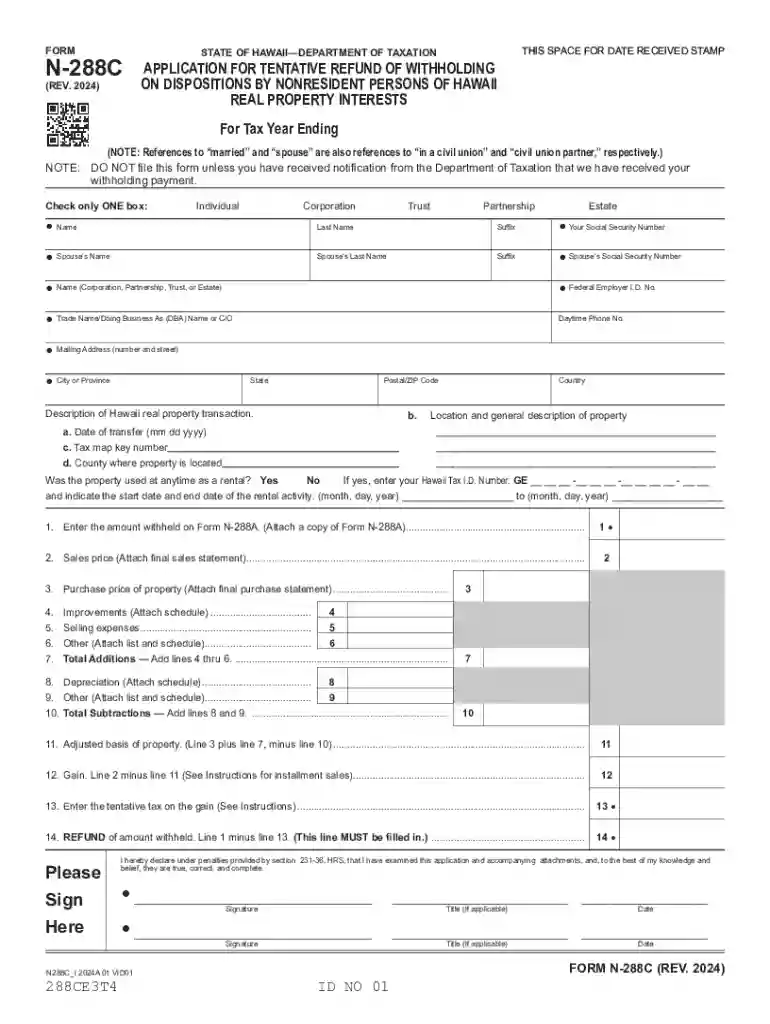
Form N-288C, Rev 2024, serves as an application for a tentative refund of withholding on dispositions of Hawaiian real property interests by nonresident persons. This form is used when the amount withheld exceeds the tax liability from the transaction. It allows individuals, corporations, estates, and other entities to reclaim excess funds. The form collects vital information about the taxpayer, details of the property transaction, and calculates gains and taxes involved.
When using Form N-288C, it is essential to ensure all the details regarding the transaction and the taxpayer are accurately filled out. The process involves:
By following these steps, taxpayers can determine if they are eligible for a tentative refund and submit the form for processing.
Taxpayer Information:
Property Transaction Details:
Withholding Information:
Refund Calculation:
Sign and Date:
Completing these steps accurately helps streamline the processing of the tentative refund application.
Eligibility to file Form N-288C typically includes:
It is critical for individuals and entities to assess their status and transaction details to determine eligibility for filing this form.


Prior to submitting Form N-288C, ensure that the following documents are prepared:
Proper documentation supports the refund application and facilitates quicker approval by verifying details related to the transaction and withholding.
Understanding these terms equips applicants with the necessary knowledge to accurately complete and submit the form.
These users are most likely to encounter withholding exceeding their tax liabilities, necessitating the application for a tentative refund.
While Form N-288C is specific to Hawaii, it should be used in compliance with both Hawaiian regulations and IRS guidelines on withholding refunds. This involves:
Following IRS guidelines ensures that nonresident taxpayers correctly navigate federal and state tax obligations.
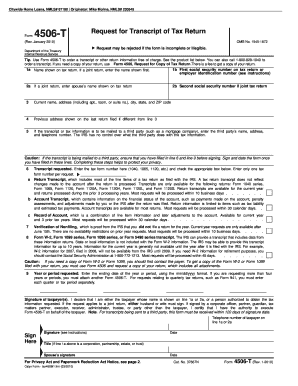
We've got more versions of the Form N-288C, Rev 2024, Application for Tentative Refund of Withholding on Dispositions by Nonresiden form. Select the right Form N-288C, Rev 2024, Application for Tentative Refund of Withholding on Dispositions by Nonresiden version from the list and start editing it straight away!
| Versions | Form popularity | Fillable & printable |
|---|---|---|
| 2025 | 4.8 Satisfied (44 Votes) | |
| 2024 | 4.2 Satisfied (44 Votes) | |
| 2022 | 4.5 Satisfied (39 Votes) | |
| 2020 | 4.8 Satisfied (127 Votes) | |
| 2019 | 3.9 Satisfied (32 Votes) | |
| 2018 | 4.3 Satisfied (133 Votes) | |
| 2017 | 4.2 Satisfied (61 Votes) | |
| 2016 | 4.4 Satisfied (186 Votes) | |
| 2015 | 4.4 Satisfied (66 Votes) | |
| 2014 | 4.2 Satisfied (65 Votes) | |
| 2013 | 3.9 Satisfied (36 Votes) | |
| 2012 | 4 Satisfied (54 Votes) |
At DocHub, your data security is our priority. We follow HIPAA, SOC2, GDPR, and other standards, so you can work on your documents with confidence.