




01. Edit your 2024 form schedule b online
Type text, add images, blackout confidential details, add comments, highlights and more.

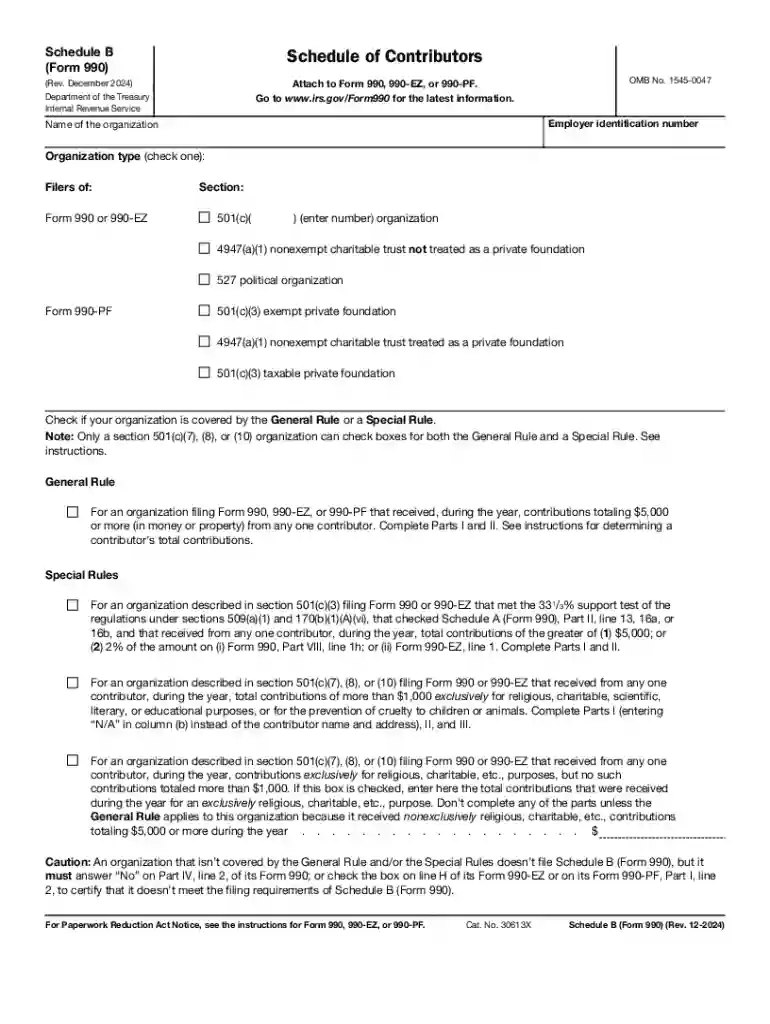
Type text, add images, blackout confidential details, add comments, highlights and more.

Draw your signature, type it, upload its image, or use your mobile device as a signature pad.

Send 990 b schedule via email, link, or fax. You can also download it, export it or print it out.
Sections 509(a)(1) and 170(b)(1)(A)(vi) of the Internal Revenue Code define the requirements for organizations to qualify as public charities. These sections set criteria for entities that receive substantial support from the general public, government units, or other publicly supported organizations. Schedule A (Form 990), Part must be filled in by nonprofits demonstrating their status under these regulations. The Schedule A form ensures compliance with these IRS codes and provides detailed insight into the funding sources of an organization, confirming that its public support exceeds certain statutory limits.
Nonprofits, particularly public charities, which receive a significant portion of their total support from public contributions, must adhere to these regulations. This includes churches, hospitals, schools, and government-supported entities. These organizations file Schedule A to support their claim of public charity status by detailing their sources of funding. This status is crucial for maintaining tax-exempt advantages and is primarily utilized by entities in the U.S.


Organizations should use these regulations to assess their funding mechanisms and ensure eligibility for public charity status. The regulations provide a framework for calculating the public support percentage required. Using Schedule A, Part of Form 990, organizations document their financial support data, such as donations or government grants. This data is then used to verify that they meet the 33⅓% support test or the "facts and circumstances" test, ensuring that they qualify as publicly supported organizations.
The IRS provides clear guidelines on maintaining compliance with these regulations. Organizations must understand the criteria under sections 509(a)(1) and 170(b)(1)(A)(vi) to correctly file Form 990, Schedule A. Adhering to these guidelines supports audit readiness and ensures continued tax-exempt status. Nonprofits must regularly review these guidelines to adapt to any IRS changes which may affect their qualification status.
Nonprofits must typically file Schedule A with their Form 990 by the 15th day of the 5th month following the end of their fiscal year. It's essential to mark this deadline in organizational calendars to ensure timely compliance and avoid penalties. The extension options, if needed, align with those available for Form 990 and should be utilized in accordance with IRS regulations.
We've got more versions of the 2024 form schedule b form. Select the right 2024 form schedule b version from the list and start editing it straight away!
| Versions | Form popularity | Fillable & printable |
|---|---|---|
| 2024 | 4.5 Satisfied (23 Votes) | |
| 2023 | 4.7 Satisfied (51 Votes) | |
| 2022 | 4.7 Satisfied (34 Votes) | |
| 2021 | 4.8 Satisfied (140 Votes) | |
| 2020 | 4.3 Satisfied (48 Votes) | |
| 2019 | 4.4 Satisfied (102 Votes) | |
| 2018 | 4.1 Satisfied (85 Votes) | |
| 2017 | 4.2 Satisfied (58 Votes) | |
| 2016 | 4.3 Satisfied (186 Votes) | |
| 2015 | 4 Satisfied (43 Votes) | |
| 2014 | 4.4 Satisfied (53 Votes) | |
| 2013 | 4 Satisfied (49 Votes) | |
| 2012 | 4.2 Satisfied (39 Votes) | |
| 2011 | 4 Satisfied (36 Votes) |
At DocHub, your data security is our priority. We follow HIPAA, SOC2, GDPR, and other standards, so you can work on your documents with confidence.

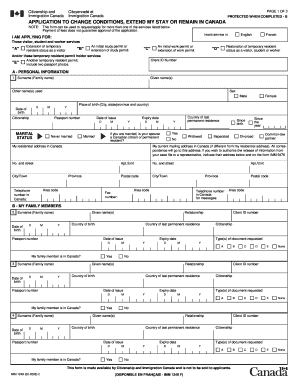

990-EZ that met the 331/3 % support test of the regulations under sections 509(a)(1) and 170(b)(1)(A)(vi), that checked Schedule A (Form 990 or 990-EZ)
For the tax year, it doesnt meet the requirements for public charity status under section 170(b)(1)(A)(vi) or. 509(a)(2), or as a supporting organization underRead more


