Definition and Purpose of the 2024 AR1000NR SW
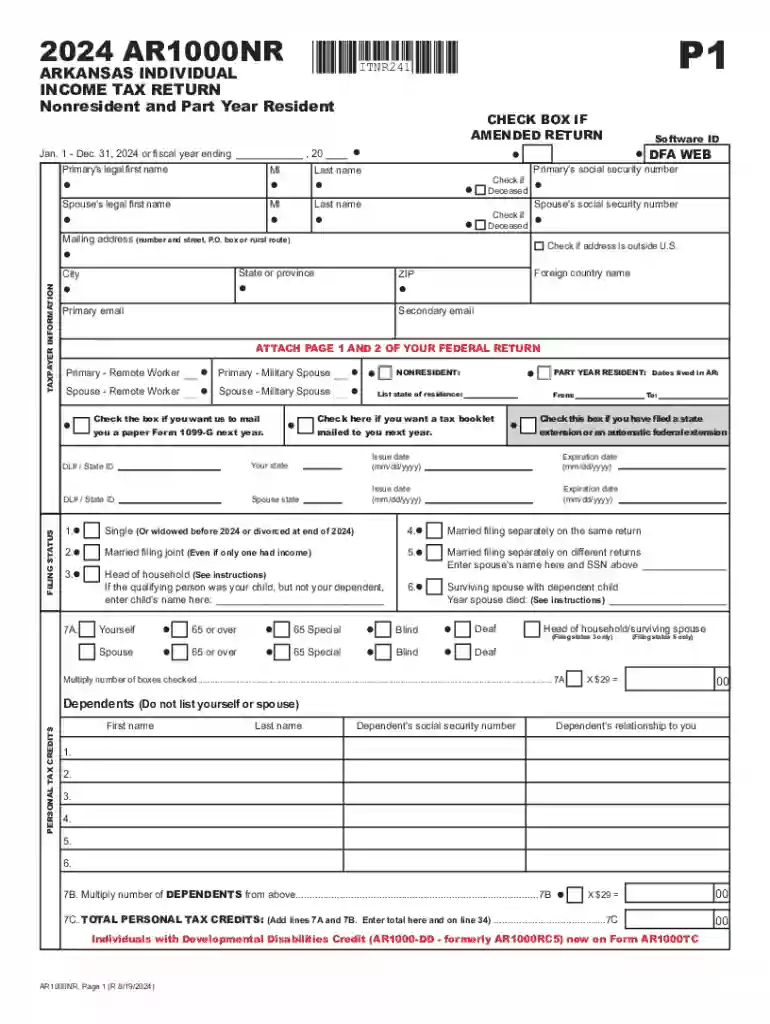
The 2024 AR1000NR SW is the Arkansas Individual Income Tax Return form specifically designed for nonresidents and part-year residents. This document is crucial for individuals who have earned income in Arkansas but do not reside there full-time. The form enables taxpayers to declare their income, calculate tax obligations, and determine refunds or additional taxes payable. It is structured to accommodate various income sources and allows for deductions and credits, aligning with state tax regulations.
Key Components of the AR1000NR
- Taxpayer Information: Fields for personal identification details, including name, social security number, and address.
- Income Details: Sections to report income from wages, investments, and other sources, ensuring comprehensive income reporting.
- Tax Credits and Deductions: Opportunities to apply eligible credits and deductions to lower overall tax liability.
- Tax Calculation: Detailed formulas and instructions to accurately compute tax due or refund amount.
How to Use the 2024 AR1000NR SW
Steps to Accurate Completion
- Collect Required Documentation: Gather all necessary financial documents related to income, deductions, and credits.
- Review Taxpayer Information: Carefully fill in personal details to ensure accuracy and prevent processing delays.
- Report Income Sources: Include all income earned in Arkansas, adhering to categorization guidelines specified in the form.
- Apply Deductions and Credits: Utilize eligible deductions and credits, meticulously following the instructions for each section.
- Calculate Taxable Income: Use the worksheet provided to determine the taxable income and final tax amount.
Finalizing the Form
- Double-check entries for accuracy and completeness.
- Attach any necessary schedules or additional documentation.
- Follow submission instructions applicable to your filing method.
Obtaining the 2024 AR1000NR SW
Where to Access the Form
- Arkansas Department of Finance and Administration Website: The primary source for downloading the form and its accompanying instructions.
- Local Tax Offices: Obtain physical copies from authorized state tax offices.
- Tax Preparation Software: Use software compatible with state tax forms to access a digital version for electronic filing.
Important Considerations
- Ensure you download or acquire the latest version to comply with current tax laws and instructions.
- For first-time users, review guidance notes or consult a tax professional to understand form requirements.
Typical Users
- Nonresidents: Individuals who earned income in Arkansas but reside in another state.
- Part-Year Residents: Those who lived in Arkansas for only part of the year due to relocation or temporary residency.
Example Scenarios
- A consultant from Texas who completed projects in Arkansas.
- A student who attended the University of Arkansas for one semester then moved elsewhere.
Important Terms Related to the 2024 AR1000NR SW
Glossary of Key Terms
- Adjusted Gross Income (AGI): The total income from all sources adjusted for allowable deductions, crucial for tax calculations.
- Exemption: A deduction allowed by the state to reduce taxable income, based on personal or dependent status.
- Tax Credit: A direct reduction in the tax amount owed, often dependent on factors like energy efficiency investments or education.
State-Specific Rules for the 2024 AR1000NR SW
Arkansas-Specific Tax Guidelines
- Income Allocation: Nonresidents must allocate income based on Arkansas-sourced earnings, following state allocation rules.
- Residency Criteria: Distinct guidelines define what constitutes part-year residency, affecting tax obligations.
- Filing Thresholds: Specific income thresholds necessitate a required filing, tailored to resident status and income sources.
Examples of Using the 2024 AR1000NR SW
Practical Application Scenarios
- Gig Economy Worker: An individual working remotely for Arkansas-based clients, navigating multi-state income reporting.
- Temporary Employment: A professional temporarily assigned to an Arkansas branch of their company.
Common Missteps
- Incorrectly categorizing income sources or missing deadlines due to unfamiliarity with Arkansas-specific tax dates.
Filing Deadlines and Important Dates
Critical Tax Dates
- Filing Deadline: Typically due by April 15, aligning with federal tax deadlines unless extended by state mandates.
- Estimated Payment Deadlines: For those required to make estimated payments, consider quarterly due dates to prevent penalties.
Extensions and Penalties
- Arkansas allows filing extensions upon application, but penalties may apply for late payments, highlighting the need for timely submissions.