







Definition & Meaning
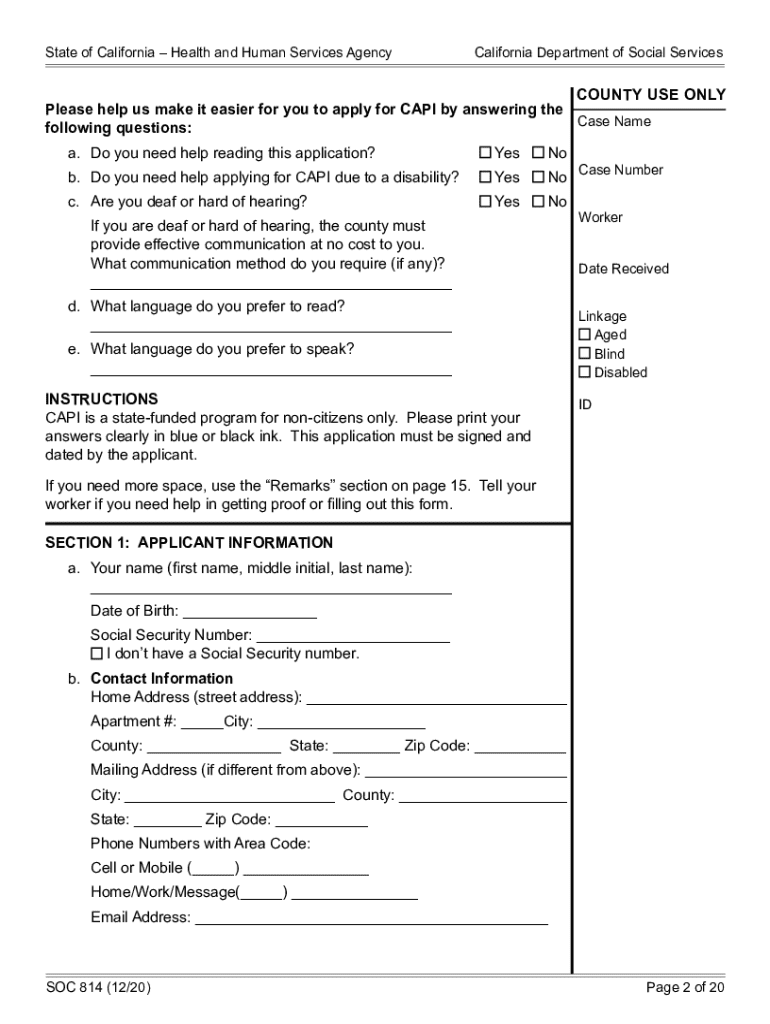
The "Get financial assistance for aged, blind, or disabled" form is designed to aid individuals in applying for financial support tailored to specific needs. This form specifically targets those who are elderly, visually impaired, or disabled, offering a structured method to request necessary funds. Understanding this form is crucial for assisting in navigating the application processes of financial aid programs that address physical and financial challenges affecting these groups in the U.S.
In the context of financial assistance, this form acts as both a gateway and a checklist, ensuring that applicants meet specified criteria. It frequently involves assessing income, resources, and residency status to determine eligibility. It’s tailored to ensure that those in greatest need can access governmental and non-governmental resources, recognizing various hardships faced by aged, blind, and disabled individuals.
Eligibility Criteria
Eligibility for financial assistance under this form primarily requires applicants to demonstrate a need based on age, vision, or disability status. Applicants must often prove their status with relevant documentation, such as medical records or age verification. Income thresholds may vary by state, reflecting differing cost-of-living standards and local regulations.
- Aged: Generally defined as those aged 65 or older, applicants must provide proof of age through documents like a birth certificate or government-issued ID.
- Blindness: Visual impairment must meet specific severity criteria, validated by an optometrist or ophthalmologist.
- Disability: Applicants should present medical documentation detailing the nature and extent of the disability, which must significantly hinder daily living activities.

Steps to Complete the Form
- Gather Required Documents: Assemble all necessary documentation, including proof of identity, age, medical records, and any prior disability assessments.
- Complete Personal Information: Enter personal details accurately, ensuring consistency with official documents.
- Provide Financial Details: Detailed information about income, assets, and expenses should be included to paint a clear picture of financial need.
- Submit Health Information: Include relevant medical reports certifying age-related conditions, blindness, or disability.
- Sign and Date: Each section requiring signatures must be duly signed and dated according to the instructions.
- Review Submission Checklist: Verify that all necessary components are included before submitting the form through the designated method (e.g., online, mail).
Application Process & Approval Time
The application process involves submitting the completed form to the appropriate state or federal agency responsible for processing financial aid claims. Processing times can vary significantly depending on workload and specific state protocols. Typically, applicants might anticipate a waiting period ranging from a few weeks to several months for approval.
- Initial Review: The agency initially reviews the application for completeness.
- Verification: Officials verify the provided information, often reaching out to healthcare providers or financial institutions for confirmation.
- Decision Notification: Once the application is approved or denied, applicants are notified through their chosen communication channel—email, phone, or postal mail.
Required Documents
A comprehensive set of documents is needed to support the application, ensuring that the provided details are valid and verifiable. Key documents often include:
- Proof of Age/Identity: Government-issued ID, birth certificate.
- Medical Records: Detailed evidence of disability or blindness.
- Financial Statements: Recent pay stubs, bank statements, or tax returns.
- Residency: Utility bills or lease agreements demonstrating state residency.
These documents help establish eligibility by providing credible evidence of each asserted condition.
Legal Use of the Form
The "Get financial assistance for aged, blind, or disabled" form must be used in compliance with applicable legal guidelines. Failure to provide accurate information, whether intentional or accidental, can result in severe consequences, including application denial, rescission of benefits, or legal action. Legal compliance ensures the integrity of the aid distribution process and protects applicants from accusations of fraud or misrepresentation.
State-Specific Rules
Different states may impose additional criteria or offer varying levels of assistance through this form. For example, some states may provide supplementary benefits or establish different income limits. State-specific agencies may also have unique procedures or documentation requirements. It is crucial for applicants to consult local guidelines or speak with a state representative to ensure full compliance with local policies.
Key Elements of the Form
Key elements of the form include identifiable sections that require careful attention from applicants:
- Applicant Information: Collects identification details like name, social security number, and contact information.
- Financial Details: Captures income sources, assets, liabilities, and expenses.
- Medical Verification: Section dedicated to the establishment of qualification based on health status.
- Signatory Confirmation: The part of the form where the applicant and witnesses must sign to authenticate all information provided.
Understanding the significance of each section ensures that applicants complete the form accurately, increasing the likelihood of gaining access to needed financial assistance.




