




01. Edit your form online
Type text, add images, blackout confidential details, add comments, highlights and more.

Type text, add images, blackout confidential details, add comments, highlights and more.

Draw your signature, type it, upload its image, or use your mobile device as a signature pad.

Send it via email, link, or fax. You can also download it, export it or print it out.
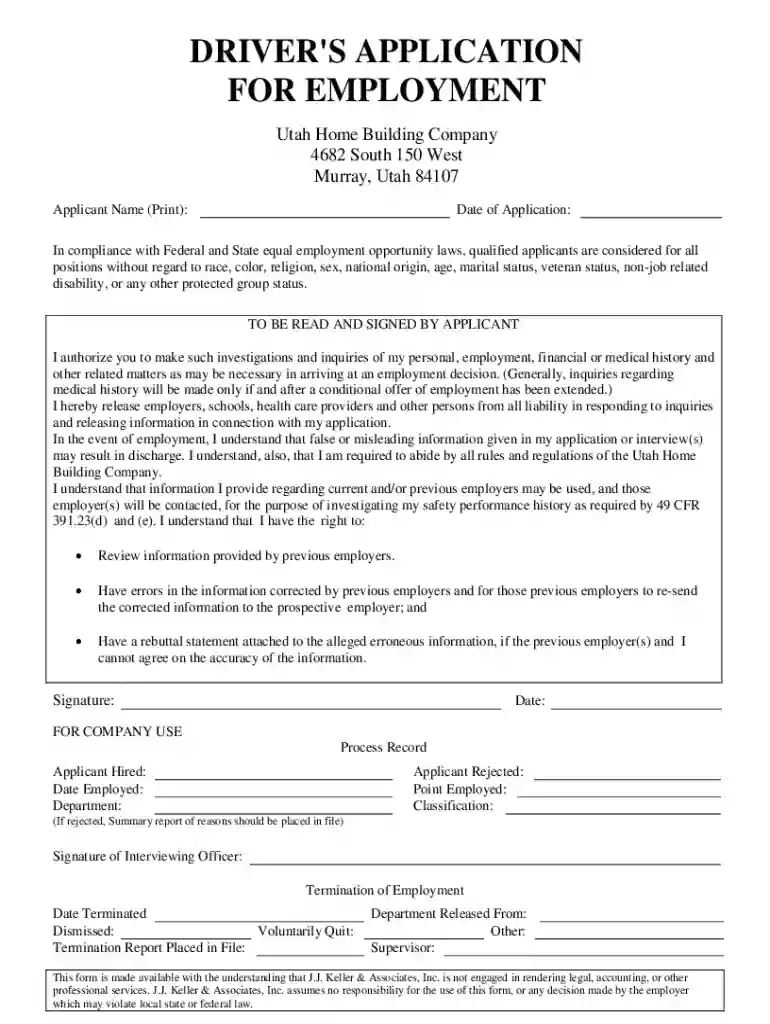
The Driver Employment Application (Company Name - FMCSA CSA) is a standardized form utilized by companies in the United States to gather essential information from individuals applying for driving positions. The form, often required by companies that adhere to the Federal Motor Carrier Safety Administration (FMCSA) and Compliance, Safety, Accountability (CSA) guidelines, serves as a comprehensive record of an applicant's personal details, driving history, qualifications, and consent for background checks. These applications are vital for maintaining compliance with federal regulations and ensuring that potential drivers meet the necessary legal and safety standards.
This application includes several critical sections that applicants must complete. These sections often consist of:
Personal Information: Requires the applicant's full name, contact information, Social Security number, and driver's license details.
Employment History: Applicants must provide a detailed account of their employment history, including previous employers, job titles, responsibilities, and reasons for leaving each position.
Accident and Violation Records: This section documents any past traffic violations or accidents the applicant has been involved in, which is crucial for assessing their suitability for driving roles.
Driving Experience: Potential drivers need to list their specific driving experiences, such as types of vehicles operated and duration of driving different vehicle classes.
Qualifications and Certifications: Includes any relevant certifications, endorsements, or special skills that could benefit their role as a driver.
Filling out the Driver Employment Application requires careful attention to detail:
Gather Required Information: Before starting, collect all necessary documents, including your driver's license, previous employment details, and any certificates or endorsements.
Fill Out Personal and Licensing Info: Accurately enter personal details and verify that your licensing information is correct.
Detail Employment History: Provide comprehensive and honest accounts of past employment, focusing on roles that involved driving.
List Driving Experience and Qualifications: Include relevant driving experiences and any specialized training or certifications in freight, hazardous materials, or large vehicle operation.
Review and Authorize Background Checks: Ensure you authorize necessary background checks by reading and agreeing to the terms stated in the application.
Complete and Double-Check: Review all sections for completeness and accuracy before submitting.
Candidates must typically provide several key documents when submitting the Driver Employment Application:
The form complies with FMCSA and CSA regulations, ensuring that hiring practices align with federal transportation safety standards. It is designed to protect both the employer and the applicant by documenting the latter’s consent to background checks and verifying they meet all regulatory requirements. Compliance with Title VI of the Civil Rights Act of 1964 ensures non-discrimination in hiring processes.
While the Driver Employment Application serves a national function under federal regulations, some state-specific variations may exist, such as:
Applicants have several options for submitting their completed applications:
Consider a logistics company that employs long-haul truck drivers. The application ensures that all potential hires are assessed for:
After submission, the applications undergo a detailed review process:
This step-by-step structure helps ensure applicants are thoroughly assessed and meet all necessary criteria for employment in driving roles.
At DocHub, your data security is our priority. We follow HIPAA, SOC2, GDPR, and other standards, so you can work on your documents with confidence.


DOT violations are situations where commercial vehicles or drivers fail to meet the regulations set by the Department of Transportation.
This is an example driver employment application. but must have a completed and signed employment application for all drivers
Hosted in partnership with the Wisconsin DOT, this seminar is designed to help intrastate motor carriers understand federal motor safety regulations.Read more


