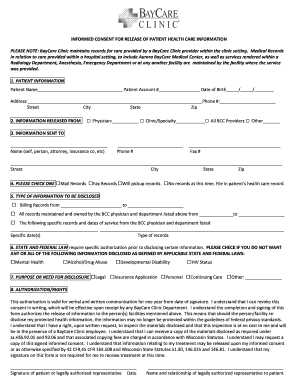
Definition & Meaning
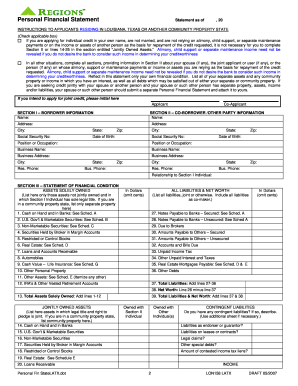
The Borrower Financial Worksheet - mortgagemediation is a comprehensive document designed to collect crucial financial information from borrowers seeking mortgage assistance. It aims to gather detailed data regarding personal, employment, expense, liability, and asset information of both the borrower and co-borrower. This form acts as a critical tool in evaluating a borrower's financial situation, enabling lenders and mediators to tailor appropriate mortgage solutions based on the information provided.
How to Use the Borrower Financial Worksheet - mortgagemediation
Using the Borrower Financial Worksheet requires careful attention to detail to ensure accurate data collection. Borrowers should begin by gathering all necessary financial records, including pay stubs, bank statements, and expense invoices. The worksheet typically accompanies a mortgage modification request and should be completed meticulously to provide lenders with a clear picture of the borrower's financial status. Each section of the form must be filled out accurately, reflecting the most current financial circumstances.
Step-by-Step Usage
- Personal Information: Start by entering the primary details, such as names, addresses, and contact information for both the borrower and co-borrower.
- Employment Details: Provide current employment information, including employer name, job title, and monthly income.
- Monthly Expenses: List all regular expenses, such as utilities, groceries, and transportation, to present a comprehensive view of monthly outgoings.
- Liabilities and Debts: Document outstanding debts, including credit card balances and loans, to showcase financial obligations.
- Assets: Include a detailed account of tangible and intangible assets, such as savings, investments, and real estate ownership.
Steps to Complete the Borrower Financial Worksheet - mortgagemediation
Filling out the Borrower Financial Worksheet involves several critical steps that need to be executed with precision. Following these steps ensures that all required data is reflected accurately, providing a complete overview of financial health.
Sequential Steps
- Gather Required Documentation: Collect all financial documents that will help in populating information on employment, income, expenses, and assets.
- Fill Out Personal Details: Start with the basic information section, ensuring that all fields are filled correctly.
- Detail Income Sources: List all income sources for both the borrower and co-borrower, categorizing them as primary or supplementary income.
- Identify and Record Expenses: Break down monthly expenses into categories such as housing, utilities, and personal expenses.
- Summarize Debts and Liabilities: Accurately account for debts using the current balances and interest rates to provide clarity.
Key Elements of the Borrower Financial Worksheet - mortgagemediation
The worksheet is composed of several key elements, each critical to painting a full picture of the borrower's financial status for mortgage mediation. Understanding these elements helps in precise data collection and interpretation.
Major Components
- Personal Information Section: This section captures general information about the borrower, such as names, age, and contact details.
- Employment and Income Section: Requires detailed reporting of employment status and monthly net income.
- Monthly Expenses Section: Insists on illustrating all essential and discretionary monthly expenses.
- Liabilities Section: Documents current debts and other financial obligations.
- Assets Section: Enlists assets in the form of savings, properties, and other investments.
Required Documents
The completion of the Borrower Financial Worksheet requires supporting documentation to validate the information provided. This ensures the credibility of the data submitted and aids in efficient mortgage mediation.
Necessary Documentation
- Income Verification: Recent pay stubs, tax returns, or other proof of income for all income sources.
- Expense Records: Utility bills, rent/mortgage statements, credit card statements, and other recurring monthly expenses.
- Debt Information: Current statements from creditors, including loans and credit cards, to show outstanding balances and due dates.
- Asset Proofs: Bank statements, investment portfolio details, or ownership documents for listed assets.
Who Typically Uses the Borrower Financial Worksheet - mortgagemediation
This worksheet is predominantly utilized by individuals seeking mortgage relief or modification. Borrowers experiencing financial hardship who are unable to meet their current mortgage obligations often use this form. Mortgage mediators and lenders are the primary entities that review this worksheet to determine the borrower’s eligibility for alternative mortgage arrangements.


Legal Use of the Borrower Financial Worksheet - mortgagemediation
Legal validity is paramount when utilizing the Borrower Financial Worksheet. It serves as a formal declaration of the borrower's financial situation during the mortgage mediation process. The worksheet not only aids in decision-making but also becomes a part of the borrower's official mortgage documentation.
Legal Considerations
- Accuracy: Borrowers are legally required to ensure the information provided is truthful and precise.
- Certification: Signatures from both borrower and co-borrower certify accuracy, binding them to the data they have provided.
- Confidentiality: Information provided is subject to privacy laws and is used solely for mortgage mediation purposes.
Examples of Using the Borrower Financial Worksheet - mortgagemediation
Real-world scenarios exemplify the usefulness of the Borrower Financial Worksheet. Through practical examples, borrowers better understand how to utilize the worksheet to their advantage.
Case Studies
- Example One: A borrower with fluctuating income due to freelance work uses the worksheet to document irregular income sources and substantiate their monthly financial status.
- Example Two: A borrower facing unexpected medical expenses uses the worksheet to negotiate more manageable mortgage terms by highlighting increased financial burdens.
- Example Three: A married couple experiencing job loss fills out the worksheet together to present a united financial front for potential mortgage modification.
By thoroughly understanding and correctly utilizing the Borrower Financial Worksheet - mortgagemediation, borrowers can significantly improve their chances of successfully negotiating favorable mortgage terms.