







Definition & Meaning
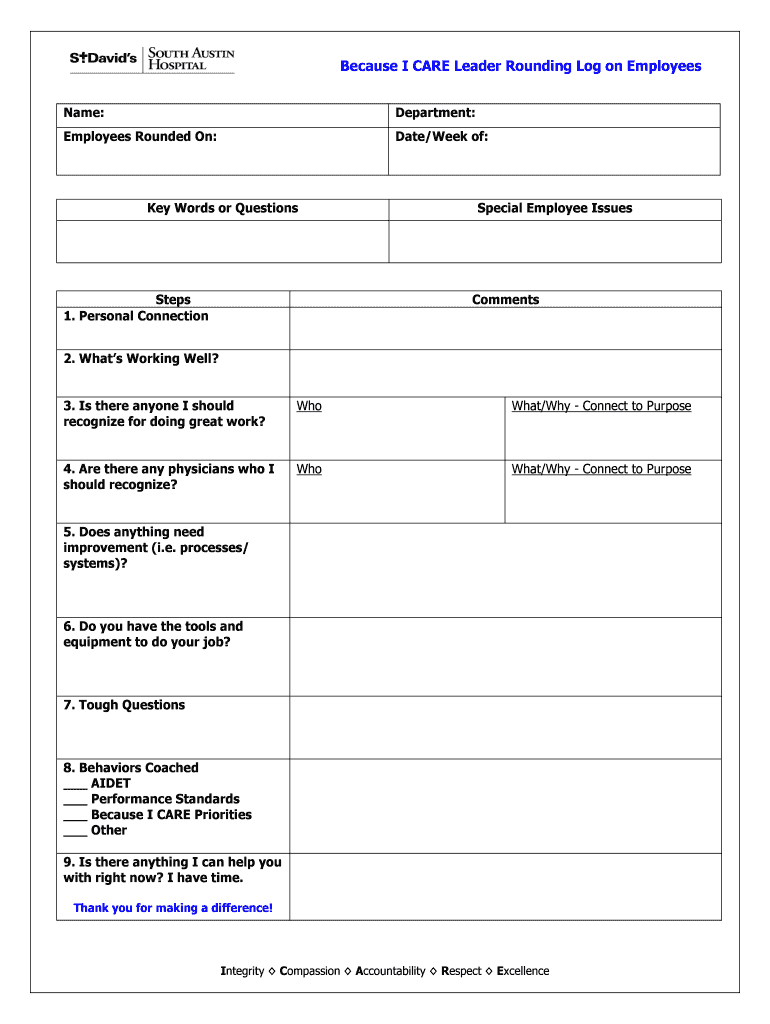
The "Because I CARE Leader Rounding Log on Employees" is a structured tool used by organizational leaders to engage with their team members. It's designed not only to document interactions but to establish personal connections, recognize achievements, and address any areas requiring improvement. The log emphasizes core values like integrity, compassion, accountability, respect, and excellence to foster a supportive work environment. By documenting these engagements, leaders can ensure employees have the resources they need to succeed.
How to Use the Because I CARE Leader Rounding Log on Employees
Using this log involves a series of strategic steps aimed at maximizing employee engagement and development. Leaders should:
- Schedule Regular Check-ins: Plan regular intervals for rounding to maintain consistent communication.
- Document Each Interaction: Record details of each discussion, including personal achievements and challenges, to keep a comprehensive history.
- Identify Action Points: Note specific areas for improvement and resources required by employees.
- Follow Up on Commitments: Ensure any promised resources or changes are delivered in a timely manner.
This methodical approach ensures that leaders maintain transparency and build trust with their team members.
Steps to Complete the Because I CARE Leader Rounding Log on Employees
Completing the log involves several clear steps:
- Initiate the Conversation: Start each session by setting a positive tone and expressing genuine interest in the employee's wellbeing.
- Gather Information: During the conversation, collect detailed insights about the employee’s current projects, successes, and challenges.
- Record Details: Accurately document all relevant details including any personal anecdotes shared by the employee.
- Set Objectives: Discuss and set realistic objectives for both the leader and the employee, ensuring alignment with organizational goals.
- Review & Close: Conclude with a review of the discussion and outline next steps, making plans to revisit any unresolved issues.
These steps help ensure the log is thorough, accurate, and ultimately constructive for both the employee and the leader.
Who Typically Uses the Because I CARE Leader Rounding Log on Employees
This log is primarily used by managers, supervisors, and organizational leaders who are responsible for team oversight and development. It serves as a vital tool for leaders seeking to enhance team dynamics through personalized engagement strategies. In corporate environments, HR professionals may also utilize this log to assist in implementing employee-centric policies and interventions.


Key Elements of the Because I CARE Leader Rounding Log on Employees
Several key elements make up this log:
- Employee Details: This includes the employee’s name, role, and department, providing context for each interaction.
- Summary of Discussion: A concise overview of topics discussed during the rounding session.
- Achievements: Recording of any personal or professional achievements shared by the employee.
- Challenges & Needs: Documenting any barriers the employee is facing and resources they may need.
- Action Items: A list of commitments and actions agreed upon by the leader and employee.
These elements are designed to ensure each session is productive and actionable.
Examples of Using the Because I CARE Leader Rounding Log on Employees
Practical examples of utilizing this log include:
- Monthly Performance Reviews: Leaders can use this log during scheduled performance reviews to create a record of ongoing development.
- Onboarding Process: New hires can be engaged through personalized interactions during their induction period using this log, providing support during their transition.
- Recognition Programs: Recognize employees’ accomplishments by documenting successes, which can be used later for performance appraisals or awards.
These scenarios demonstrate how the log can be a flexible tool accommodating various organizational needs.
Important Terms Related to Because I CARE Leader Rounding Log on Employees
Understanding the terminology specific to this log is critical for its effective implementation:
- Rounding: A method of engaging with employees in a structured and consistent manner.
- Engagement: The level of commitment and involvement an employee feels towards their organization.
- Feedback Loop: A process of delivering and receiving constructive feedback to facilitate continuous improvement.
These terms reflect the log's focus on promoting a healthy, interactive workplace culture.
Legal Use of the Because I CARE Leader Rounding Log on Employees
While the use of this log primarily revolves around enhancing organizational practices, it’s important to adhere to legal standards regarding employee interaction documentation. Considerations include:
- Confidentiality: Ensuring employee information recorded within the log is protected and shared only with authorized personnel.
- Compliance: Adhering to labor laws and organizational policies when documenting conversations to avoid potential disputes.
These legal considerations help maintain a fair and respectful environment when utilizing the log.




