




01. Edit your verification of experience form child development online
Type text, add images, blackout confidential details, add comments, highlights and more.

Type text, add images, blackout confidential details, add comments, highlights and more.

Draw your signature, type it, upload its image, or use your mobile device as a signature pad.

Send it via email, link, or fax. You can also download it, export it or print it out.
The verification of experience form for child development is a crucial document used to verify an individual's professional experience as it pertains to obtaining a Child Development Permit. This form serves as a validation tool that outlines the practical experience an applicant has accrued in the field of child development. Employers complete this form for each role the applicant has held, stating the specific positions and durations of employment. The completed form is required for the permit application process, ensuring the applicant meets the necessary experience credentials for various permit levels, such as Assistant, Associate Teacher, Teacher, Master Teacher, Site Supervisor, and Program Director.
Utilizing the verification of experience form effectively involves a systematic approach to ensure all required information is accurately captured. Here's how to use the form:
This step-by-step approach ensures that applicants provide comprehensive and verifiable documentation of their field experience.
Completing the verification of experience form requires precision and attention to detail. Follow these steps for a thorough and accurate submission:
Several key elements must be included in the verification of experience form to ensure that it meets the requirements:
These elements form the backbone of the form, detailing the experience and presenting it clearly for the reviewing authority.
The form is primarily used by individuals seeking a Child Development Permit in the United States. It is relevant to aspiring child development professionals aiming to demonstrate their practical experience in the field. The form is also crucial for employers in the child development sector, as it allows them to verify and officially attest to the work performed by their employees. Furthermore, educational boards and licensing authorities utilize these forms to evaluate the eligibility of applicants for various permit levels.


Compliance with legal requirements is critical when using the verification of experience form. It's essential to provide accurate and truthful information, as any misrepresentation can lead to penalties or rejection of the permit application. Employers must ensure their verification of the applicant's experience is accurate and fully reflective of the individual's role and responsibilities. The form must be completed and submitted within the deadlines set by the issuing authority to remain valid. Adhering to these guidelines ensures legality and authenticity in the permitting process.
While the verification of experience form for child development follows a general template, specific rules and requirements may vary by state. Differences can include:
Understanding and checking for any state-specific regulations is essential for applicants to ensure seamless processing of their forms.
Applicants can handle this form in both digital and traditional paper formats, although some states may have preferences or requirements for one over the other. Compatibility with common software tools like DocHub enhances the form's utility, allowing for easy editing and sharing with employers. Digital versions streamline the process by facilitating quicker submission and reducing the time it takes for processing and ultimate approval. Users must ensure all digital inputs retain the form's integrity and meet any specific format requirements set by their state's educational authority.
At DocHub, your data security is our priority. We follow HIPAA, SOC2, GDPR, and other standards, so you can work on your documents with confidence.




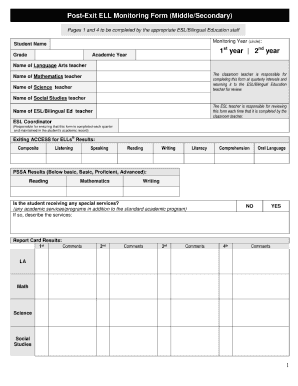
Complete 175 days of experience. This experience must be verified by submitting an original letter from the employer on official letterhead. A completed
Jun 14, 2022 When applying for a Child Development Permit with Option 1, experience must be verified by submitting this Verification of Experience form or anRead more


