Understanding the Purpose of Schedule O (Form 990) (Rev December 2024)
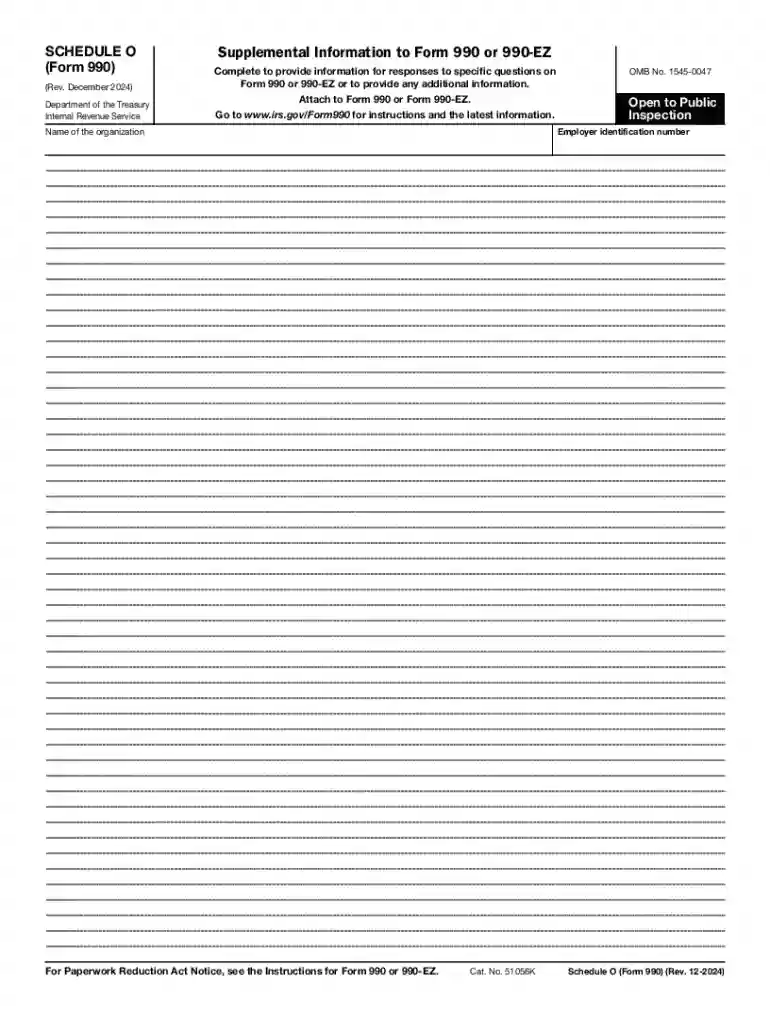
Schedule O (Form 990) is an essential part of filing for tax-exempt organizations, acting as a supplemental form to provide additional information required by the IRS. This form is vital for showing transparency in operations and ensuring compliance with legal obligations.
The Role of Schedule O in Tax Filings
- Supplemental Information: Provides additional insights that the main form lacks.
- Filling In Gaps: Addresses specific questions or sections that require further explanation.
- Public Inspection: Information provided on this schedule becomes available for public scrutiny, emphasizing the need for accuracy and transparency.
How to Use Schedule O (Form 990) (Rev December 2024)
Schedule O is primarily used by tax-exempt organizations to detail and elaborate on specific sections of Form 990 or 990-EZ.
Utilization Process
- Identify Sections Needing Elaboration: Recognize the sections of Form 990 that request additional information.
- Input Comprehensive Details: Ensure all necessary expansions or responses are thoroughly documented in Schedule O.
- Align Responses with IRS Guidelines: Maintain consistency with IRS instructions to avoid discrepancies.
Practical Application
- Mission Statements: Provide detailed descriptions of the organization's mission and program services.
- Board Composition Changes: Explain any alterations in board members or structure not captured in the main form.
Steps to Complete Schedule O
Completing Schedule O requires precision to ensure compliance and accuracy in the information provided.
Step-by-Step Completion
- Review Instructions: Begin by thoroughly reading the IRS instructions specific to Schedule O.
- Gather Necessary Information: Collect data relevant to the sections requiring further detail.
- Draft Responses: Prepare concise yet comprehensive explanations for each applicable section.
- Verify Details: Cross-check the information with organizational records to ensure accuracy.
- Completion and Review: Fill out the form, then review for consistency and completeness before submission.
Typical Sections Needing Elaboration
- Section A: Explaining variances in financial reporting.
- Section B: Detailing governance policies and practices.
Who Typically Uses Schedule O
Schedule O is utilized by various types of organizations, primarily those applying for tax exemptions.
Unique Use Cases
- Environmental Groups: May leverage Schedule O to expound on their environmental impact and projects.
- Healthcare Nonprofits: Use the form to offer detailed reports on community health programs.
Important Terms Related to Schedule O
Understanding specific terms ensures accurate completion and interpretation of Schedule O.
Glossary of Terms
- Tax-Exempt Entity: A type of organization that is exempt from federal income tax.
- Supplemental Information: Additional details that are not covered in Form 990 or 990-EZ.
- Public Inspection Copy: The version of Schedule O available for public review that should omit sensitive information.
- Governance Documentation: Internal policies and procedures that an entity follows.
Common Misunderstandings
- Confidential Information: Organizations must know what is exempt from public disclosure to avoid unnecessary exposure.
IRS Guidelines for Schedule O
Adhering to IRS guidelines ensures that Schedule O is filled out correctly and without errors.
Key Compliance Points
- Accuracy: All information provided must be true and verifiable.
- Timeliness: Schedule O should be submitted on time with the core Form 990 to avoid penalties.
- Detail Level: Organizations should provide enough detail to paint a clear picture of operations without being overly verbose.
IRS Instructions Overview
- Appendix Indicators: IRS guidelines often specify sections where supplemental information is necessary, helping organizations identify what must be included in Schedule O.
Filing Deadlines and Important Dates
Correct filing timelines are crucial for maintaining compliance and avoiding penalties.
Essential Dates
- Regular Deadline: Generally corresponds with the deadline for Form 990, typically the 15th day of the fifth month after the fiscal year ends.
- Extended Deadlines: Organizations may apply for extensions, often up to six months beyond the regular deadline.
Time Management
- Preparation Timeline: Organizations should begin preparing Schedule O well before the final deadline to allow for comprehensive reviews and edits.
Penalties for Non-Compliance with Schedule O
Failure to complete or include Schedule O accurately can result in significant repercussions.
Common Penalties
- Monetary Fines: Entities may incur fines for late or incomplete submissions.
- Loss of Tax-Exempt Status: Repeated non-compliance can lead to revocation of tax-exempt status.
Preventative Measures
- Internal Checks: Organizations should establish an internal audit system for reviewing the details before submission.
- Legal Consultation: Legal consultation can help navigate complex reporting requirements and avoid potential penalties.
Key Elements and Features of Schedule O
Recognizing what crucial components to focus on enhances the quality and completeness of Schedule O.
Essential Components
- Detailed Explanations: Focused on providing context for numbers or statements made in Form 990.
- Complete Narratives: Each section should tell a coherent story about the organization's activities.
Enhancing Understanding
- Case Study Examples: Providing real-world examples of how contributions were used within the narrative sections can enhance the quality of information provided.
In crafting this detailed guide, the emphasis has been on clarity, relevance, and comprehensiveness to ensure accurate and effective use of Schedule O (Form 990) (Rev December 2024) in tax filing and compliance.