







Definition and Meaning
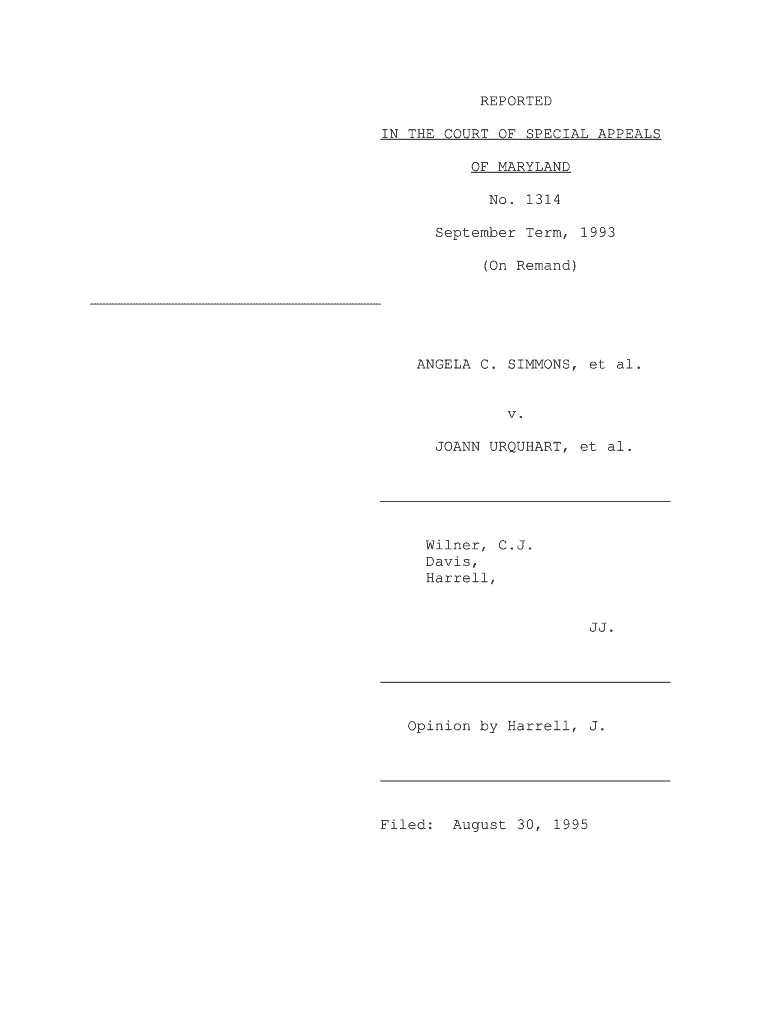
"Simmons, et al" refers to a legal case involving Angela C. Simmons and her children against Joann Urquhart, M.D., and others. This case is centered around issues of wrongful death due to alleged medical negligence. The plaintiffs claimed that Dr. Urquhart failed to adequately respond to Mr. Simmons's post-operative symptoms, resulting in his death from a pulmonary embolism. The case is notable for its examination of the 'last clear chance' doctrine, where it was argued that Dr. Urquhart had a final opportunity to mitigate the outcome but failed to do so. The Maryland Court of Special Appeals had to assess the lower court’s decisions particularly around the venue and jury instructions.
How to Use the SIMMONS, et al Case
In legal settings, the Simmons, et al case can be used as a precedent to demonstrate the applicability of the 'last clear chance' doctrine. Lawyers examining similar cases can reference the appellate court's decision to argue for proper consideration of evidence related to last opportunities to avoid negative outcomes. It can guide attorneys in identifying critical points where healthcare providers may have averted potential harm to patients. To make effective use of this case, it's essential to analyze specific circumstances where similar procedural or judicial errors might have occurred.
Steps to Complete a Similar Legal Form
- Identify Case Details: Gather all relevant information, including names of parties involved, dates of events, and key incidents.
- Document Evidence: Collect post-operative records, medical reports, and witness testimonies.
- File for Venue Appropriateness: Ensure the chosen venue adheres to legal standards to avoid disputes like those in Simmons, et al.
- Draft Legal Arguments: Craft arguments focusing on negligence and the application of the 'last clear chance' doctrine.
- Submit Filings to Court: Follow correct filing procedures as mandated by jurisdiction guidelines.
- Prepare for Proceedings: Organize all documentation in a manner that supports the sequence of events pertinent to the claim.
Legal Use of the SIMMONS, et al Case
The Simmons, et al case underscores vital legal concepts in wrongful death litigation. It emphasizes the importance of procedural accuracy, particularly concerning the 'last clear chance' doctrine and medical negligence. Legal professionals can harness this case to argue for or challenge the sufficiency of jury instructions and the admissibility of evidence regarding the possibility of averting harm. The case's progression through appellate review highlights the necessity of scrutinizing lower court rulings and how judicial oversights can be grounds for appeal.
Key Elements of SIMMONS, et al
- Parties: Angela C. Simmons, et al versus Joann Urquhart, M.D., et al.
- Allegations: Medical negligence leading to wrongful death.
- Legal Principles: 'Last clear chance' doctrine and jury instruction adequacy.
- Court Decisions: Reversal and remand for jury instruction issues relating to the aforementioned doctrine.
- Key Outcome: Emphasis on how trial courts must duly consider circumstantial evidence that might have provided an alternative outcome.
Important Terms Related to SIMMONS, et al
- Wrongful Death: Legal action due to death caused by negligence.
- Negligence: Failure to take reasonable care, resulting in damage or injury to another.
- Pulmonary Embolism: A blockage in a lung artery, critical in the Simmons case.
- Last Clear Chance Doctrine: Concept that allows recovery of damages even if the plaintiff is partially at fault, provided the defendant had a final opportunity to prevent the harm.
Examples of Using the SIMMONS, et al Case
Legal professionals may cite Simmons, et al when arguing similar cases of alleged medical negligence. If a healthcare provider fails to act upon a patient's critical symptoms, this case could be used to argue that all existing procedures and recommendations were not pursued. Another instance may involve re-examining jury instructions when procedural errors in advising jurors might have led to unfair verdicts due to omitted legal doctrines like 'last clear chance.'
State-Specific Rules for SIMMONS, et al
While Simmons, et al was decided in Maryland, similar legal principles may differ across states. Each state may interpret the 'last clear chance' doctrine variably, and adherence to procedural protocols involves state-specific guidelines. Understanding these differences is crucial when utilizing this case as a reference; legal professionals must adjust their strategies to conform to local laws and procedures.




