




01. Edit your after death form online
Type text, add images, blackout confidential details, add comments, highlights and more.

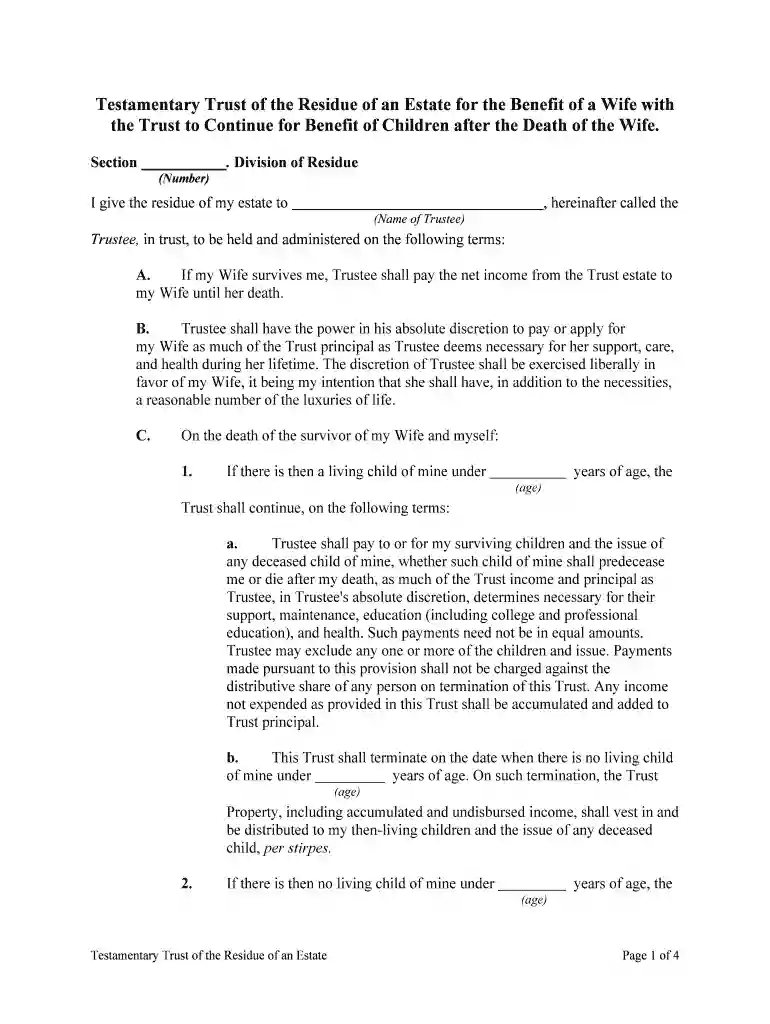
Type text, add images, blackout confidential details, add comments, highlights and more.

Draw your signature, type it, upload its image, or use your mobile device as a signature pad.

Send testamentary trust form via email, link, or fax. You can also download it, export it or print it out.
An "after death form" is typically a legal document completed following someone's passing to address various legal and administrative tasks associated with the deceased person’s estate. This form serves different purposes depending on the legal requirements of the jurisdiction and the specifics of the deceased individual's assets. It may be used to file taxes, initiate the probate process, designate asset distribution, and more. Understanding the exact purpose and context of the form is crucial in managing posthumous responsibilities effectively.
The after death form is integral in the formal transfer of properties and finalizing outstanding matters related to the deceased. Its completion often involves legal, financial, and personal details, making it a sensitive and critical part of the estate management process.
Acquiring an after death form can vary by state and the specific task it addresses. Generally, these forms are available through state government websites or specific agencies such as the Department of Revenue or the Probate Court, depending on the form’s nature. Legal advisors or estate planners can also provide these documents as part of their services.
Most forms are available in multiple formats, ensuring accessibility for individuals using various document management tools.
Filling out an after death form can be comprehensive due to the detailed information required. Below is a step-by-step guide typically involved in the process:
Collect Necessary Information: Gather essential details such as the deceased’s full name, Social Security Number, financial records, and relevant legal documents.
Understand the Form Sections: Familiarize yourself with each section of the form to ensure accurate completion. This includes areas for personal data, financial assets, debts, and beneficiary details.
Complete Sections Accurately: Fill out each part carefully, ensuring that the information matches official records to avoid discrepancies.
Attach Required Documents: Include necessary attachments such as death certificates, ownership documents, or other proofs that substantiate claims and declarations.
Review for Completeness: Double-check all entries for accuracy and completeness to prevent processing delays.
Submit the Form: Determine the method of submission as specified, whether online, by mail, or in person, according to instructions on the form.
Detailed attention to each step is vital, as errors can delay legal proceedings or result in penalties.
The after death form is used by individuals and professionals dealing with estate administration. Typical users include:
Each user has a specific role that involves handling specific sections of the form, ensuring the estate's compliance with legal standards.


Certain terminology is frequently used concerning after death forms, each holding significant importance:
Understanding these terms helps in effectively navigating through the document and associated legal procedures.
The form is a legal instrument that facilitates the formalities required in estate management, including:
These legal applications underscore the necessity of handling the form accurately and efficiently.
Every after death form comprises essential elements essential to completing posthumous formalities, including:
These elements ensure that the form serves its intended purpose in managing the deceased’s affairs.
Each state in the U.S. imposes distinct rules surrounding the requirements and processing of after death forms. It's imperative to adhere to state-specific regulations, which might include:
Consulting state resources or legal professionals ensures compliance with local legislation and aids in the smooth administration of the estate.
Several scenarios illustrate the practical application of the after death form:
These examples depict the versatility and necessity of the form across various situations in estate management.
At DocHub, your data security is our priority. We follow HIPAA, SOC2, GDPR, and other standards, so you can work on your documents with confidence.


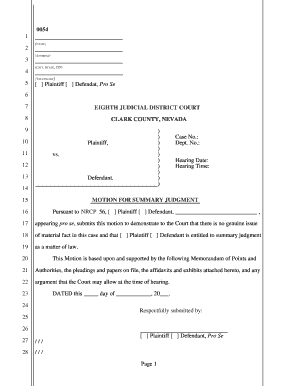

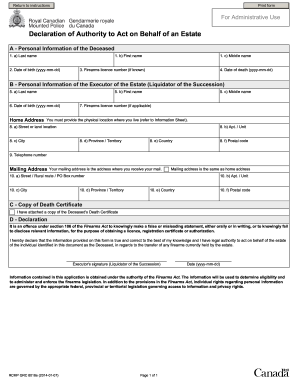

There are many practical matters to handle when a loved one dies. This guide covers getting a death certificate, other documents to gather and whom to notify.
After death we are unconscious in a certain sense, because consciousness is too strong, too powerful, because we live entirely in consciousness, and what we
If you check the box on line C, you must have proof of death. The proof of death is a copy of either of the following. The death certificate. The formal


