




01. Edit your property manager agreement online
Type text, add images, blackout confidential details, add comments, highlights and more.

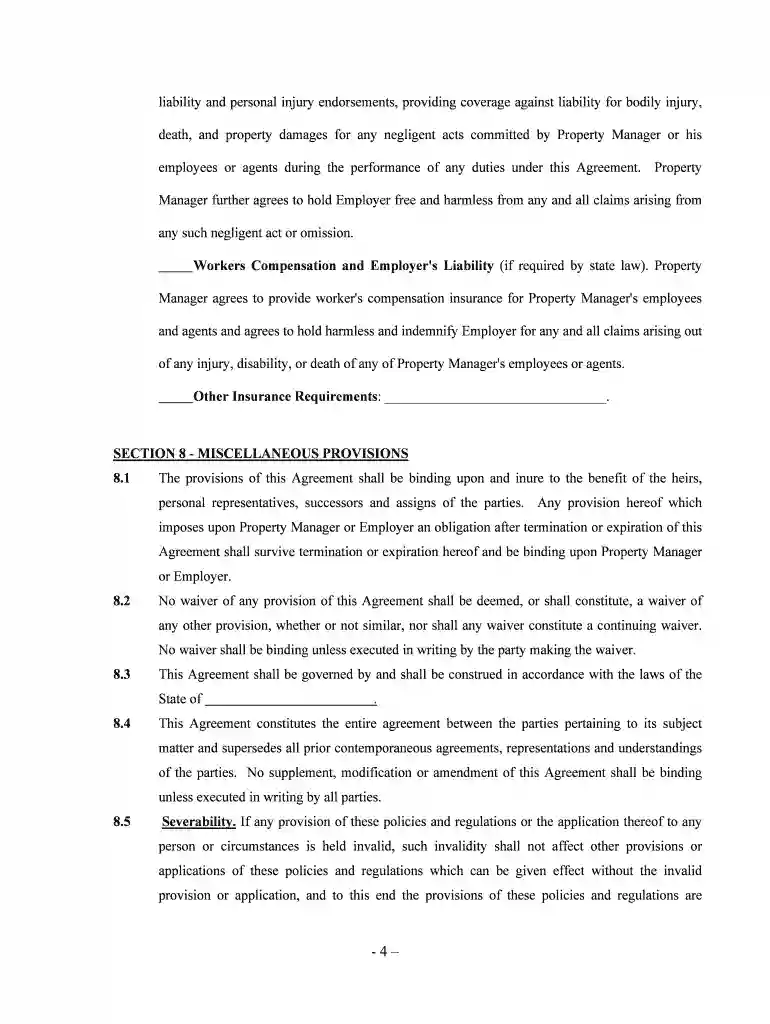
Type text, add images, blackout confidential details, add comments, highlights and more.

Draw your signature, type it, upload its image, or use your mobile device as a signature pad.

Send manager independent contractor via email, link, or fax. You can also download it, export it or print it out.
Property management involves overseeing and managing real estate properties on behalf of the owners. This can include residential, commercial, or industrial properties. The primary goal is to ensure the property is maintained, tenants' needs are met, and the property generates income. Property managers handle various tasks, including rent collection, property maintenance and repairs, tenant screening, and lease agreements. This role requires strong negotiation skills, financial acuity, and a comprehensive understanding of real estate laws and regulations.
Identify Property Needs:
Screen and Select Tenants:
Lease Agreement Execution:
Routine Inspections:
Rent Collection and Financial Management:
Engaging in property management provides property owners with the advantage of professional oversight of their real estate investments. Through property management, owners can maximize rental income, ensure property maintenance, and adhere to legal requirements, which can be daunting to manage independently. It also offers peace of mind by ensuring constant tenant relations and property occupancy, leading to higher long-term profitability.
A property management agreement defines the working relationship between the property manager and the property owner. Key elements include:
Scope of Services:
Compensation Structure:
Termination Conditions:
Confidentiality Obligations:
Lease Agreement:
Tenant Screening:
Maintenance:
Eviction:
Property management must adhere to a variety of legal standards and regulations. This includes compliance with housing laws such as the Fair Housing Act, which prohibits discrimination in renting. Property managers must also ensure leases meet state and local requirements, safeguarding both the tenant's and landlord's rights. Additionally, proper handling of security deposits in compliance with state regulations is legally mandated.
Property management is subject to state-specific laws and regulations. These can dictate how property managers conduct tenant screening, handle security deposits, and terminate rental agreements. For example, some states may have rent control laws or mandated notice periods before eviction. Understanding these rules is essential for property managers to operate within legal boundaries and avoid penalties.
Efficient property management often requires integrating digital tools for tasks such as rent collection, maintenance scheduling, and financial reporting. Software solutions like QuickBooks and specialized property management platforms can enhance operation efficiency, providing useful insights through data analytics and streamlining communication with tenants. These tools are critical for modern property managers aiming to maintain high service standards.
At DocHub, your data security is our priority. We follow HIPAA, SOC2, GDPR, and other standards, so you can work on your documents with confidence.







Explore the Real Estate Property Management certificate program at Fordham, focused on operations, leasing, and asset management.
The Property Management Department (PMD) consists of four divisions including Facilities Management, Fleet Services, General Services, and Real Estate.Read more


