




01. Edit your form online
Type text, add images, blackout confidential details, add comments, highlights and more.

Type text, add images, blackout confidential details, add comments, highlights and more.

Draw your signature, type it, upload its image, or use your mobile device as a signature pad.

Send it via email, link, or fax. You can also download it, export it or print it out.
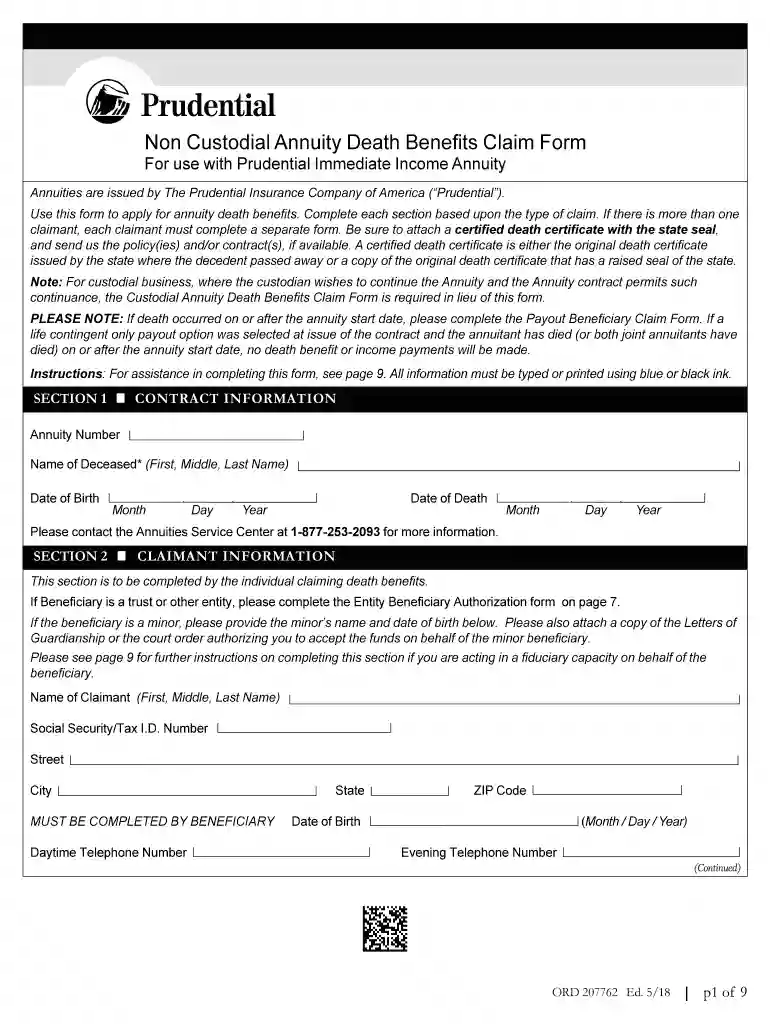
The Non Custodial Annuity Death Benefits Claim Form is designed for beneficiaries to claim death benefits following the passing of an annuity holder. This form pertains specifically to the Prudential Immediate Income Annuity, a contract that pays regular income during the lifetime of the holder. When the holder passes away, beneficiaries must complete this form to access funds designated as death benefits. This document is structured to gather essential information and validate claims, ensuring compliance with legal requirements.
Beneficiaries and executors of the estate of a deceased annuity owner are the primary users of this form. When an annuity holder passes away, specified beneficiaries must file this document to legally claim the death benefits. Insurance companies, legal representatives, or financial advisors might also engage with this form to assist their clients in completing the process. Understanding the form's requirements and accurately submitting it ensures timely and proper dispensation of benefits.


The form serves as a legally binding document to approve the release of death benefits from an annuity contract. It's crucial for legal compliance in distributing funds designated to beneficiaries. Misrepresentation or withholding of required details can lead to legal challenges or denial of the claim. In the U.S., adherence to relevant state laws and regulations governing annuities and death benefits is necessary for lawful processing.
The processing timeline can vary based on several factors:
Consider a scenario where a family member has passed away and left an annuity with Prudential. The named beneficiary uses this form to claim the death benefits. They select the lump-sum payment option, opting for minimal tax withholding due to expected low overall taxable income. Upon compiling necessary documents, including the death certificate, they submit everything to Prudential. Within a few months, the death benefits are disbursed as outlined in the contract.
Another scenario could involve multiple beneficiaries. Each claimant must submit a separate form detailing payment preferences and tax options. If one party wishes to defer payment into a retirement account, they should select that option within the form. This ensures the proper allocation of benefits across all parties involved.
We've got more versions of the Non Custodial Annuity Death Benefits Claim Form form. Select the right Non Custodial Annuity Death Benefits Claim Form version from the list and start editing it straight away!
| Versions | Form popularity | Fillable & printable |
|---|---|---|
| 2018 | 4.5 Satisfied (34 Votes) |
At DocHub, your data security is our priority. We follow HIPAA, SOC2, GDPR, and other standards, so you can work on your documents with confidence.



Custodial Account. The designated person who is entitled to receive benefits under the Plan after the death of a Participant, Custodial Accounts. no claim made
AN ACT relating to insurance; imposing requirements on 2 providers of life insurance, annuity contracts and retained 3 asset accounts to confirm deaths of


