




01. Edit your form online
Type text, add images, blackout confidential details, add comments, highlights and more.

Type text, add images, blackout confidential details, add comments, highlights and more.

Draw your signature, type it, upload its image, or use your mobile device as a signature pad.

Send it via email, link, or fax. You can also download it, export it or print it out.
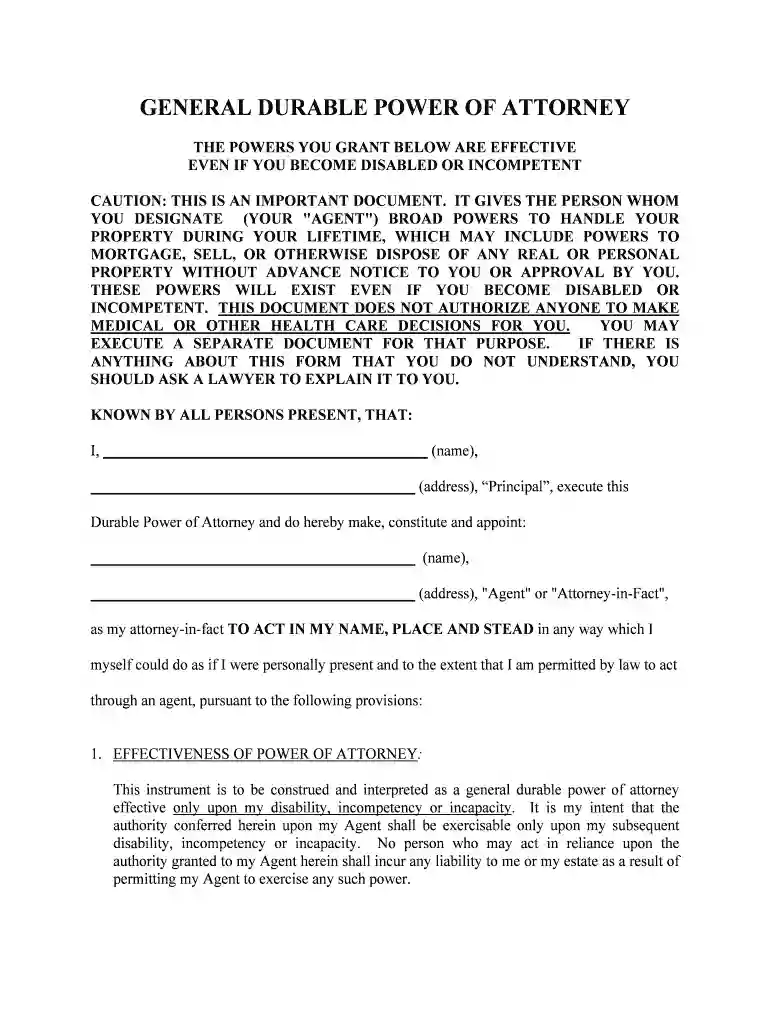
The Virginia General Durable Power of Attorney for Property and Finances, often referred to as a durable power of attorney, is a legal document that grants an appointed individual, known as the "agent," the authority to manage the financial and property affairs of another person, the "principal." This document remains in effect even if the principal becomes incapacitated. The agent can make broad decisions involving the principal's assets, accounts, and property transactions, ensuring management continuity in different circumstances. It is important to note that this document does not authorize the agent to make medical decisions on behalf of the principal.
The document typically outlines several critical components that clarify the scope and limitations of the agent's authority. Key elements include:
Using this document effectively involves several steps to ensure compliance and proper execution:
Proper execution and clear communication ensure that the document serves its intended purpose efficiently.
Completing the document involves a sequence of steps to ensure its validity:
Adhering to these steps ensures that the power of attorney is completed properly.
The document serves several legal purposes, primarily in managing and overseeing the principal's financial and property-related activities. Legal uses may include:
These legal uses ensure that the principal's financial affairs are maintained efficiently and legally.
While durable power of attorney agreements share many similarities across states, Virginia implements specific rules:
Understanding these state-specific rules is crucial when drafting the document in Virginia.
Various individuals and situations benefit from the utilization of this document:
These use cases exemplify the document's versatility and importance for different demographics.
Understanding certain terms associated with the durable power of attorney is essential for all parties involved:
Familiarity with these terms enhances comprehension and effective implementation of the document.
At DocHub, your data security is our priority. We follow HIPAA, SOC2, GDPR, and other standards, so you can work on your documents with confidence.


Durable, with respect to a power of attorney, means not terminated by the principals incapacity.
by FP Manns Jr 2018 Cited by 2 Power of Attorney Act on July 1, 2010. Durable General Power of Attorney published. CLE forms specifically prohibited


