
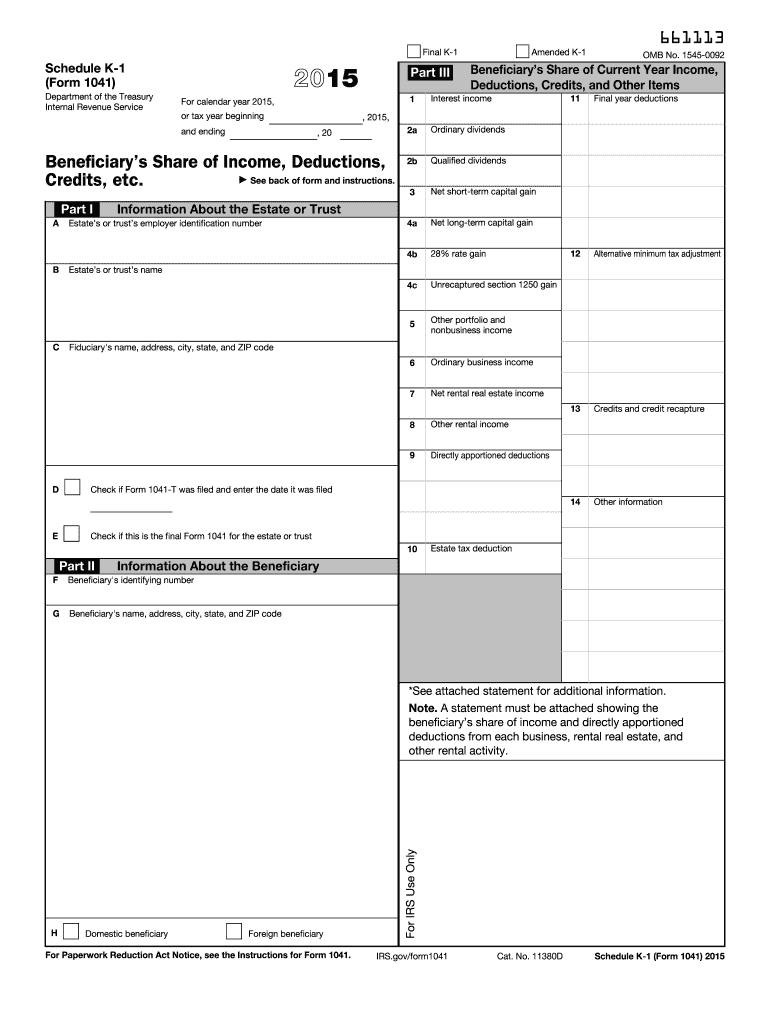







Definition and Purpose of the 2015 Form 1041 Schedule K-1
The 2015 Form 1041 Schedule K-1 is a crucial tax document used by estates and trusts to report each beneficiary's share of income, deductions, credits, and other pertinent financial items. This form serves as a means to document and communicate the distribution of an estate or trust's financial activities, ensuring beneficiaries understand and accurately report their individual tax liabilities. Items such as interest, dividends, capital gains, rental income, and other financial components are detailed within this form to assist in correct inclusion on a beneficiary’s personal tax return.
How to Obtain the 2015 Form 1041 Schedule K-1
To acquire the 2015 Form 1041 Schedule K-1, beneficiaries typically rely on the fiduciary or administrator of the estate or trust, who is responsible for preparing and distributing this document. In cases where the form is misplaced or not provided, contacting the estate or trust administrator directly is advisable. Additionally, filers might access the form through online portals provided by tax software or request assistance from tax professionals to ensure accurate retrieval and application of the form.
Steps to Complete the 2015 Form 1041 Schedule K-1
-
Collect Essential Information: Gather all necessary documents reflecting the estate or trust’s income, deductions, and credits for accurate reporting.
-
Enter Beneficiary Information: Include the beneficiary's name, address, and taxpayer identification number.
-
Detail Income Distribution: Itemize types of income such as interest, dividends, rental income, and capital gains, specifically allocating them to the appropriate beneficiary sections.
-
Account for Deductions and Credits: Outline any deductions and credits the beneficiary is entitled to, ensuring conformity with IRS guidelines.
-
Review and Finalize: Verify the accuracy of all information provided, making any necessary corrections to ensure compliance with tax regulations before submission.
Important Terms Related to 2015 Form 1041 Schedule K-1
- Fiduciary: An entity responsible for managing assets of the estate or trust for the beneficiaries’ benefit.
- Distributable Net Income (DNI): Determines the amount of income that must be distributed to beneficiaries and is reportable on the K-1 form.
- Beneficiary: An individual designated to receive assets or income from the estate or trust.
- Grantor Trust: A type of trust where the grantor retains control over the trust's assets.
IRS Guidelines for the 2015 Form 1041 Schedule K-1
The IRS stipulates specific guidelines for completion of Form 1041 Schedule K-1, focusing on accurate allocations of income, deductions, and credits. The fiduciary must ensure the form is consistent with the estate or trust's income tax return and adheres to all statutory requirements. They must provide beneficiaries with their respective forms by the fiduciary’s tax filing deadline, allowing beneficiaries adequate time to report their totals accurately on personal returns.
Filing Deadlines and Important Dates
The deadline for furnishing the 2015 Form 1041 Schedule K-1 to beneficiaries typically corresponds with the filing deadline for estates and trusts, which is usually April 15th of the following year, though this date may shift if it falls on a holiday or weekend. Extensions may be available if requested by the fiduciary, affecting when beneficiaries are furnished their copies.
Penalties for Non-Compliance
Failing to properly report or distribute Form 1041 Schedule K-1 can result in penalties for the fiduciary, including fines for late filing or incorrect information. Likewise, beneficiaries failing to report income detailed in the Schedule K-1 on their personal tax returns might incur penalties or increased audit risks from the IRS.
Form Submission Methods
Beneficiaries can receive their 2015 Schedule K-1 through multiple methods including direct mail from the fiduciary or digital delivery, contingent on trust or estate policies. It is critical to confirm receipt, as timely response and reporting of information provided are beneficial for maintaining compliance with IRS regulations.
Business Entity Types Utilizing the Form
The Schedule K-1 is predominantly utilized by estates and complex trusts, which operate under fiduciary management to distribute income to beneficiaries. It is not typical for use by general business entities like LLCs or corporations unless these entities function within a trust or estate context. Beneficiaries within these structures must ensure they understand their reporting obligations under trust or estate tax law.




