



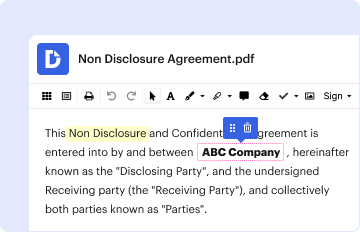
01. Edit your form online
Type text, add images, blackout confidential details, add comments, highlights and more.

Type text, add images, blackout confidential details, add comments, highlights and more.
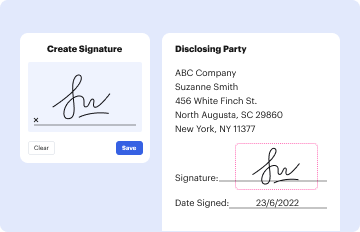
Draw your signature, type it, upload its image, or use your mobile device as a signature pad.

Send it via email, link, or fax. You can also download it, export it or print it out.
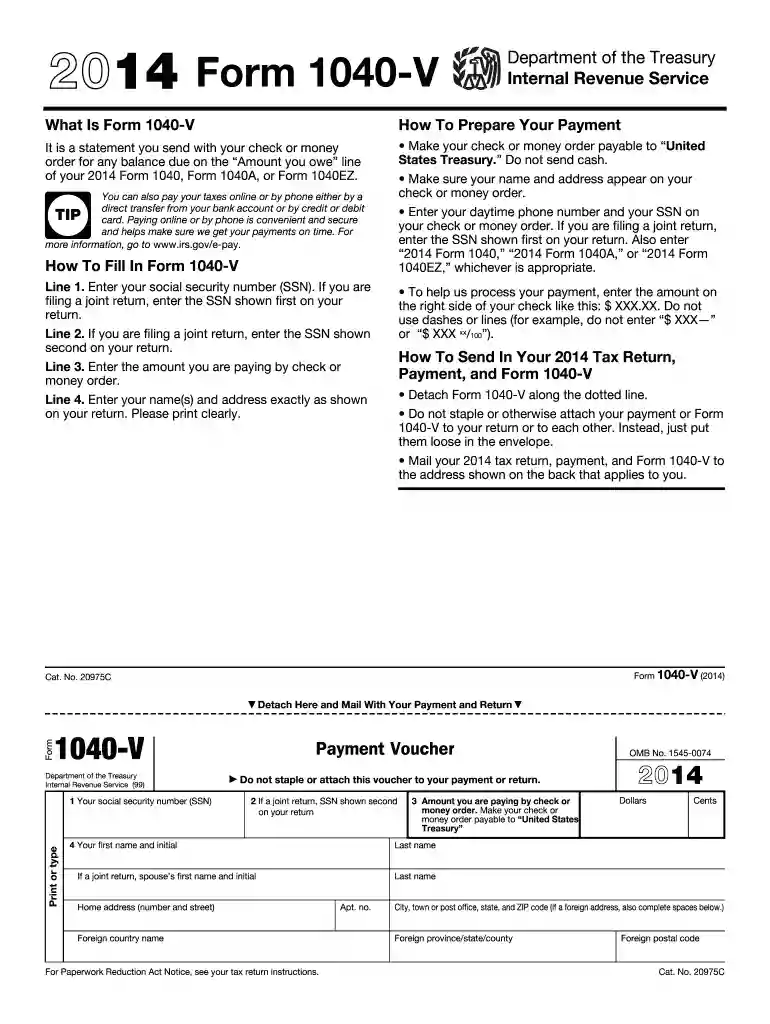
The 2014 Form 1040-V, issued by the IRS, is a payment voucher used by individual taxpayers who owe a balance on their federal income tax return for the year 2014. This document is essential for organizing and sending payments to the IRS, ensuring that all dues are correctly accounted for. The form delineates the procedure for making the payment, either by check or money order, and the specific information that must accompany the submission. Crucially, it acts as a cover sheet for the payment, ensuring that the IRS can swiftly match the payment to the correct taxpayer account.
When utilizing the 2014 Form 1040-V, it is important to follow specific steps to ensure the payment is processed accurately:
This methodical approach ensures efficiency and accuracy in processing tax payments.
Completing the 2014 Form 1040-V is straightforward:
By following these clear steps, taxpayers can minimize errors and potential delays in their payment processing.
Understanding the terminology used on the Form 1040-V is vital:
Familiarity with these terms ensures clarity and prevents misunderstandings during the submission process.
The IRS mandates specific filing deadlines:
Awareness of these deadlines helps taxpayers avoid penalties and late fees.
Submitting Form 1040-V can be done via:
Each submission method has particular guidelines which must be observed to prevent processing delays.
The IRS provides specific guidelines to ensure compliance:
These guidelines are crucial for the seamless processing of payments and proper allocation to taxpayer accounts.
Failure to submit Form 1040-V correctly can lead to significant penalties:
Understanding these risks reinforces the importance of submitting accurate and timely payments to avoid additional financial burdens.
We've got more versions of the 2014 Form 1040-V - irs form. Select the right 2014 Form 1040-V - irs version from the list and start editing it straight away!
| Versions | Form popularity | Fillable & printable |
|---|---|---|
| 2025 | 4.4 Satisfied (30 Votes) | |
| 2024 | 4.3 Satisfied (21 Votes) | |
| 2023 | 4.7 Satisfied (42 Votes) | |
| 2022 | 4.8 Satisfied (43 Votes) | |
| 2021 | 4.7 Satisfied (32 Votes) | |
| 2020 | 4.3 Satisfied (86 Votes) | |
| 2019 | 4.2 Satisfied (62 Votes) | |
| 2018 | 4.2 Satisfied (123 Votes) | |
| 2017 | 4.2 Satisfied (113 Votes) | |
| 2016 | 4.3 Satisfied (186 Votes) | |
| 2015 | 3.9 Satisfied (30 Votes) | |
| 2014 | 4.3 Satisfied (61 Votes) | |
| 2014 | 4.6 Satisfied (48 Votes) | |
| 2013 | 4 Satisfied (22 Votes) | |
| 2012 | 4 Satisfied (26 Votes) |
At DocHub, your data security is our priority. We follow HIPAA, SOC2, GDPR, and other standards, so you can work on your documents with confidence.


Form 1040-V (PDF) Name f1040v--2014.pdf Date 2014-12-31 00:00:00 Size 77.52 KB Description 2014 Form 1040-V (PDF)
VIncome from exercise of nonstatutory stock option(s) (included in boxes 1, 3 (up to social security wage base), and 5).


