01. Edit your sharepoint access request online
Type text, add images, blackout confidential details, add comments, highlights and more.

Type text, add images, blackout confidential details, add comments, highlights and more.

Draw your signature, type it, upload its image, or use your mobile device as a signature pad.

Send sharepoint access request via email, link, or fax. You can also download it, export it or print it out.
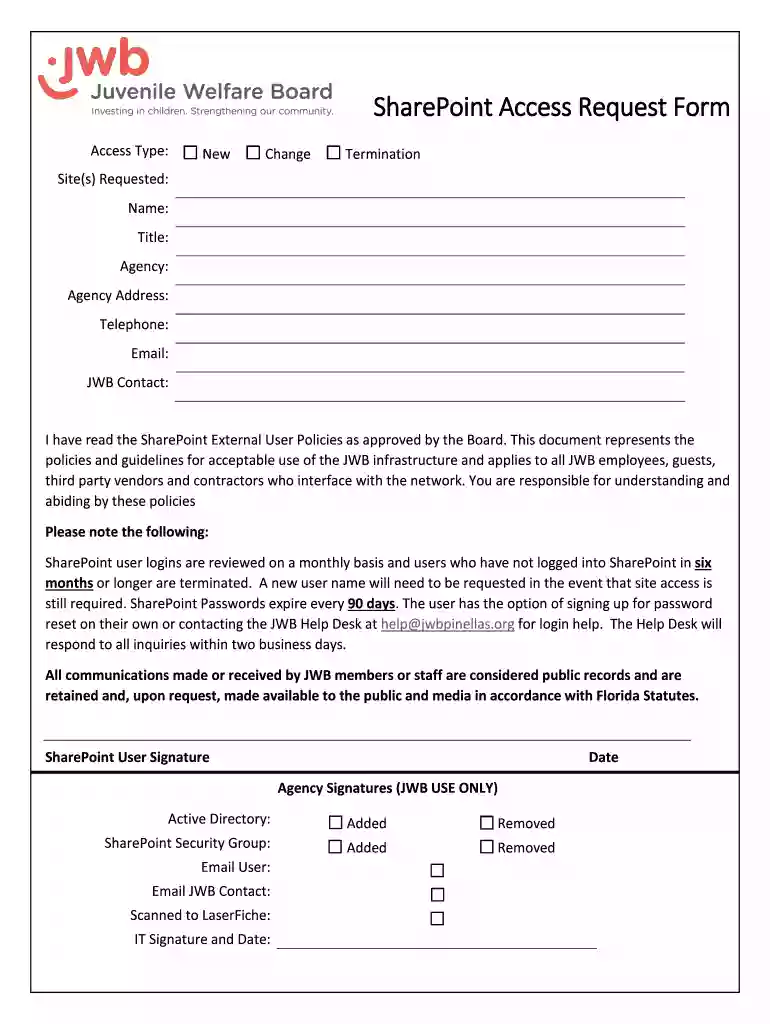
The SharePoint Access Request is a formalized process used within organizations to manage and control access to SharePoint environments, ensuring compliance with security protocols and operational policies. This process typically includes submitting a request for new access, modifying existing permissions, or terminatating access. Understanding the SharePoint Access Request is crucial for maintaining the integrity of the collaborative platform, as it regulates who can access, modify, or view specific documents and sites within SharePoint. The form also emphasizes adherence to company-specific policies, such as the SharePoint External User Policies, which often outline conditions for external parties accessing the system.
Identify the Type of Access Needed: Begin by determining whether you are requesting new access, a modification of existing permissions, or termination of access. This is essential to ensure that the request aligns with your specific needs and organizational requirements.
Gather Necessary Information: Collect all required information before filling out the form. This usually includes personal details, department information, and the specific SharePoint resources for which access is being requested. You may also need to provide justification for access and any associated business rationale.
Fill Out the Form: Complete all sections of the SharePoint Access Request Form. Be thorough in filling out every detail to avoid delays in processing. Ensure the accuracy of all information provided, such as user names, team details, and the level of access requested.
Obtain Required Signatures: The form typically requires signatures from both the requester and a managerial or IT authority. These signatures confirm the legitimacy of the request and compliance with internal policies.
Submit the Form: Submission methods might include digital submission through an HR portal or IT system, or physical delivery to a specified department. Be aware of any deadlines or specific channels designated for submissions to ensure timely processing.
Track the Request Status: After submission, keep track of the request status. Some organizations offer tracking systems or notification services to inform you of the progress of your request.
SharePoint Access Requests must adhere to various legal and compliance standards, particularly when handling sensitive or regulated data. This includes adherence to public records retention policies, especially relevant in regions like Florida where state statutes govern the retention and disposal of public records. Ensuring compliance with these regulations is not just about reducing risk but also about maintaining transparency and integrity within the organization.
User Reviews: Regular reviews of user access are vital for compliance, ensuring that users only have access to necessary resources, thus minimizing security risks.
Password Policies: Implementing robust password policies, including expiration and complexity requirements, is crucial for safeguarding access to SharePoint sites.
A new employee joins a department that regularly utilizes SharePoint for project collaboration. As part of the onboarding process, the HR department submits a SharePoint Access Request on behalf of the new hire to ensure they have the appropriate permissions to access relevant documents and tools necessary for their role from day one.
An employee’s role changes from a project contributor to a project manager. In this case, the Access Request Form is used to modify their existing SharePoint permissions, granting them additional rights to manage document libraries, assign tasks, and set permissions for other team members.
Eligibility for a SharePoint Access Request generally requires users to demonstrate a business need for accessing the platform. It is important to justify the request adequately and ensure that it aligns with the organization’s data governance and access control policies.


SharePoint Access Requests can be submitted via various methods, including online systems, email, or paper forms, depending on organizational infrastructure. The processing time can vary, typically ranging from a few days to a week, based on complexity and the need for additional approvals or verifications. Automated systems might facilitate quicker processing compared to manual methods, which can be delayed by workload and human error.
Understanding these facets of a SharePoint Access Request enables better preparation and execution, ensuring that access permissions are managed effectively and securely.
We've got more versions of the sharepoint access request form. Select the right sharepoint access request version from the list and start editing it straight away!
At DocHub, your data security is our priority. We follow HIPAA, SOC2, GDPR, and other standards, so you can work on your documents with confidence.