




01. Edit your form online
Type text, add images, blackout confidential details, add comments, highlights and more.

Type text, add images, blackout confidential details, add comments, highlights and more.

Draw your signature, type it, upload its image, or use your mobile device as a signature pad.

Send it via email, link, or fax. You can also download it, export it or print it out.
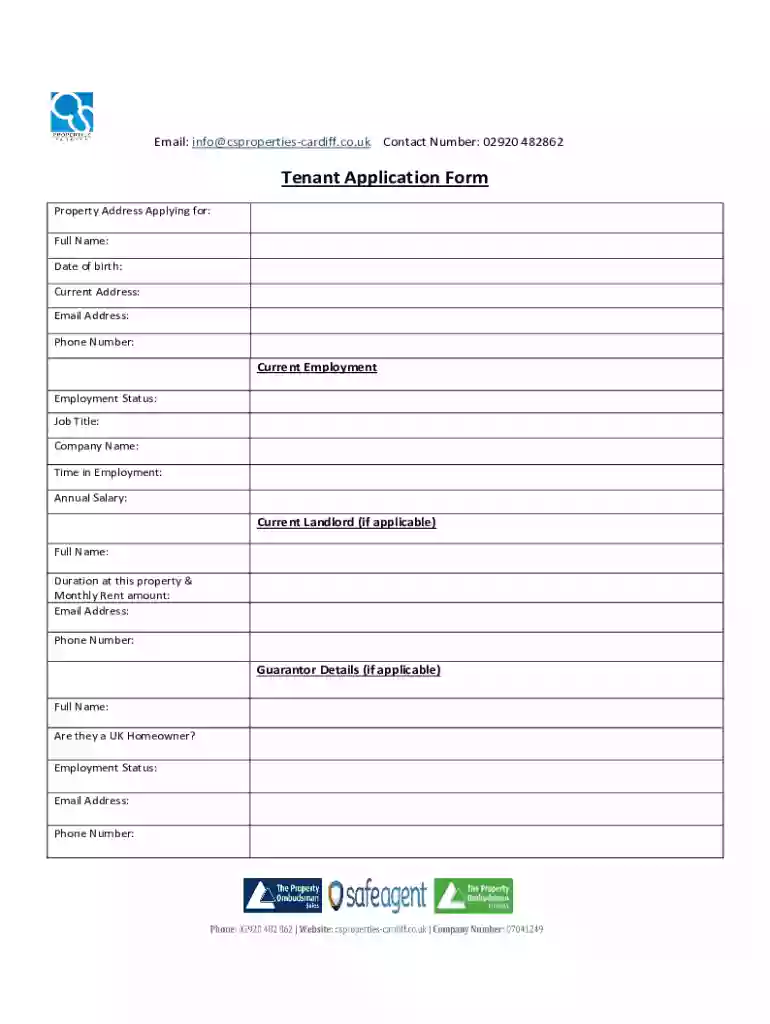
A Tenant Application Form is a crucial document utilized in the process of renting residential properties. It serves as a screening tool for landlords and property management companies to collect essential information from potential tenants. The form typically comprises sections that capture personal, employment, and financial details of the applicant. By using these forms, landlords can assess whether an applicant is a suitable and reliable tenant, ensuring that the property will be rented to individuals who are likely to fulfill lease agreements and maintain the premises responsibly.
The form often includes fields for contact information, identification, past and current rental history, employment details, income sources, and consent for a background and credit check. This holistic overview helps landlords mitigate potential risks associated with renting out their property.
The Tenant Application Form is designed to be straightforward for applicants to fill out, but understanding its intended use can help ensure accuracy:
Read Thoroughly: Before filling out the form, carefully read all instructions to understand what information is being requested.
Gather Necessary Information: Prepare your personal, employment, and financial details ahead of time to streamline the application process.
Complete All Sections: Ensure that every section of the form is filled out completely. Missing or inaccurate information can delay the application process or lead to rejection.
Provide Accurate Information: Accuracy is vital. Double-check details like social security numbers, employer contact information, and financial data to prevent any errors that might reflect badly on your application.
Sign and Consent: Be sure to sign the form and consent to necessary checks like credit and background verifications. Without signature and consent, the application may not be processed.
Submit Promptly: If there's a deadline for submission as part of a larger application process, ensure timely submission to maintain eligibility.
Filling out a Tenant Application Form involves several detailed steps:
Personal Information: Begin with your full name, date of birth, and contact details. Include phone numbers and email addresses to ensure quick communication.
Identification Documents: Include details from government-issued identification, such as driver's license or passport number.
Residential History: Provide information about current and previous residences. Include landlord contact information and duration of residence to demonstrate stability.
Employment Information: Note your current employer, job title, duration of employment, and salary. This section assures the landlord of your financial reliability.
Financial Information: Detail any other income sources and provide authorization for the landlord to perform a credit check.
References: List personal or professional references who can vouch for your character and reliability.
Review and Sign: Review the entire application for completeness and accuracy. Sign and date the document where required to validate your application.
When completing a Tenant Application Form, it is important to be familiar with and understand its essential components:
The legal framework surrounding the use of Tenant Application Forms involves several considerations:
While the Tenant Application Form serves a standard purpose across the U.S., state-specific rules can influence certain aspects:
Understanding these nuances ensures tenants and landlords remain compliant with local laws.
To accompany the Tenant Application Form, several documents are usually required:
Familiarity with terms related to the Tenant Application Form can streamline the process:
Understanding these terms aids in navigating the application effectively.
At DocHub, your data security is our priority. We follow HIPAA, SOC2, GDPR, and other standards, so you can work on your documents with confidence.


Mar 25, 2026 Download our rental application and fill it out completely. Instructions are on the second page of the form. Rental Application (PDF) Email:
APPLICATION FOR TENANCY Each adult applicant must provide photo ID, fully complete an application AFTER reading/agreeing to follow our Rules of Tenancy.


