Definition and Meaning of Contractor Punch List
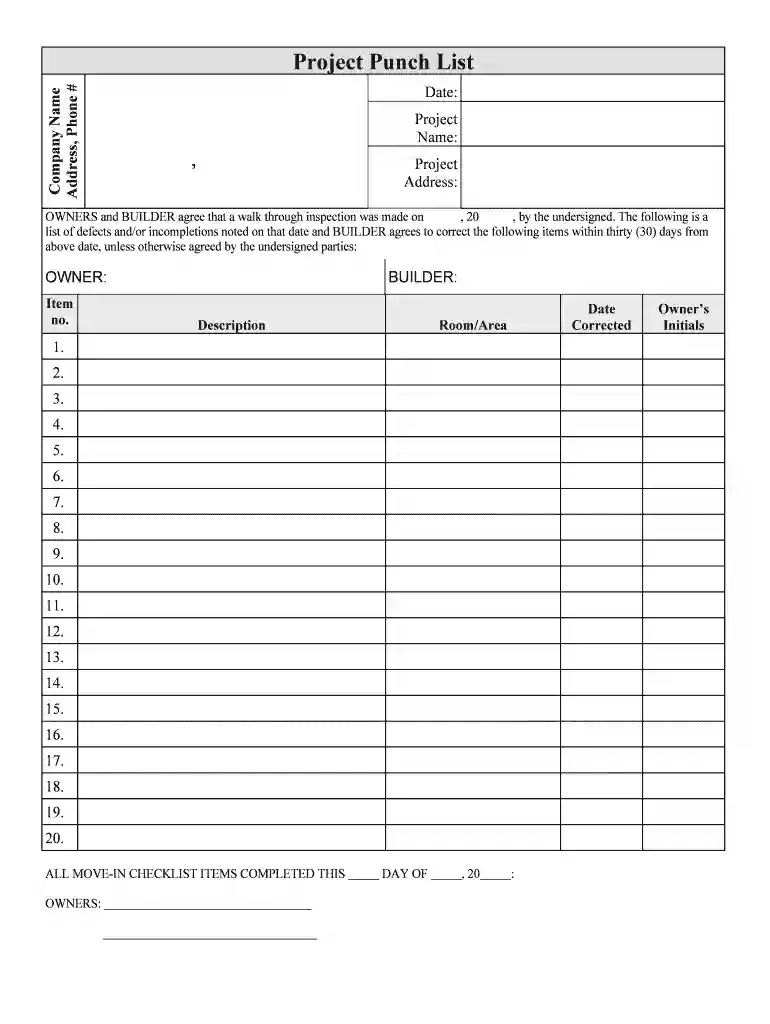
A contractor punch list is a critical document used in the construction industry to outline defects and incomplete tasks identified during a final inspection of a project. This list serves as a guide for contractors to address any outstanding issues before a project is deemed complete. Typically, the punch list specifies all corrective actions needed, including details about the project's rooms or areas that require attention. Both the contractor and project owner review and agree upon the items, ensuring mutual understanding of the necessary fixes.
Key Elements of the Contractor Punch List
A comprehensive contractor punch list should include several important components to ensure clarity and completeness:
- Item Descriptions: Clearly describe each defect or incompletion, detailing what is wrong or missing.
- Location Details: Specify the exact area or room related to each item on the list for easy identification.
- Correction Action Required: Outline the steps needed to resolve each issue, indicating whether repairs, adjustments, or replacements are required.
- Responsible Party: Identify who is responsible for addressing each item, whether it’s the general contractor, a subcontractor, or another party.
- Deadlines for Completion: Include expected dates by which each defect should be corrected to keep the project on schedule.
- Approval Signatures: Conclude with signatures from both the owner and contractor to confirm agreement on the listed items and intended corrective actions.
How to Use the Contractor Punch List
Using a contractor punch list efficiently involves a systematic approach:
- Conduct a Thorough Walk-Through: Begin with a detailed inspection of the entire project with the contractor, noting all discrepancies and unfinished items.
- Document Findings: Record each item on the punch list, noting specific locations and the nature of problems found.
- Assign Responsibilities: Clearly assign tasks to responsible parties. This step is crucial for accountability and ensures all parties know their duties.
- Set Completion Dates: Agree on deadlines for each item’s completion to prevent prolonged project closures.
- Revisit for Verification: Once corrections are made, conduct a follow-up inspection to ensure all punch list items have been satisfactorily resolved.
- Finalize the Project: Get final confirmation from all stakeholders that the project meets the agreed-upon standards and specifications.
Important Terms Related to Contractor Punch List
To fully understand and utilize the contractor punch list, familiarize yourself with the following terms:
- Defects: These are any imperfections or problems identified in a construction project.
- Satisfactory Completion: This refers to the state where all items in the punch list are corrected to the satisfaction of the project owner.
- Final Inspection: The last walk-through performed to identify any remaining issues before project closure.
- Retainage: A portion of the project’s payment withheld until all punch list items are completed satisfactorily.
- Substantial Completion: When a project is sufficiently complete so that it can be used for its intended purpose, pending a few minor modifications listed on the punch list.
Steps to Complete the Contractor Punch List
Completing a contractor punch list requires careful coordination and communication:
- Initiate the Review Process: Begin as the project nears completion; gather the project owner, contractor, and relevant subcontractors.
- Document Observations: Use a systematic approach to cover all areas of the project; ensure note-taking captures all needed corrections.
- Prioritize Items: Decide which issues should be tackled first based on their impact on project completion or functionality.
- Communicate with the Team: Share the finalized punch list with all parties; ensure everyone knows their responsibilities.
- Track Progress: Regularly update the document with progress notes, keeping all stakeholders informed of ongoing resolutions.
- Perform Final Verification: Conduct a final review once all items are marked as completed, ensuring each correction meets quality standards.
Examples of Using the Contractor Punch List
Consider these scenarios where a punch list proves invaluable:
- Residential Construction: A homeowner identifies scratches on wooden floors and missing kitchen cabinet handles during the final walk-through. The contractor punch list documents these details for prompt correction by the building team.
- Commercial Projects: In a new office building, incomplete electrical wiring and unfinished drywall are added to the punch list, specifying the timelines and teams responsible for rectifying these issues.
- Large-Scale Renovations: During renovation of a historical site, mismatched paint colors and improperly installed fixtures are logged in the punch list to ensure the restoration meets historical integrity standards.
Legal Use and Considerations of the Contractor Punch List
In the United States, the contractor punch list holds legal significance in construction contracts:
- Contractual Obligation: The completion of punch list items is typically a condition for the final release of payment in many contracts.
- Dispute Resolution: A well-documented punch list can serve as crucial evidence if disputes arise regarding project completion or quality.
- Enforcement of Standards: Utilizing a punch list ensures compliance with industry standards and legal requirements, protecting both contractor and owner interests.
State-Specific Rules for the Contractor Punch List
State regulations may influence how punch lists are managed:
- California: Requires detailed documentation and reasonable timelines for corrections.
- New York: Imposes stringent requirements for documenting defects and their resolution in public projects.
- Florida: Encourages mediation between parties if disagreements over punch list items occur, promoting alternative dispute resolution.
Understanding these nuances ensures that using a contractor punch list aligns with legal and contractual frameworks in different regions.