
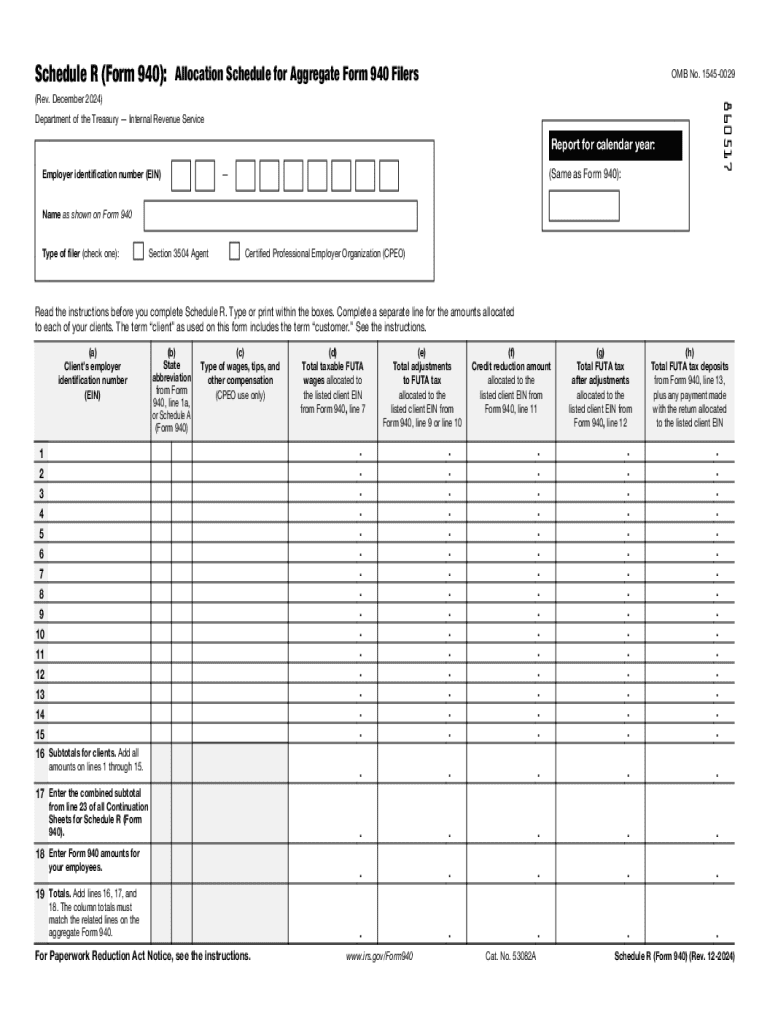







Definition and Meaning
IRS Form 940 is a crucial document used by employers in the United States to report annual federal unemployment tax. This form helps the IRS monitor businesses’ compliance with the Federal Unemployment Tax Act (FUTA). The e-filing process facilitates this by allowing digital submission, streamlining compliance for businesses by reducing paperwork and improving accuracy. E-filing this form offers secure, efficient handling of sensitive tax data, contributing to an easier annual filing experience.
How to Use the E-file IRS Form 940 for Federal Unemployment Tax Online
Businesses primarily use the e-file version of IRS Form 940 to report FUTA tax obligations. By utilizing online platforms, employers can input their details directly into the system, which guides them through each section. DocHub and similar services provide tools to digitally edit, sign, and submit the form, making the process intuitive and efficient. Utilizing these services ensures users accurately calculate their tax liability, considering exemptions and adjustments where applicable.
Steps to Complete the E-file IRS Form 940 for Federal Unemployment Tax Online
-
Log into Your Preferred E-filing System: Access systems like DocHub to securely start the e-filing process.
-
Gather Required Information: Ensure you have your Employer Identification Number (EIN), total employee wages, and state unemployment tax information.
-
Fill Out Necessary Sections: Carefully input data regarding your business, including details of any FUTA tax payments or credits.
-
Review and Edit: Use available annotation tools for accuracy and completeness, correcting any errors identified during a review.
-
Digitally Sign the Form: Apply your electronic signature to certify the accuracy of the data.
-
Submit the Form: Utilize the platform’s submission functionality to send your form to the IRS electronically.
Key Elements of the E-file IRS Form 940 for Federal Unemployment Tax Online
- Employer Information: Include name, address, and EIN.
- Annual Wage Detail: Report your organization’s total employee wages for the year.
- Tax Calculation: Calculate FUTA taxes owed after adjustments for state unemployment contributions.
- Payment Details: Include any payments made throughout the year and credits.
- Signature and Date: A legally binding electronic signature to affirm data accuracy.
Who Typically Uses the E-file IRS Form 940 for Federal Unemployment Tax Online
The primary users of IRS Form 940 are business owners and employers in the United States who pay wages to employees and are subject to FUTA taxes. This includes:
- Limited Liability Companies (LLCs)
- Corporations
- Partnerships
- Sole proprietors employing staff


Why You Should E-file IRS Form 940 for Federal Unemployment Tax Online
E-filing Form 940 is highly advantageous, offering several benefits:
- Efficiency and Speed: Online filing is quicker and reduces potential errors associated with paper submissions.
- Security: Protects sensitive financial data through robust encryption technologies.
- Convenience: Easily manage documentation from any device with internet access without the need for physical paperwork.
- Real-time Feedback: Instant error notifications and guidance ensure accuracy.
State-specific Rules for the E-file IRS Form 940 for Federal Unemployment Tax Online
While Form 940 addresses federal unemployment taxes, it is crucial to understand variations in state unemployment tax regulations. For instance, employer-specific adjustments may be available depending on employment levels and payment timelines. States like California or Texas may have unique requirements, affecting credit calculations and overall FUTA tax obligations. It’s important to consult state-specific guidelines to ensure comprehensive compliance.
Filing Deadlines and Important Dates
IRS Form 940 must be filed by January 31 of each year, covering the previous calendar year. However, if employers make timely FUTA tax deposits throughout the year, they may have until February 10 to file. It's essential to adhere to these deadlines to avoid penalties or interest on unpaid taxes. Keeping a checklist of these important dates helps maintain compliance and avoid last-minute rushes.
By following these detailed insights and guidelines, businesses can effectively manage and optimize their e-filing of IRS Form 940, ensuring a streamlined and compliant process.




