
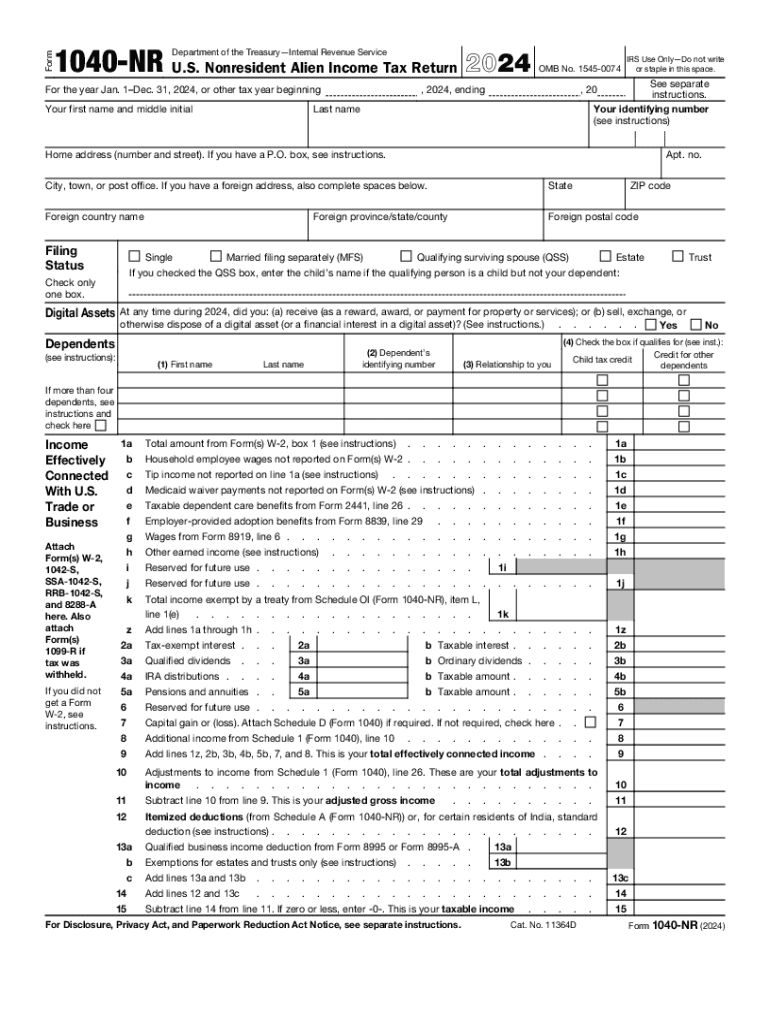







Definition and Purpose of Form 1040-NR
The 2024 Form 1040-NR is designated for U.S. nonresident aliens needing to report their income, claim deductions, and calculate tax liabilities. This form ensures that nonresident aliens fulfill their tax obligations to the United States, even if their connection to the country is limited. As nonresident aliens do not benefit from all standard deductions available to U.S. citizens, Form 1040-NR accommodates these specific tax situations by including sections for specific income sources, such as U.S. sourced wages, business income, and effectively connected income.
Eligibility Criteria
To determine if you need to file the 2024 Form 1040-NR, you must assess your residency status. Nonresident alien status applies if you do not meet the substantial presence test or do not possess a Green Card. Typically, individuals on certain types of visas or those who spend a shorter amount of time in the U.S. may qualify as nonresident aliens. It's essential to understand IRS guidelines on residency to avoid potential misfilings. Furthermore, individuals engaging in business activities or having U.S.-sourced income must check specific rules to confirm their filing obligations.


Steps to Complete the Form 1040-NR
-
Gather Required Documents
Collect necessary documentation such as W-2s, 1099s, and other forms reflecting U.S. income, taxes withheld, and potential deductions or credits applicable. -
Personal Information
Fill out identifying information, including your full name, address, and Taxpayer Identification Number (TIN). Ensure accuracy as this data is critical for processing your return. -
Income Reporting Sections
Report various sources of income. Nonresident aliens may have unique income streams, such as U.S. business income or capital gains, necessitating detailed entries. -
Deductions and Exemptions
Enter any applicable deductions or exemptions. While personal exemptions were phased out until 2025, other deductions can be reported. -
Tax Calculations
Utilize IRS tax tables to calculate owed taxes. This section might involve more detailed computations if your income includes different income types or multiple treaty benefits. -
Finalize and Submit
Complete remaining sections dedicated to credits and payments, ensure all figures are correct, and submit through the appropriate channel, be it mailing or e-filing.
How to Obtain Form 1040-NR
Form 1040-NR can be acquired through the IRS website, where downloadable PDF versions are available, or by requesting paper copies via mail from the IRS. Additionally, many tax preparation software solutions include Form 1040-NR, allowing for electronic preparation and submission. It is crucial to confirm you are accessing the correct version of the form specific to the tax year 2024 to ensure compliance with current regulations.
Important Dates and Deadlines
Typically, nonresident aliens must file Form 1040-NR by June 15th of the following tax year if both employed and receiving income in the U.S. For those not earning wages subject to U.S. income tax withholding, the deadline may still be April 15th if residing outside the United States. Monitoring IRS publications for updates ensures compliance with deadlines, preventing penalties and interest charges.
Submission Methods
-
Online Submissions:
E-filing through IRS-authorized providers or tax software is often swift and secure. This method allows for quick processing and electronic confirmation of receipt. -
Mailing the Form:
Mailing physical copies of the completed Form 1040-NR and accompanying documents to the designated IRS processing center remains an option. Ensure secure mailing to avoid data breaches or lost forms.
Key Elements of Form 1040-NR
Personal Information Section
This section requires filers to input critical details like legal name and residency status. Missteps here can lead to processing delays or misapplication of tax status.
Income and Deductions Entities
This involves comprehensive reporting of diverse income forms and corresponding deductions, illustrating the filer’s financial activities within the U.S.
Treaty Benefits
Nonresident aliens may claim certain treaty benefits if their country of residence has a tax treaty with the U.S. Filling out the treaty benefits section correctly ensures preferential tax treatment where applicable.
Penalties for Non-Compliance
Non-filing can incur penalties including accruing interest on taxes due or fines for each month (or part thereof) the return is late, not exceeding 25 percent of the due tax. Ensuring accuracy and adherence to deadlines mitigates the risk of penalties.
Understanding the unique aspects of the 2024 Form 1040-NR enables nonresident aliens to comply effectively with U.S. tax regulations, leveraging available deductions and treaty benefits to settle their tax affairs accurately.


