




01. Edit your form online
Type text, add images, blackout confidential details, add comments, highlights and more.

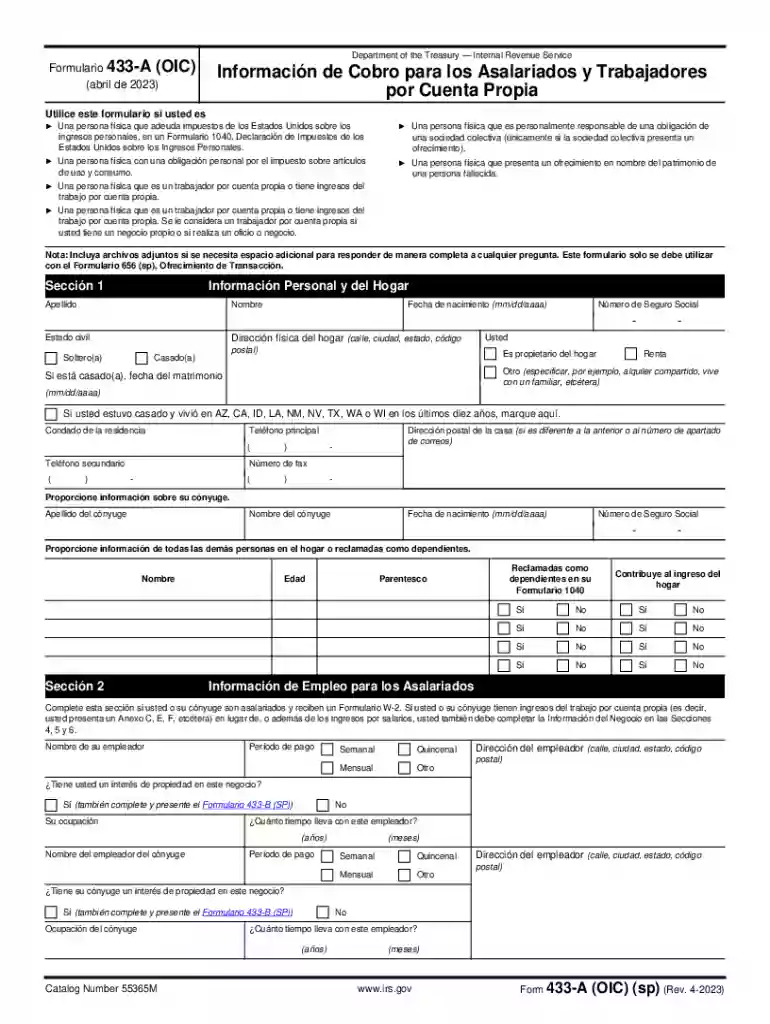
Type text, add images, blackout confidential details, add comments, highlights and more.

Draw your signature, type it, upload its image, or use your mobile device as a signature pad.

Send it via email, link, or fax. You can also download it, export it or print it out.
Form 656-B (sp) (Rev 4-2021) Offer in Compromise (Booklet) (Spanish Version) is a crucial resource for taxpayers seeking to resolve their tax liabilities with the IRS by paying less than the full amount owed. Known as an Offer in Compromise (OIC), this form provides detailed instructions on eligibility criteria, application processes, and terms for negotiating your tax debt. It explains how you may qualify for settling debts due to financial hardship or other circumstances accepted by the IRS.
A clear grasp of this form's purpose is essential for taxpayers struggling with significant tax debts. The form facilitates understanding of your rights and the potential to alleviate overwhelming financial burdens by presenting a formal offer to the IRS.
To effectively use Form 656-B (sp), begin by thoroughly reviewing the booklet to understand the terms and conditions of an OIC. Follow these general steps:
Completing Form 656-B (sp) involves several detailed steps:
The legal use of this form allows taxpayers to propose a compromise to settle tax liabilities, legally reducing their obligation under certain conditions. The OIC process is governed by IRS standards, ensuring fair consideration of applications based on stringent criteria.
Eligibility for filing an OIC using Form 656-B (sp) is contingent on several factors:


The application process for the Form 656-B (sp) is structured and involves:
To bolster your Form 656-B (sp) submission, include essential documents:
The IRS has established guidelines for processing OIC applications:
We've got more versions of the Form 656-B (sp) (Rev 4-2021) Offer in Compromise (Booklet) (Spanish Version) form. Select the right Form 656-B (sp) (Rev 4-2021) Offer in Compromise (Booklet) (Spanish Version) version from the list and start editing it straight away!
At DocHub, your data security is our priority. We follow HIPAA, SOC2, GDPR, and other standards, so you can work on your documents with confidence.





by A Offit Cited by 5 Third, it shows how the incorporation of one or more of these innovations into post- pandemic trials would DocHubly lower extant barriers to jury service.Read more
Apr 21, 2021 Para 2020, usted usar el Formulario 1040(SP) o, si naci antes del 2 de enero de 1956, tiene la opcin de usar el. Formulario 1040-SR(SP).Read more


