






Definition & Meaning
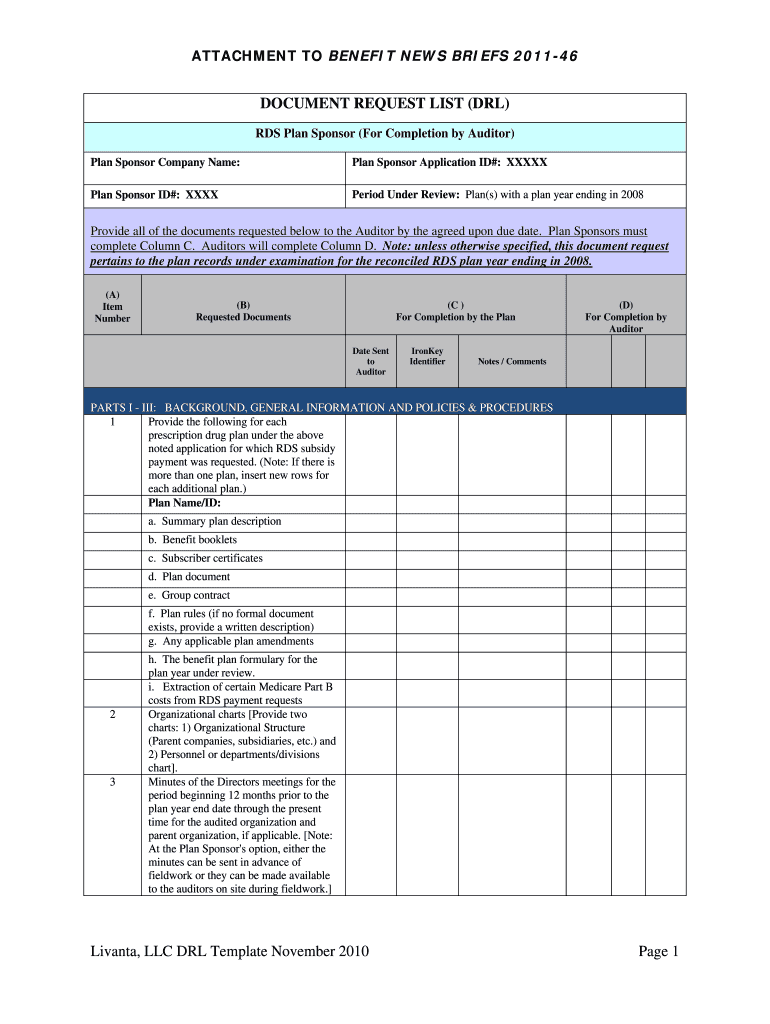
A Document Request List (DRL) is a comprehensive inventory of documents required during audits, legal proceedings, or administrative reviews. These lists are essential tools for systematically gathering necessary information, ensuring compliance, and verifying the accuracy of details provided by individuals or organizations. They delineate specific document types such as financial statements, contracts, and records pivotal for substantiating claims or regulatory requirements. Additionally, DRLs are tailored to specific scenarios such as the Retiree Drug Subsidy (RDS) audit, assisting sponsors in amassing pertinent documents to corroborate program compliance. Understanding and utilizing DRLs effectively can significantly streamline the process of information collection and validation.
Detailed Breakdown
- Financial Statements: Vital for showcasing financial health and transactions.
- Contracts and Agreements: Provide clarity on terms and commitments with third parties.
- Communication Records: Required for demonstrating transparency and adherence to notification requirements.
- Supporting Documentation: Includes additional evidence necessary for comprehensive compliance verification.
How to Use the Document Request List
Using a DRL efficiently involves a step-by-step process that ensures all necessary documents are collated accurately and promptly. Begin by thoroughly reviewing the list to identify all relevant document types required for your specific scenario. Organize your approach to collecting these documents by delegating responsibilities to appropriate team members if necessary.
Step-by-Step Process
- Review the DRL: Gain a solid understanding of what documents are needed.
- Assign Responsibilities: Distribute tasks among team members based on expertise.
- Collect Documents: Gather documents systematically, ensuring they are complete and accurate.
- Verify Information: Cross-check documents to ensure consistency and accuracy.
- Compile a Folder: Organize all documents into a single, accessible location.
Key Elements of the Document Request List
A well-structured DRL includes several fundamental components that guide users in collecting the necessary documentation. Key elements typically encompass detailed descriptions of required documents, instructions for format or submission, timelines or deadlines for provision, and additional guidance to ensure complete compliance.
Core Elements
- Document Descriptions: Clarity on what content is needed.
- Submission Guidelines: Format and delivery method specifications.
- Deadlines: Timelines for submission to ensure timely compliance.
- Support Contacts: Designated contacts for assistance or clarification.
Steps to Complete the Document Request List
Completing a DRL involves a meticulous approach to managing document collection tasks effectively. Start by assembling a team of relevant personnel who are knowledgeable about the documents in question. Establish a systematic approach and set internal deadlines to manage time effectively, thereby ensuring all requirements are met within stipulated periods.
Completion Strategies
- Team Formation: Include staff with expertise in relevant areas.
- Timeline Establishment: Set clear internal deadlines for task fulfillment.
- Review Sessions: Regular intervals to assess progress and rectify errors.
- Compliance Verification: Ensure all documents meet specified standards.
Required Documents
Documentations required in a DRL are subject to the purpose of the list. For instance, an RDS audit DRL might require financial records, plan descriptions, and retiree lists. Tailor your document collection approach to align with these stipulated requirements to ensure comprehensive coverage and compliance.
Document Categories
- Financial Records: Essential for verifying monetary transactions and budget alignment.
- Plan Descriptions: Provide insight into policy terms and coverage.
- Legal Contracts: Establish binding agreements influencing compliance adherence.
- Employee or Participant Lists: Ensure that all relevant parties are included in documentation.
Legal Use of the Document Request List
Legal frameworks underpin the use of DRLs, particularly in audit and regulatory compliance scenarios. Parties are obligated to adhere to DRL obligations to avoid potential legal repercussions or sanctions. It is vital to remain informed about the legal requirements related to specific scenarios where a DRL is implemented to ensure processes remain above board and consistent with legal expectations.
Compliance Considerations
- Adherence to Laws: Ensure all actions comply with relevant legal standards.
- Audit Trails: Maintain records of document provision for future verification.
- Confidentiality Concerns: Secure sensitive data against unauthorized access.
- Verification Processes: Regular checks to uphold reliability and integrity.
Penalties for Non-Compliance
Failing to comply with a DRL can result in significant penalties, particularly in regulated settings like audits and legal proceedings. These might include fines, legal consequences, or impacts on credibility. Organizations should therefore prioritize meeting DRL requirements to avoid adverse outcomes and maintain good standing with overseeing bodies.
Potential Consequences
- Financial Penalties: Fines imposed for non-compliance or incomplete submission.
- Legal Actions: Possible court proceedings due to regulatory breaches.
- Industry Sanctions: Adverse effects on reputation and credibility within the industry.
- Operational Disruptions: Challenges in normal operations due to non-compliance fallout.
Software Compatibility
Technological advancements have led to integration compatibility with various software solutions that facilitate effective document management. Platforms like DocHub excel by providing extensive compatibility, enabling users to work seamlessly without additional software challenges. This adaptability ensures streamlined processes across different document types and file formats, enhancing user efficiency through robust technological integration.
Supported Platforms
- Cloud Storage Systems: Google Drive, Dropbox, OneDrive integration.
- Document Editors: Compatibility with various file formats including PDF, DOC, PPT, and XLS.
- Secure Transfer Protocols: Use of encryption standards for data safety.
- Collaborative Tools: Real-time editing capabilities for enhanced teamwork.