Definition and Meaning of Enforced Collection Actions by the IRS
Enforced collection actions by the Internal Revenue Service represent formal steps taken by the agency to recover unpaid taxes. These actions are initiated after other forms of communication and requests for payment have been exhausted without resolution. Enforced actions can include liens, levies, wage garnishments, and even seizure of property. The objective is to ensure compliance with federal tax obligations when congenial methods have failed.
Key Components of Enforced Collection Actions
- Liens: A legal claim against a taxpayer's property that serves as security for the debt owed.
- Levies: The actual seizure of property or money by the IRS, often from bank accounts, to pay off tax debts.
- Wage Garnishment: Direct deduction from a taxpayer's salary to satisfy tax debts.
- Property Seizure: Taking physical or financial assets to fulfill outstanding tax obligations.
Steps to Complete the Enforced Collection Actions Form
Filing forms related to enforced collection actions involves several steps designed to both inform the taxpayer and outline their options.
- Receive Notice: Taxpayers first receive a formal notification from the IRS detailing the debt and potential actions.
- Responding to Notices: Form completion and submission within the specified deadlines indicated in the IRS communications.
- Gathering Required Documentation: Compile financial records, proof of payments, and any documents that verify discrepancies or disputes.
- Submission: Forms can be submitted via mail or electronically if the IRS supports an online submission process for that specific form.
- Verification of Compliance: Ensure all responses meet IRS expectations to prevent further action.
Important Documentation
- Tax return filings for relevant years
- Payment records and bank statements
- Evidence of financial hardship if applicable
IRS Guidelines on Enforced Collection Actions
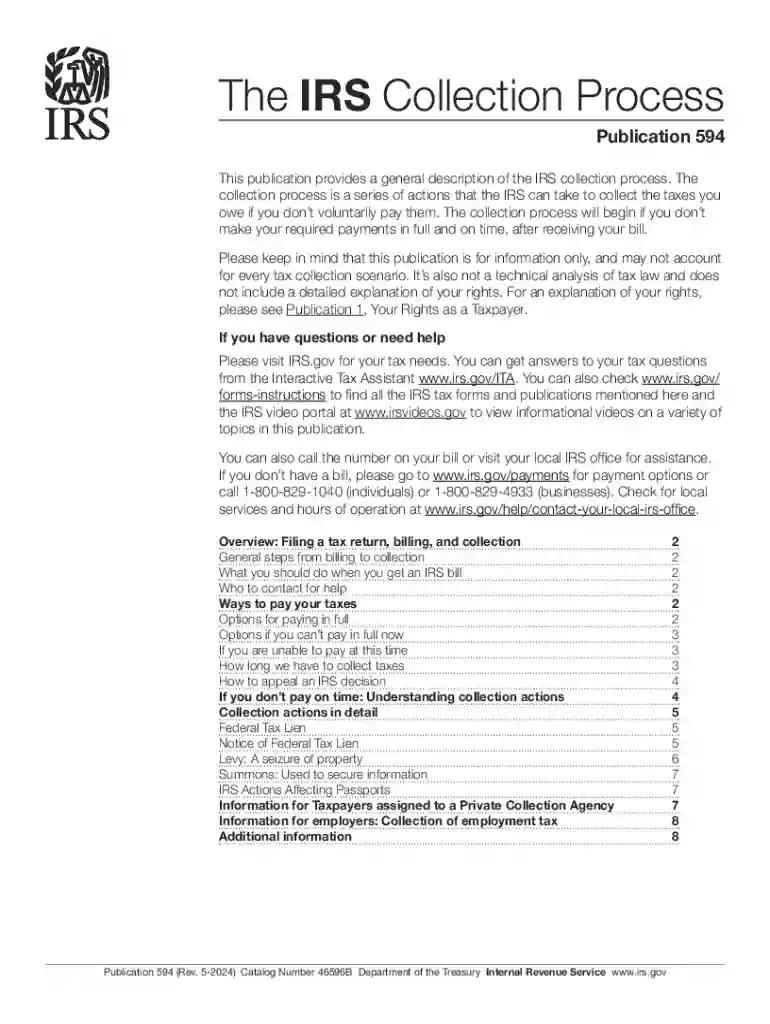
The IRS provides comprehensive guidelines regarding the execution and management of collection actions. These are detailed in various publications and resources.
- Publication 594: Offers a detailed overview of the collection process, including taxpayer rights and options.
- Notice of Federal Tax Lien: Explains liens, how they affect property rights, and options for resolution.
- Approach to Negotiation: Taxpayers are encouraged to communicate with the IRS to negotiate payment plans.
Who Uses Enforced Collection Actions by the IRS
Enforced collection actions can be levied on a variety of taxpayers who have failed to meet their tax obligations.
Common Categories Affected
- Individual Taxpayers: Typically those with significant unpaid taxes after multiple reminders.
- Businesses: Corporations, partnerships, or sole proprietorships with outstanding payroll or income tax debts.
- Self-Employed Workers: Individuals failing to report income or remit sufficient estimated tax payments.
Legal Use and Implications
The legal framework for enforced collection actions ensures the IRS has the authority to collect outstanding debts while maintaining safeguards for taxpayers.
- Taxpayer Rights: Individuals maintain specific rights during enforcement, allowing for appeals and due process.
- Legal Constraints: The IRS must adhere to prescribed procedures under federal law, including notification and waiting periods.
Protection Measures
- Right to a hearing before enforcement
- Installment agreements to prevent aggressive actions
- Opportunities for appeal
Key Elements of the Enforced Collection Actions Process
- Notification Periods: States requirements for how and when taxpayers are informed.
- Options for Resolution: Several avenues exist, including Offers in Compromise or payment extensions.
- Impacts of Non-Compliance: Understanding potential ramifications is vital for taxpayers unable to meet IRS demands.
Penalties for Non-Compliance
Failure to comply with IRS enforced collection actions can lead to severe financial and legal consequences.
Consequences
- Increased Debt: Accumulated interest and penalties on unpaid amounts.
- Credit Impact: Federal tax liens can negatively affect credit scores.
- Loss of Assets: Potential forfeiture of personal and business property.
Examples of Using Enforced Collection Actions by the IRS
Real-world scenarios exemplify how the IRS implements these actions, highlighting the importance of compliance and timely resolutions.
- Case Study 1: A small business with overdue payroll taxes faced levy actions and was able to negotiate a payment plan to halt further seizures.
- Case Study 2: An individual with outstanding income taxes had wages garnished but successfully appealed by proving financial hardship.
Lessons Learned
- Proactive communication is critical in mitigating enforced actions.
- Understanding tax obligations and deadlines is crucial for prevention.