




01. Edit your form 1045 online
Type text, add images, blackout confidential details, add comments, highlights and more.

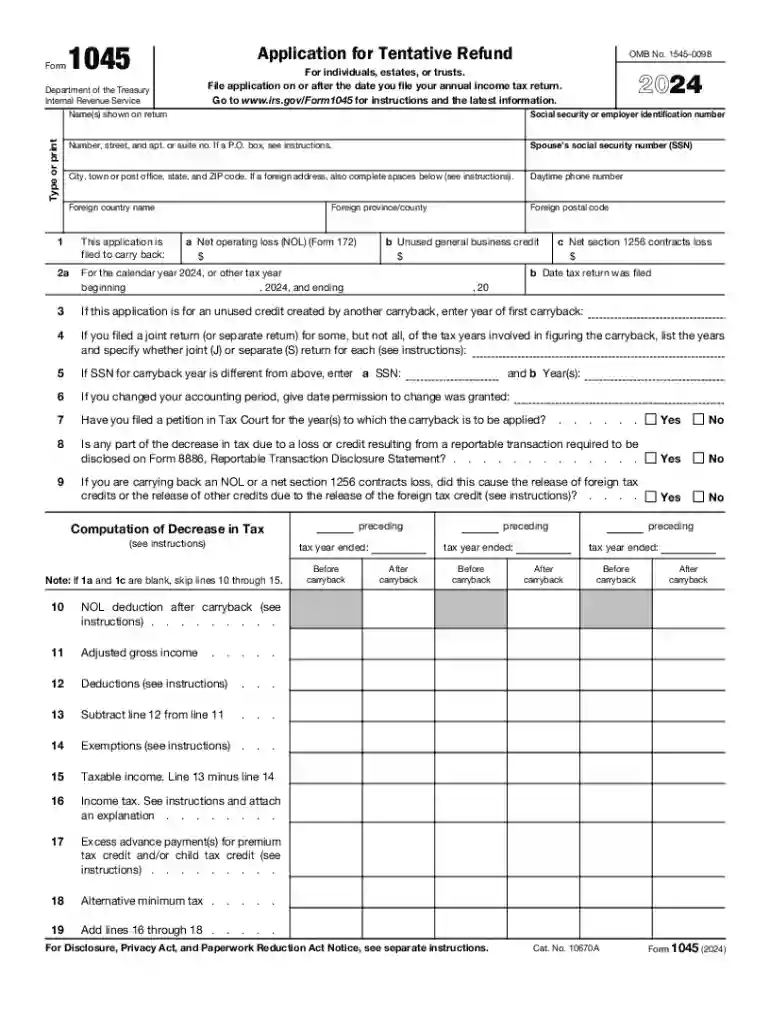
Type text, add images, blackout confidential details, add comments, highlights and more.

Draw your signature, type it, upload its image, or use your mobile device as a signature pad.

Send net operating loss carryforward via email, link, or fax. You can also download it, export it or print it out.
Form 1045 is an application for a tentative refund filed with the Internal Revenue Service (IRS). It is designed for individuals, estates, or trusts that wish to apply for a quick refund by carrying back net operating losses (NOLs) or unused tax credits to prior tax years. By offsetting past taxable income, taxpayers can potentially receive a refund for taxes previously paid. This form serves as a critical tool for cash flow management in certain taxpayer situations, providing a way to access funds by recalibrating past tax liabilities.
Using Form 1045 allows taxpayers to adjust their taxable income from previous years by applying current losses. This form is typically used when:
When preparing the form, ensure you have access to your tax records for previous years, as you will need to provide detailed calculations of the adjustments made to income and credits. The application should clearly demonstrate how the carryback affects your tax liability in the targeted year(s), ultimately resulting in a potential refund.
The IRS provides specific guidelines on how to fill out Form 1045 and what constitutes eligible carrybacks. These guidelines stipulate:
Form 1045 is a strategic tool for those needing liquidity through tax adjustments and is often engaged by those looking to optimize financial positions by utilizing past tax credits efficiently.


We've got more versions of the form 1045 form. Select the right form 1045 version from the list and start editing it straight away!
| Versions | Form popularity | Fillable & printable |
|---|---|---|
| 2025 | 4.1 Satisfied (55 Votes) | |
| 2024 | 4.1 Satisfied (55 Votes) | |
| 2023 | 4.6 Satisfied (37 Votes) | |
| 2022 | 4.5 Satisfied (25 Votes) | |
| 2021 | 4.8 Satisfied (62 Votes) | |
| 2020 | 4.4 Satisfied (134 Votes) | |
| 2019 | 4.1 Satisfied (74 Votes) | |
| 2018 | 4.3 Satisfied (164 Votes) | |
| 2017 | 4.3 Satisfied (145 Votes) | |
| 2016 | 4.4 Satisfied (684 Votes) | |
| 2015 | 4.4 Satisfied (1090 Votes) | |
| 2014 | 4 Satisfied (60 Votes) | |
| 2013 | 4 Satisfied (20 Votes) | |
| 2012 | 4 Satisfied (58 Votes) | |
| 2011 | 4 Satisfied (58 Votes) |
At DocHub, your data security is our priority. We follow HIPAA, SOC2, GDPR, and other standards, so you can work on your documents with confidence.




Jul 20, 2026 For a calendar year taxpayer, Form 1045, Application for Tentative Refund must generally be filed by December 31 of the year following the year
Application for Tentative Refund For individuals, estates, or trusts. File application on or after the date you file your annual income tax return.


