






Definition and Purpose of IRS Form 1065
IRS Form 1065, also known as the "U.S. Return of Partnership Income," is a tax document used by partnerships to report their income, deductions, and credits. Partnerships, unlike corporations, do not pay taxes at the entity level. Instead, they pass through the financial results to their partners, who report them on their individual tax returns. This process makes Form 1065 an essential component of compliance for partnerships, ensuring that income is reported and taxed appropriately among partners.
- Tax Treatment: The form serves as an informational return; it does not calculate a tax liability for the entity itself.
- Reporting Partnerships: Partnerships include any unincorporated organization with multiple owners that functions in a trade, business, financial operation, or venture.
Steps to Complete IRS Form 1065
Fulfilling the requirements of Form 1065 involves detailed record-keeping and careful preparation, as errors or omissions can lead to compliance issues.
- Gather Business Information: Collect details such as the partnership's name, address, and Employer Identification Number (EIN).
- Income Reporting: Record all sources of income, including gross receipts or sales, interest, dividends, capital gains, and other relevant items.
- Deduction Listings: List business deductions such as salaries, rent, depreciation, and travel expenses.
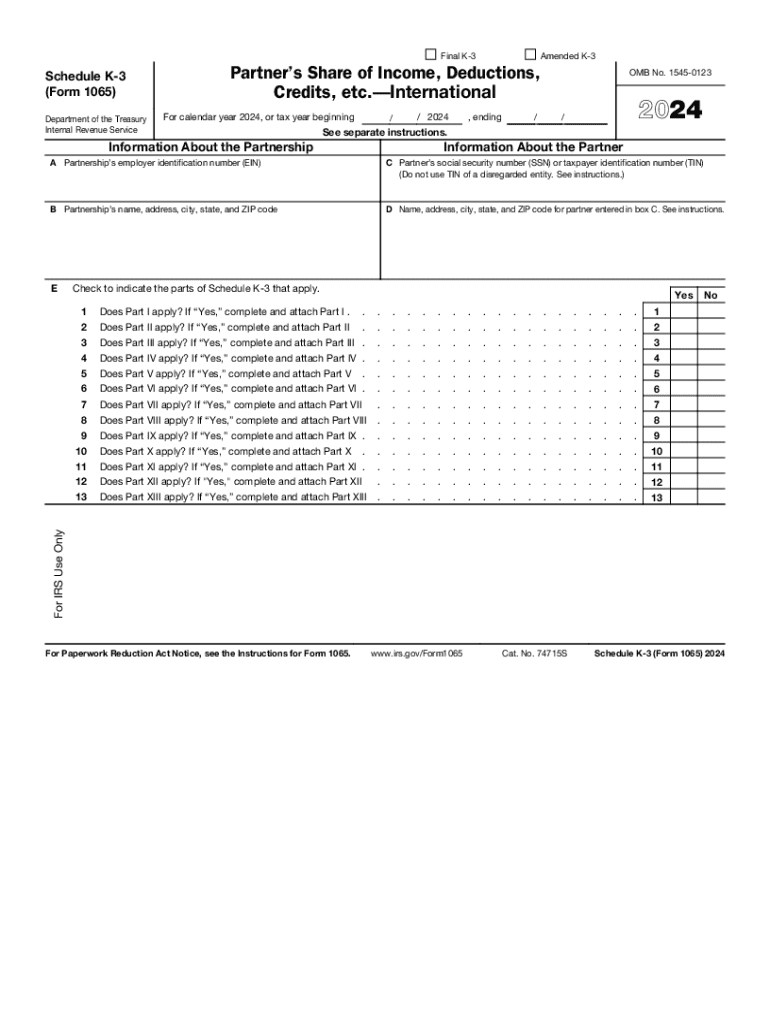
- Fill out Schedule K: This part details each partner's share of income, credits, and deductions.
- Complete Schedule K-1: Allocate the partnership's income and deductions to individual partners on a K-1 form, which partners must report on their tax returns.
- Review and Submit: After reviewing for accuracy, submit the form by the deadline, typically March 15th for calendar-year partnerships.
Important Terms Related to IRS Form 1065
Understanding specific terms can clarify the information required and facilitate accurate completion of the form.
- General Partner: A partner who is actively involved in the management of the partnership and holds personal liability for the partnership's obligations.
- Limited Partner: A partner who typically does not participate in management and whose liability is limited to their investment in the partnership.
- Gross Receipts: The total revenue received before any deductions or allowances.
Filing Deadlines and Important Dates
Adhering to filing deadlines is critical to avoid penalties and ensure compliance.
- Regular Deadline: For partnerships operating on a calendar-year basis, Form 1065 is due on March 15th.
- Automatic Extension: Partnerships can file Form 7004 to receive an automatic six-month extension, moving the deadline to September 15th.
- State Deadlines: Be aware that state returns may have different requirements and deadlines.
Required Documents for Form 1065
Having the necessary documentation ready in advance can streamline the filing process.
- Partnership Agreement: Outlines the terms of the partnership and each partner’s responsibilities.
- Financial Statements: Including a balance sheet, income statement, and cash flow statement.
- Previous Year’s Return: Helpful for reference and comparative analysis.
- Partner’s Information: Names, addresses, and social security numbers of all partners.
Key Elements of IRS Form 1065
The form is comprehensive and includes several sections and schedules that require accurate completion.
- Income Section: Details all sources of income, ensuring an accurate representation of revenue.
- Deductions: Comprehensive listing of allowable business deductions.
- Schedule K: Summarizes the partnership’s financial results for the year.
- Schedule K-1: Individual statements for each partner reflecting their share of income, credits, and deductions.
Penalties for Non-Compliance
Failing to file Form 1065 or to include accurate information can result in penalties.
- Late Filing Penalty: Generally, $210 per partner, per month, for a maximum of twelve months.
- Inaccurate Information: Submitting incorrect or incomplete returns can also incur penalties.
- Failure to Furnish Schedule K-1: This may result in separate penalties.
Business Entity Types Utilizing Form 1065
Understanding which business structures are required to file this form helps in compliance and tax planning.
- Partnership: Any entity classified as a partnership must file if it had income, deductions, or credits.
- Limited Liability Company (LLC): Classified as a partnership with more than one member unless formally electing to be treated as a corporation.
- Foreign Partnerships: Required to file if they have income deemed effectively connected with a U.S. trade or business.
Software Compatibility for Filing
Various software applications can assist in preparing and filing Form 1065, adding convenience and reducing error.
- TurboTax: Offers specialized editions for small business owners and partnerships.
- QuickBooks: Integrates accounting data into tax software to facilitate accurate returns.
- Drake Tax: Known for extensive support and features for complex partnership tax situations.
IRS Guidelines and Instructions
Following the IRS guidelines ensures compliance and accuracy when completing the form.
- Official Instructions: Consult IRS instructions for line-by-line guidance and examples.
- Updates: Check for recent changes in tax law or filing requirements.
- Resources: Utilize IRS publications and official resources to gain clarity on ambiguous issues.
Each of these sections explores critical components of IRS Form 1065, providing comprehensive guidance tailored to partnerships in the U.S. tax framework.