







Definition and Meaning
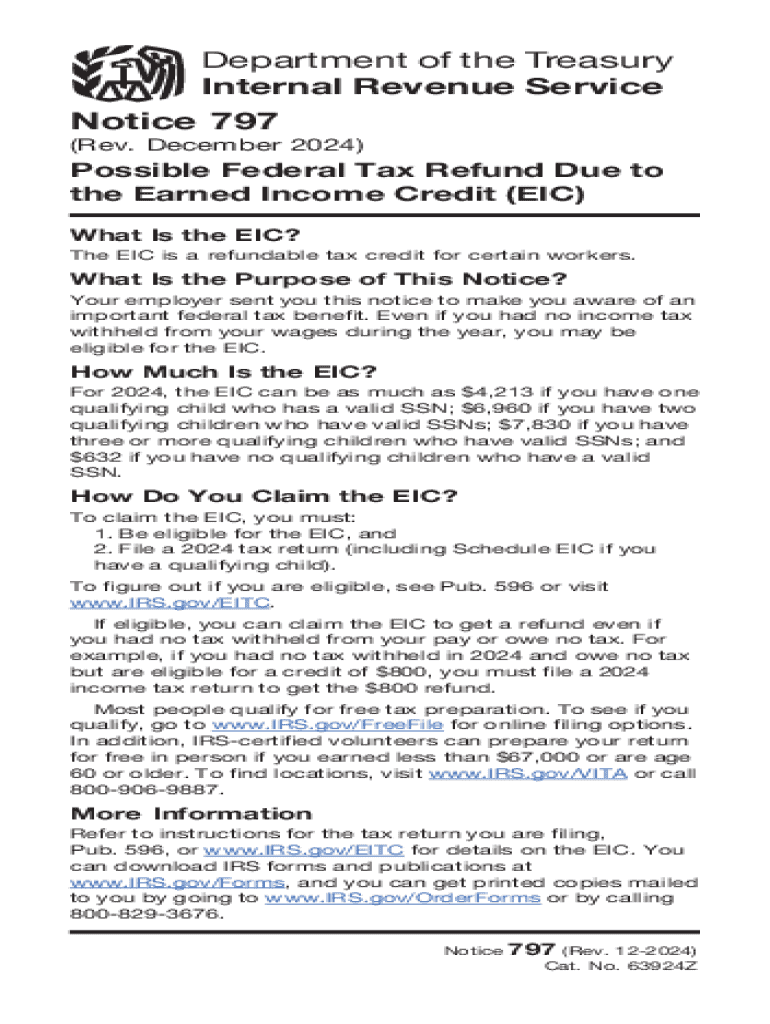
The Earned Income Tax Credit (EITC) is a refundable tax credit designed to support low-to-moderate-income workers in the United States. Its purpose is to reduce the amount of tax owed and potentially increase a tax refund, effectively supplementing the income of eligible individuals and families. By offering a financial boost, the EITC aims to alleviate poverty and incentivize employment.
- Eligibility: Primarily determined by income, adjustments exist for working families and individuals without children. However, to qualify for the EITC, individuals must meet specific criteria, including age, income limits, and filing status.
- Tax Year 2024 Criteria: It is crucial to verify current year criteria as thresholds and amounts can change annually.
Eligibility Criteria
Eligibility for the EITC hinges on several factors, including income level, filing status, and number of qualifying children. Taxpayers must have earned income from employment or self-employment. The IRS outlines these conditions clearly:
- Income Limits: Vary by filing status and the number of qualifying children.
- Qualifying Children: Must meet specific age, relationship, and residency requirements.
- Filing Status: Head of household, married filing jointly, or single filers may qualify.
Special rules apply for clergy, members of the military, and certain non-wage earners. It is essential to review the IRS guidelines carefully to ensure compliance.


Steps to Complete the Earned Income Tax Credit
Filing for the EITC involves several critical steps:
- Verify Eligibility: Start by using the IRS EITC Assistant to verify eligibility based on income and family situation.
- Collect Documents: Gather necessary documents such as W-2s, 1099s, and records of any additional income.
- Choose a Filing Method: Decide between filing online, through a tax preparation service, or using free IRS resources.
- Complete IRS Form 1040 and Schedule EIC: Both of these must be accurately filled out, particularly focusing on the section dedicated to the EITC.
- Check for Errors: Double check all entries for accuracy and completeness to avoid processing delays.
Required Documents
To claim the EITC, the following documents are generally required:
- Proof of Income: W-2 or 1099 forms from all employers.
- Social Security Number: For the taxpayer, spouse, and any qualifying children.
- Residency Proof: Documentation confirming residency in the U.S. for over six months within the tax year.
- Filing Status Documentation: Divorce decrees or support documents if claiming a different status than the previous year.
Providing this documentation ensures proper assessment of eligibility and prevents delays in processing the credit.
Important IRS Guidelines
The IRS provides comprehensive guidelines related to the Earned Income Tax Credit, which are essential to follow:
- Audit Procedures: Understanding how to substantiate claims if the IRS questions the eligibility.
- Amendments: Directions for filing an amended tax return if errors or omissions are discovered after submission.
- Taxpayer Rights: Protection and representation rights if disputes arise regarding eligibility.
Adhering strictly to these guidelines optimizes the likelihood of a successful claim.
Filing Deadlines and Important Dates
Filing for the EITC must align with the IRS deadlines for tax returns. Key dates include:
- April 15: Deadline for filing federal tax returns.
- October 15: Final deadline if an extension is filed by April 15.
- January 31: Deadline for employers to issue W-2s.
Knowing these dates helps ensure timely submission and processing.
Examples of Using the Earned Income Tax Credit
Various scenarios illustrate different applications of the EITC:
- Single Parent with Two Children: A single mother earning $30,000 annually might qualify for a sizeable credit if filed properly.
- Married Couple without Children: A couple with modest income can still benefit, albeit with a lower credit amount.
- Self-Employed Taxpayer: Business income, including deductions, determines their eligibility and the amount they can claim.
These examples underscore the diverse applicability of the EITC across different taxpayer situations.
Application Process and Approval Time
Applicants can expect the following timeframe for the EITC:
- Processing Time: Generally, IRS processing takes approximately three weeks, especially for early digital filers.
- Notification: Taxpayers receive correspondence from the IRS confirming receipt and approval status or requests for additional information.
- Refund: Once approved, the IRS disburses the credit as part of the overall tax refund, delivered either through direct deposit or a physical check.
Utilizing digital filing methods can expedite this process, ensuring funds are received efficiently.
Penalties for Non-Compliance
Failing to comply with IRS regulations regarding the EITC can result in various penalties:
- Denial of Credit: Ineligible claims can be disallowed, necessitating repayment if the credit was disbursed.
- Fines and Interest: Incorrect filings can incur penalties alongside interest on any owed amount.
- Filing Restrictions: Repeated fraudulent or erroneous claims could result in a ban from claiming the EITC for up to ten years.
Understanding these potential penalties highlights the importance of accuracy when filing for the credit.




