
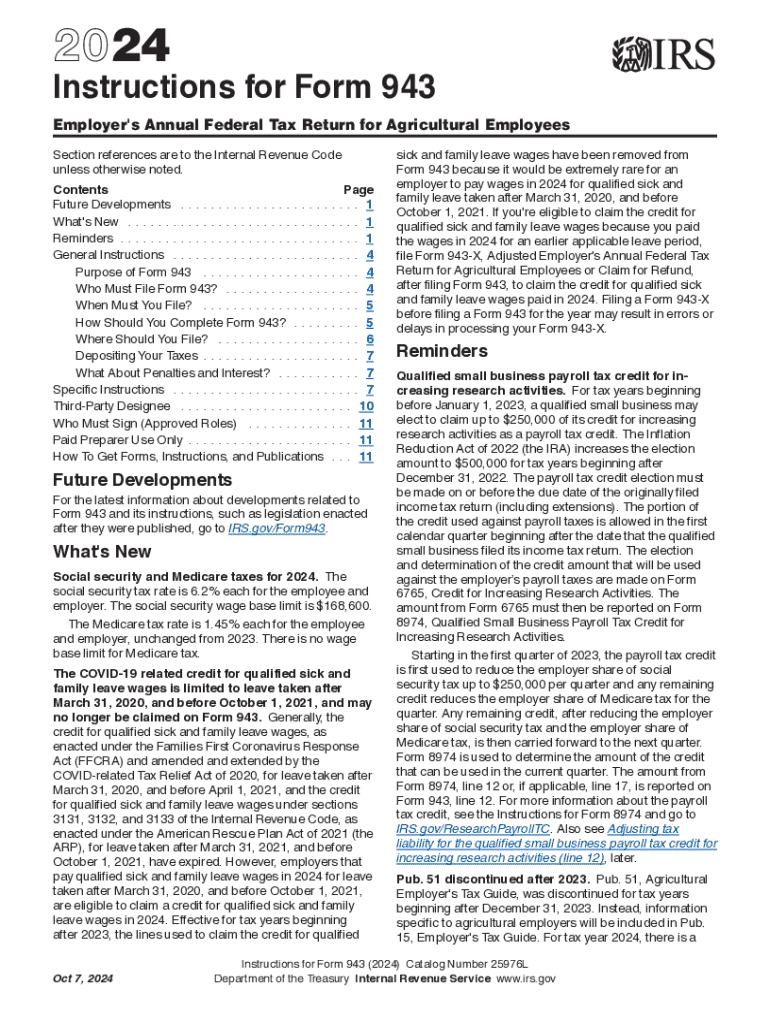







Definition and Purpose of Form 943-XAdjusted Employer's ANNUAL Federal Tax
Form 943-X is an adjusted return or claim for refund specifically designed for employers who filed Form 943, which deals with the annual federal tax for agricultural employees. The form allows employers to correct inaccuracies from their originally submitted Form 943, addressing errors related to social security and Medicare taxes, overreported tax payments, or unclaimed employee payments. This is essential for maintaining compliance with IRS regulations and ensuring accurate tax liabilities and withholdings.
Form 943-X operates as a tool for rectifying errors, ensuring that all employers dealing with agriculture payroll taxes can make necessary adjustments. Its strategic importance lies in preventing discrepancies that might result in penalties or additional audits by the IRS, highlighting its critical role in the tax management framework for agricultural businesses.
Steps to Complete Form 943-XAdjusted Employer's ANNUAL Federal Tax
-
Gather Necessary Documentation: Ensure you have the original Form 943 submission and any payroll records that reflect discrepancies needing correction.
-
Identify the Sections Requiring Adjustments: Review areas within your original filing that require modifications, such as overreported wages or incorrect tax amounts.
-
Fill Out Correcting Sections: Utilize the applicable sections of Form 943-X to make your corrections. The structure of Form 943-X parallels the original Form 943, easing navigation and data entry.
-
Provide Explanations for Changes: In Part 4 of Form 943-X, clearly explain the reasons for the corrections. Documentation is crucial if your amendments significantly influence the financial outcome of the filed taxes.
-
Calculate the Adjusted Tax Liability: Carefully recalculate the tax liabilities ensuring the accuracy between old and new figures, showcasing differences precisely.
-
Submit the Completed Form to the IRS: Choose the appropriate filing method, either electronically or by mail, per IRS guidelines, and ensure timely submission to prevent delays or complications in adjustments.
Eligibility Criteria for Using Form 943-X
Employers who have previously filed Form 943 for agricultural employees’ annual federal taxes may need to use Form 943-X if they discover errors post-submission. Errors that qualify for adjustment can include overreported social security and Medicare taxes or misclassified wages. Employers must be vigilant in recognizing these discrepancies within the IRS’s timeframe for corrections.
Time Limits: Corrections must be made within a three-year timeframe from the date the initial Form 943 was filed or two years from the date the taxes were paid, whichever is later. This timeframe is crucial and should be adhered to for ensuring eligibility for adjustments or refunds.


Important Terms Related to Form 943-X
- Adjusted Return: This refers to the rectified filing that corrects original errors in tax liability reported in Form 943.
- Overreported Tax Payments: This term indicates taxes initially stated at amounts higher than actual, thus requiring reduction and correction.
- Social Security & Medicare Taxes: These are federal tax components explicitly relevant to the adjustments process within Form 943-X.
Understanding these terms aids in grasping the scope and boundaries of what Form 943-X addresses and why it’s a critical tool for employers.
IRS Guidelines for Form 943-X
The IRS provides comprehensive guidelines on how to complete and file Form 943-X. These include specific instructions on calculating corrected tax figures, where and how to submit the forms, and detailing necessary documentation and justified explanations for any changes made. Furthermore, the IRS specifies handling multiple corrections across different reporting periods, illustrating the need for accurate and detailed documentation.
Why and When to Use Form 943-XAdjusted Employer's ANNUAL Federal Tax
Employers should use Form 943-X when discrepancies are discovered in the initial reporting of wages and relevant tax amounts. Using this form allows corrections to overpaid taxes or underreported wages, aligning tax obligations with actual payroll records. Timely utilization of the form prevents incurring penalties for inaccuracies and aligns the employer’s records with federal requirements.
Filing Deadlines and Important Dates
Understanding and adhering to deadlines is crucial for the execution of Form 943-X. The standard deadline allows for corrections within three years from the form’s original filing date. For exact dates, employers should reference the IRS published deadlines and guidelines to ensure compliance and prevent unnecessary penalties or rejected adjustments due to late filings.
Penalties for Non-Compliance with Form 943-X
Failing to address errors in Form 943 can result in significant penalties. This includes fines associated with late payment or incorrect filings not adjusted within the IRS’s specified timeframe. Moreover, employers might face increased scrutiny from audits, which could uncover further discrepancies, compounding potential penalties and interest on unpaid amounts. Compliance ensures smooth operational continuity and adherence to federal regulations.
Software Compatibility with Form 943-X
Many tax preparation software platforms, including TurboTax and QuickBooks, offer support for filing Form 943-X. This compatibility allows employers to use digital solutions for managing adjustments effectively, reducing manual errors, and ensuring that recalculated taxes are submitted promptly. The use of software ensures continued digital documentation and accessibility, crucial for records management and future reference in compliance audits.
This comprehensive elucidation on Form 943-XAdjusted Employer's ANNUAL Federal Tax offers detailed guidance and structured instructions to employers navigating this nuanced process. It ensures relevant, timely data correction and demonstrates compliance with taxation norms, thereby safeguarding employer interests.




