Definition & Meaning
Form 8275-R, known as the Regulation Disclosure Statement, is a document used by taxpayers to disclose certain tax positions or items on their returns that may not align with existing Treasury regulations. This form assists in clarifying and detailing these specific aspects to ensure compliance with the Internal Revenue Service (IRS) guidelines. Essentially, it acts as a safety net to proactively disclose discrepancies or unusual tax interpretations, reducing the likelihood of penalties associated with underreporting or improper filing.
Practical Significance
- Ensures Transparency: By using Form 8275-R, taxpayers voluntarily communicate potential discrepancies or non-standard positions, promoting transparency between themselves and the IRS.
- Reduces Penalties: Proper disclosure through this form can minimize the risk of incurring substantial penalties associated with non-compliance or misinterpretations of tax regulations.
- Facilitates Compliance: Aligning with IRS expectations through formal disclosure ensures a smoother tax filing process, avoiding misreporting or audit triggers.
How to Use the Instructions for Form 8275-R, Regulation Disclosure Statement
The instructions for Form 8275-R guide taxpayers on how to accurately complete the disclosure form. They provide step-by-step guidance on filling out various sections and ensuring all necessary information is represented clearly and concisely.
Step-by-Step Breakdown
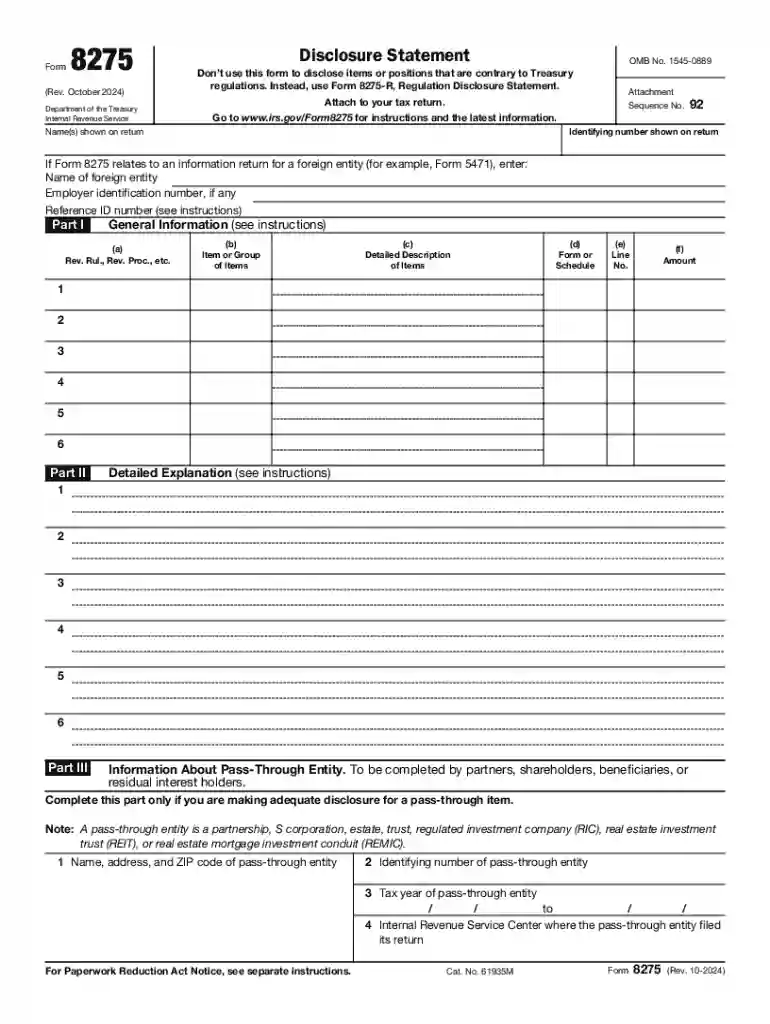
- Review the Form Structure: Familiarize yourself with different sections of the form before filling it out, such as general information, details regarding the disclosed items, and sections on pass-through entities.
- Gather Necessary Details: Ensure that all relevant information about the tax position or item being disclosed is ready. This includes detailed explanations and any supporting documents that justify the approach taken.
- Follow Detailed Instructions: Utilize the instructions to fill out each section correctly. They guide you in providing necessary details in specific fields to fulfill disclosure requirements.
Importance of Accurate Completion
- Completing the form accurately ensures that the IRS fully understands the disclosed information.
- Missteps or inaccuracies might lead to further inquiries or assessments, so adhere closely to instructions.
Key Elements of the Instructions for Form 8275-R, Regulation Disclosure Statement
Understanding the key components of the form's instructions is vital to provide accurate information.
Main Components
- General Information Section: This part requires basic taxpayer details such as name, identification number, and tax year in question.
- Detailed Explanations: This section requires a comprehensive description of the tax position. The explanation should include legal arguments, regulatory disagreements, or interpretations that justify the disclosure.
- Pass-Through Entities: If applicable, instructions provide guidance on how to disclose information about pass-through entities involved.
Supporting Documentation
- The instructions highlight the importance of attaching supporting documents or evidence that bolster the reasoning behind the disclosed tax positions or items.
IRS Guidelines
The IRS guidelines within the instructions for Form 8275-R equip taxpayers with the regulatory context needed to complete the form as intended.
Key Guidelines
- Disclosure Scope: Only positions directly affecting the return should be disclosed. This focus helps maintain the pertinence and relevance of the form.
- Specificity Requirement: The information provided must be highly specific to prevent any ambiguities in the disclosed positions.
- Regulatory Reference: References to specific IRS regulations or statutes involved in the interpretation should be clearly stated.
Understanding IRS Expectations
Adhering to these guidelines ensures that disclosures meet IRS standards, reducing the risk of penalties due to incomplete or inaccurate disclosures.
Filing Deadlines / Important Dates
Accurate timing is crucial when submitting Form 8275-R along with a tax return.
Critical Timelines
- Concurrent Filing: The form must be attached to the tax return at the time of filing. Late submissions may invalidate the protection provided by the form.
- Amendments: If the need for disclosure arises after the initial filing, amended returns should be filed following IRS protocols.
Consequences of Missed Deadlines
Failing to adhere to deadlines could lead to missed opportunities for voluntary disclosure, resulting in penalties or additional scrutiny from the IRS.
Legal Use of the Instructions for Form 8275-R, Regulation Disclosure Statement
The legal framework outlined within the instructions ensures that taxpayers properly utilize the form to maintain compliance.
Legal Considerations
- Adherence to ESIGN Act: Use of electronic submissions and signatures must align with the ESIGN Act to ensure legal validity.
- Voluntary Disclosure Protections: Courts may take the timely and accurate filing of Form 8275-R into account during audits or disputes.
- Regulation Compliance: The form must not be used to disclose outright illegal actions or fraudulent misreporting.
Form Submission Methods (Online / Mail / In-Person)
Taxpayers have different options for submitting the form based on their preferences or necessities.
Submission Options
- Online: Electronic submission is available if submitting returns using IRS-recognized electronic filing services.
- Mail: Paper submissions must be sent to the appropriate IRS submission center associated with the taxpayer’s geographical location.
- In-Person: Direct submission at IRS offices is possible but less common.
Advantages of Different Methods
- Online Submission: Offers speed and convenience, reducing processing time.
- Mail and In-Person: Suitable for those needing paper records or additional confirmation.
Penalties for Non-Compliance
Understanding penalties related to omissions or incorrect usage of Form 8275-R underscores its importance.
Consequences of Misuse
- Monetary Penalties: Undisclosed positions may lead to fines based on the severity and nature of the omission.
- Increased Scrutiny: Incorrect use may trigger audits or additional scrutiny by IRS agents.
Preventive Measures
- Thorough understanding and adherence to the instructions help mitigate the risks of incurring penalties.
Example Scenarios
- Self-Employed Individuals: Often engage in complex deductions requiring disclosures.
- Businesses with Pass-Through Entities: Must disclose tax positions affecting partnerships or S-corporations.
- Retired Taxpayers: May need to disclose differing interpretations on retirement income or deductions.
Impact of Various Scenarios
Each scenario brings unique challenges and opportunities for choosing to disclose, highlighting the need for comprehensive understanding of instructions provided in Form 8275-R.
This structured content ensures that all relevant aspects of the Instructions for Form 8275-R are covered comprehensively, providing readers with detailed insights into its application and implications.