







Definition and Purpose of Form 433-A (Sp)
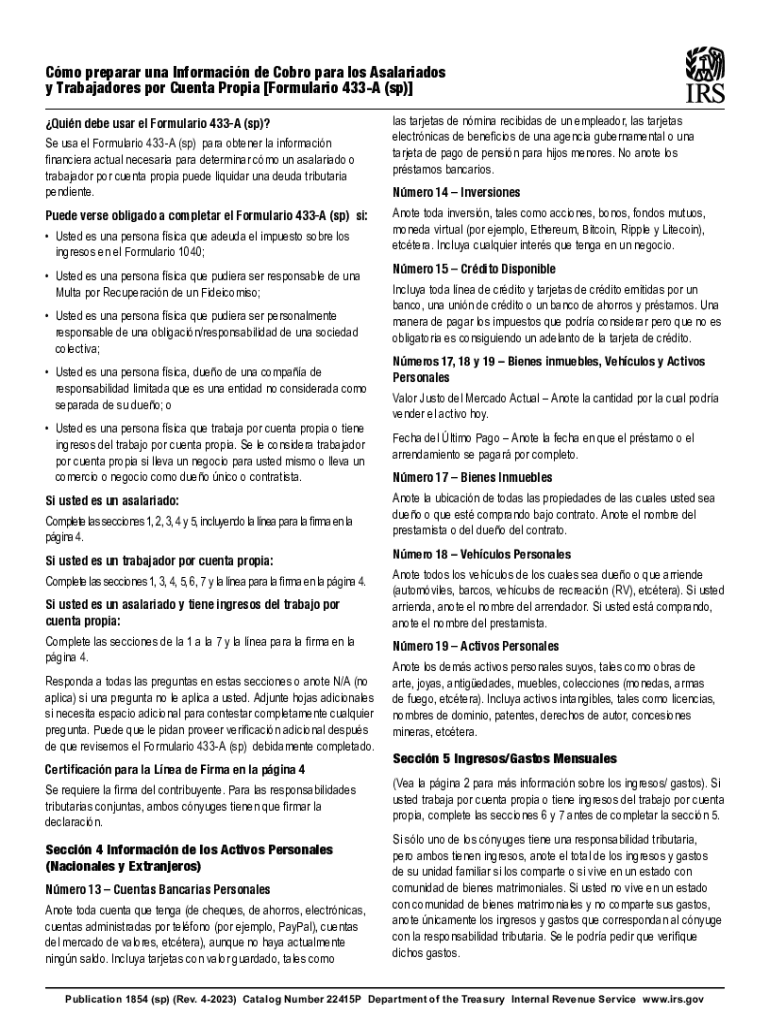
Form 433-A (Sp), also known as the Collection Information Statement, is a critical IRS document used to gather financial information from self-employed individuals and wage earners. The primary purpose of this form is to assess the ability of taxpayers to pay their outstanding tax liabilities. The form requires detailed information concerning the individual's personal assets, liabilities, income, and expenses, allowing the IRS to evaluate their financial status accurately. Understanding its importance is crucial for taxpayers who need to negotiate payment plans or settlements with the IRS.
Who Uses the Form 433-A (Sp)
Typically, Form 433-A (Sp) is utilized by individuals who are engaged in self-employment or who work as wage earners with outstanding tax debts. It is often required when taxpayers apply for installment agreements or offers in compromise. Those who are unable to pay their tax debts in full will need to complete this form to illustrate their financial situation. Tax professionals may frequently assist their clients in filling out this form accurately to ensure the IRS receives all necessary information.
Steps to Complete the Form 433-A (Sp)
- Personal Information Section: Start by entering your basic personal details, including your name, address, Social Security number, and other identification information.
- Employment and Income Details: List your employer's name and address if applicable, or provide information about your self-employed business.
- Asset and Liability Submission: Detail all assets such as bank accounts, real estate, vehicles, and other property. List liabilities including mortgages and outstanding loans.
- Income and Expense Analysis: Provide monthly income from all sources, and list necessary living expenses such as housing, utilities, and transportation.
- Verification and Signature: Review the form thoroughly, ensuring all sections are completed accurately before signing and dating the document.
Important Terms for Understanding Form 433-A (Sp)
- Installment Agreement: A payment plan arrangement with the IRS that allows taxpayers to pay their tax liabilities over time.
- Offer in Compromise (OIC): A program that allows taxpayers to settle their tax debt for less than the full amount owed if certain conditions are met.
- Financial Disclosure: The detailed disclosure of personal financial information required by the IRS to assess the taxpayer's ability to pay.
- Living Expenses: Standard expenses necessary for the taxpayer's and their family's health and welfare, including food, clothing, and medical costs.
IRS Guidelines for Completing the Form
The IRS provides comprehensive guidelines to ensure taxpayers accurately complete the Form 433-A (Sp). It is essential to follow these guidelines closely to avoid any discrepancies:
- Accurately report all assets, including their current market value.
- Use actual figures for income and expenses rather than estimates.
- Ensure consistency with previous filings and provide documentation such as bank statements or pay stubs when requested.
Required Documents for the Form 433-A (Sp)
The completion of Form 433-A (Sp) requires various supporting documents to verify the information provided:
- Recent pay stubs or profit and loss statements for self-employed individuals.
- Bank statements to validate cash on hand and asset declarations.
- Bills and documentation for recurring monthly expenses such as utilities and loans.
State-Specific Rules and Variations
While Form 433-A (Sp) is a federal IRS form, there may be specific state regulations and allowances that affect how it is completed or the relief options available. Taxpayers are advised to consult with a tax professional familiar with both federal and state tax laws to ensure compliance.
Penalties for Non-Compliance
Failure to adequately complete and submit Form 433-A (Sp) when required can result in severe consequences, including:
- Rejection of requests for installment agreements or offers in compromise.
- Potential levies or liens imposed on assets or wages until compliance is achieved.
- Additional penalties or interest on the outstanding tax liability.




