







Definition & Meaning
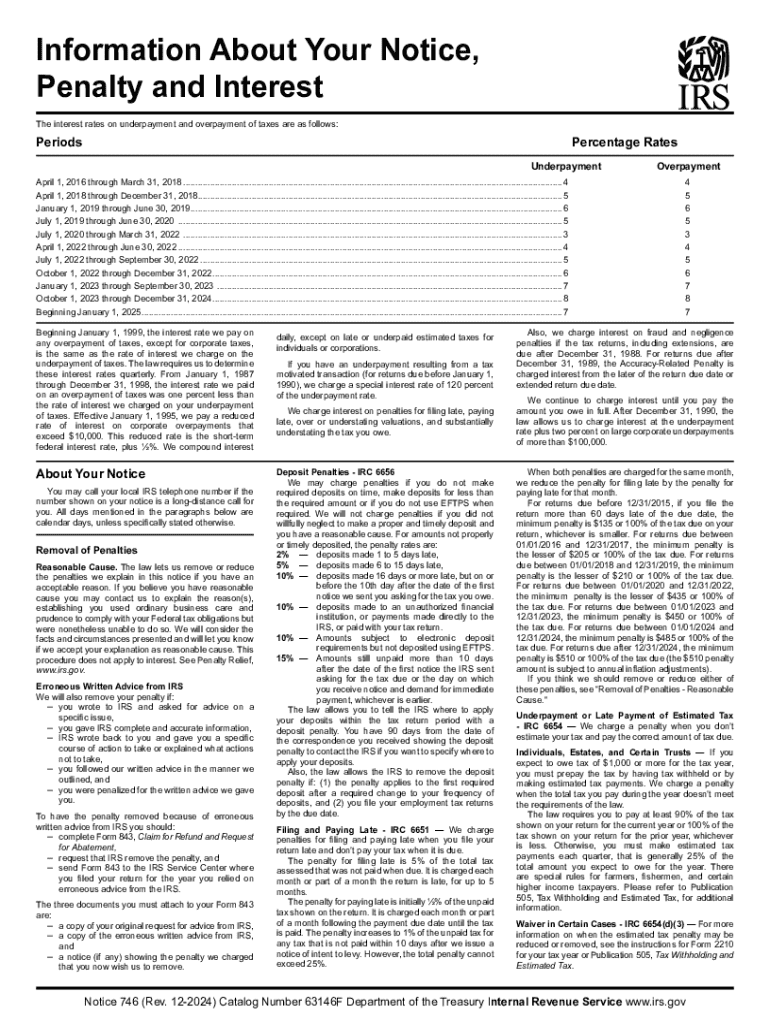
Notice 746 (Rev 12-2024) is an informational document issued by the IRS that provides critical details regarding penalties, interest, and various tax-related notices. It serves as a comprehensive guide for individuals and businesses to understand the implications of late payments, underpayments, and other financial discrepancies with their tax obligations. The form includes explanations about interest on unpaid taxes, potential penalties for failure to comply with tax filing requirements, and steps for appealing these penalties when applicable.
- Tax Penalties: Includes various penalties under IRC sections relating to late filings, inaccurate reporting, and non-payment.
- Interest Calculations: Outlines interest rates applicable to underpayments or overpayments, including how they are calculated over time.
- Appeals Process: Details the process for appealing penalties, such as showing reasonable cause to the IRS.
IRS Guidelines
The IRS guidelines outlined in Notice 746 clarify the IRS's procedures and expectations regarding tax compliance. These guidelines are crucial for taxpayers who need to understand their obligations and the consequences of failing to meet these responsibilities. By adhering to these guidelines, taxpayers can avoid unnecessary disputes and penalties.
- Compliance Expectations: Taxpayers should file accurate returns and make timely payments to avoid penalties.
- Penalty Reductions: Conditions under which penalties may be reduced or abated, such as reasonable cause or first-time penalty abatement.
- Record-Keeping Requirements: Recommendations for maintaining records that support filing positions and resolving disputes effectively.
Steps to Complete the Notice 746 (Rev 12-2024) Information
Understanding how to navigate Notice 746 can help taxpayers effectively manage their tax obligations and resolve any disputes with the IRS.
- Review Your Notice: Carefully examine any notice received from the IRS to understand the specific issue and the reason for the notice.
- Calculate Penalties and Interest: Use the guidelines in Notice 746 to calculate your potential penalties and interest on unpaid taxes.
- Determine Eligibility for Relief: Assess if you qualify for any penalty relief or reductions. This may involve providing evidence of reasonable cause to the IRS.
- Submit Required Documentation: Gather and submit any necessary documentation that supports your case or clarifies errors on the notice.
- Follow Up with IRS: After submission, monitor communications from the IRS to ensure that your appeal or dispute is processed.
Penalties for Non-Compliance
Failing to comply with tax obligations as outlined in Notice 746 can result in significant financial and legal consequences. Understanding these penalties is essential for taxpayers seeking to avoid or mitigate financial burdens.
- Late Filing Penalties: Charged for returns filed after the deadline without an extension.
- Late Payment Penalties: Apply to taxes paid after the due date.
- Accuracy-Related Penalties: Imposed for substantial understatements of income tax, negligence, or disregard of IRS rules and regulations.
How to Obtain the Notice 746 (Rev 12-2024) Information
Taxpayers can obtain Notice 746 through various channels, ensuring access to essential information related to tax compliance.
- Online Access: Available on the official IRS website for convenient access and download.
- Request by Mail: Taxpayers can contact the IRS to request a mailed copy if they prefer a physical document.
- Third-Party Platforms: Some digital platforms may offer a version of the notice for informational purposes.
Key Elements of the Notice 746
Notice 746 contains vital components that taxpayers need to understand and address any issues noted by the IRS efficiently.
- Detailed Penalty Information: Describes different penalties, their criteria, and methods to calculate them.
- Interest Rate Schedules: Provides the current interest rates applied to over/underpaid taxes and how these are updated quarterly.
- Appeal Guidelines: Outlines the required steps and documentation needed to contest penalties successfully.
Filing Deadlines / Important Dates
Staying aware of critical dates and deadlines mentioned in Notice 746 ensures that taxpayers remain compliant and can avoid additional penalties.
- Filing Due Dates: Important tax return filing deadlines, including extensions and specific requirements for different entities.
- Payment Deadlines: Final dates by which tax payments must be made to avoid interest and penalties.
- Appeal Timeframes: Specific periods allotted for a taxpayer’s response to notices or for filing appeals.
Examples of Using the Notice 746 (Rev 12-2024) Information
Real-world scenarios illustrate how different entities can utilize Notice 746 for optimal compliance with IRS guidelines.
- Small Business Scenario: How sole proprietors or small business owners address penalties and interest when filing returns late due to unforeseen circumstances.
- Individual Taxpayer Case: The process an individual might follow when requesting a penalty abatement for a first-time filing error.
- Corporate Tax Entity: Steps a corporation may take to appeal a penalty due to a clerical error in their tax filing.
Each example demonstrates practical steps and considerations based on the information contained within Notice 746, showcasing its utility in real-world applications.




