
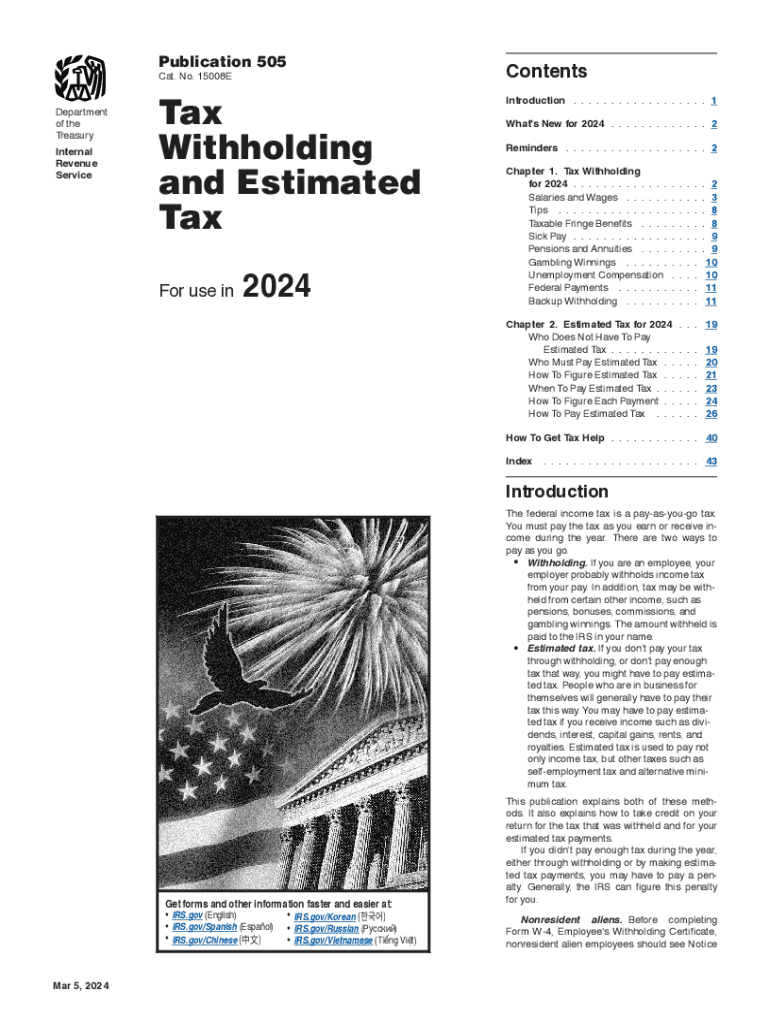







Understanding IRS Pub 505, Tax Withholding and Estimated Tax
IRS Publication 505 is a crucial resource for understanding tax withholding and estimated tax payments. This guide focuses on the methods of paying federal income tax as you earn money. It covers wage withholding for employees and estimated tax payments for those who don't have enough income subject to withholding. It provides the necessary steps to calculate obligations and avoid underpayment penalties. For 2024, it includes updates on standard deduction amounts and available tax credits.
How to Use IRS Pub 505
Utilizing IRS Pub 505 effectively involves understanding several key sections. Begin by reviewing the part that explains the purpose of withholding tax and estimated tax payments. Resources include worksheets you can use to estimate taxes and avoid paying too little or too much throughout the year. You will find detailed instructions on how to adjust withholding amounts, especially if you experience life changes like marriage, child birth, or job switches. Use the guide to update your Form W-4 to fit your current financial situation, ensuring optimum tax withholding.
Obtaining IRS Pub 505
IRS Pub 505 can be easily obtained through the official IRS website. It is available as a digital download in PDF format, offering easy access via computers and mobile devices. Alternatively, one may request a printed copy by contacting the IRS directly. Libraries and financial institutions often have copies available for public use. Ensuring you have the latest version is critical, as tax regulations and amounts may change each year.
Steps to Complete Tax Withholding and Estimated Tax
To complete your tax withholding and estimated tax using IRS Pub 505, follow these steps:
- Review Your Financial Situation: Assess your current sources of income, including wages, dividends, and other earnings.
- Calculate Withholding: Use the worksheets within IRS Pub 505 to determine appropriate withholding amounts.
- Update Forms: Adjust your Form W-4 if needed, based on calculations and changes in life circumstances.
- Estimate Payments: For income not subject to withholding, calculate estimated tax payments following the guide’s instructions.
- Make Payments: Use the IRS Electronic Federal Tax Payment System (EFTPS) or other methods outlined to pay these taxes.
Importance of IRS Pub 505
IRS Pub 505 is vital for tax compliance in ensuring that taxpayers meet their federal tax obligations. It provides a clear framework for understanding individual tax requirements throughout the year, allowing users to avoid penalties and interest due to underpayment. It is especially important for those with varied income sources, such as freelancers or business owners, to accurately estimate quarterly payments and adjust withholdings as necessary.
Common Users of IRS Pub 505
The primary users of IRS Pub 505 include:
- Employees: Reviewing withholding to align with actual tax liability.
- Self-Employed Individuals: Estimating tax payments on non-wage income.
- Retirees: Managing tax liabilities on retirement income.
- Investors: Understanding reporting requirements for dividends and capital gains.
- Tax Professionals: Advising on optimal withholding strategies for clients.


IRS Guidelines and Key Elements
IRS guidelines within Pub 505 emphasize compliance through accurate record-keeping and periodic review of financial information to adjust withholding or estimated payments as necessary. Understanding eligibility for different tax credits and applying them correctly can significantly affect tax liabilities. The publication outlines key elements such as definitions of income types, credits, and adjustment forms needed for maintaining compliance.
Filing Deadlines and Important Dates
Adherence to filing deadlines and awareness of important financial dates highlighted in IRS Pub 505 prevents costly penalties. This includes key dates for quarterly estimated tax payments and any deadlines for changing withholding status. Knowing the tax calendar assists in timely payments and updates, ensuring one remains within compliance throughout the tax year.
Consequences of Non-Compliance
Failing to follow the guidelines and requirements detailed in IRS Pub 505 may result in interest and penalty charges from the IRS due to underpayment. This publication describes the methodology for calculating penalties, thus providing taxpayers with foresight on potential financial impacts of non-compliance. It underscores the importance of timely reviews and adjustments to tax payments as a means to avoid unnecessary financial strain.




