







Understanding the Georgia Odometer Disclosure Requirements
The Georgia odometer disclosure is a legal requirement for all vehicle sales in the state, ensuring that accurate mileage information is provided during the transfer of ownership. This disclosure is crucial for preventing odometer fraud, where sellers might misrepresent a vehicle's mileage to inflate its value. Under both federal and state law, it is mandatory for the seller (transferor) to disclose the actual mileage of the vehicle, or provide a statement if the odometer reading does not reflect the true mileage.
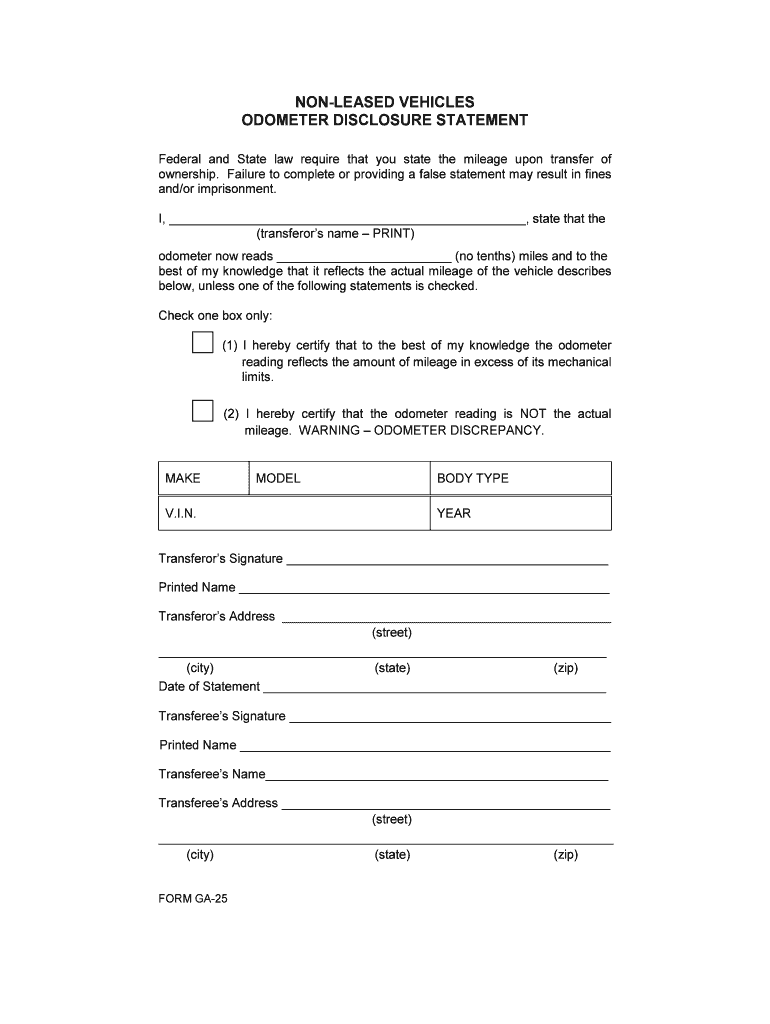
The primary document used for this process is the Georgia odometer disclosure statement. This form typically includes specific sections for the signatures of both the seller and buyer (transferee), as well as vital vehicle information such as make, model, and Vehicle Identification Number (VIN). Accuracy and transparency in this transaction are essential to protect both parties involved.
Importance of Accurate Odometer Disclosure
- Preventing Fraud: Accurate reporting of odometer readings is essential to prevent cases of fraud where the seller might underestimate the mileage of the vehicle to increase its sale price.
- Legal Compliance: Sellers must adhere to laws regarding odometer disclosure to avoid potential legal issues or penalties. Failure to provide accurate information can lead to legal disputes.
- Financial Transparency: A truthful odometer disclosure reflects the vehicle's true condition and value, providing the buyer with the necessary information to make an informed purchasing decision.
Key Elements of the Odometer Disclosure Statement in Georgia
The Georgia odometer disclosure statement consists of several critical components that must be filled out correctly to ensure its validity:
- Transferor Information: This section requires the seller's name, address, and signature, confirming the accuracy of the mileage disclosed.
- Transferee Information: The buyer's name and address must also be included to establish clarity over who is receiving the vehicle.
- Vehicle Details: Make, model, year, and VIN of the vehicle must be accurately reported.
- Odometer Reading: The current odometer reading at the time of sale must be noted, along with a certification that the reading is accurate, or a statement indicating any discrepancies.
Odometer Discrepancies and Their Disclosure
In cases where the odometer reading may not reflect the actual mileage due to repairs or replacements, the seller must disclose this fact on the statement. This is important as it protects both parties and provides clarity regarding the vehicle's history.
- Types of Discrepancies: Common discrepancies can arise from odometer repairs, replacement parts, or previous rollbacks. Sellers should be upfront about these situations to ensure compliance and transparency.
- Impact on Value: Discrepancies often impact the vehicle's resale value and should be carefully documented to avoid potential litigation or dissatisfaction from the buyer.
Filing and Compliance with the Odometer Disclosure Statement
To ensure compliance with Georgia law regarding odometer disclosures, the completed statement should be kept as a part of the vehicle's records. It is usually included with other documentation submitted during the title transfer process at the local Department of Motor Vehicles (DMV).
- Retention of Copies: Both the seller and buyer should retain copies of the odometer disclosure statement for their records, in case future disputes arise.
- Timeliness: It is advisable that the odometer disclosure be completed and filed at the time of sale to avoid delays in the title transfer process and ensure prompt registration of the vehicle in the new owner's name.
Notarization of the Odometer Disclosure Statement
In Georgia, notarization is not typically required for the odometer disclosure statement; however, certain sellers or specific transactions may opt to have the document notarized for extra security and verification of the transaction. This can add an additional level of trust and legitimacy to the agreement between the parties.
- Potential Benefits of Notarization: Notarization can provide a legal safeguard, ensuring that all parties involved are legitimate and the transaction is recorded accurately. This may be particularly useful in private sales or higher-value transactions.
Resources for Obtaining the Odometer Disclosure Statement
The Georgia odometer disclosure statement is commonly available through various channels, ensuring easy access for all sellers and buyers. Resources include:
- Local DMV: Forms can often be obtained directly at local Department of Motor Vehicle offices.
- Online Download: The statement can typically be downloaded in PDF format from state government websites, allowing for quick access.
- Third-Party Providers: Some online services may provide templates or pre-filled forms, although it is important to ensure these are compliant with Georgia state regulations.
By adhering to the odometer disclosure requirements, both sellers and buyers can engage in vehicle transfers responsibly, ensuring all legal obligations are met while fostering a transparent sales process.




